Ask any broker what buyers are asking for this year and you will hear the same phrase over and over. Ready to move. Not next year, not after possession delays, now. This preference has been building quietly for a while, but it has turned into something closer to a full-blown shift in how Indian homebuyers approach their biggest purchase. And honestly, once you look at the numbers behind it, the shift makes a lot of sense.
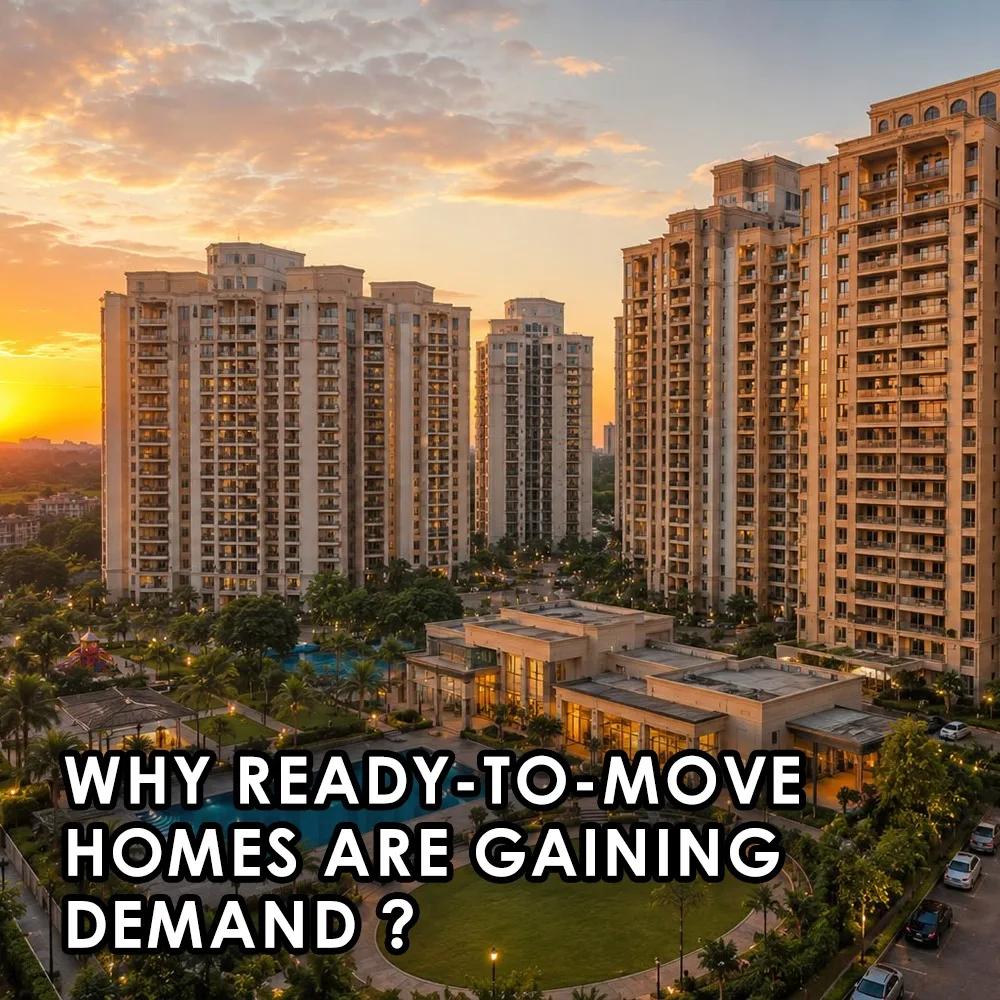
Ready possession homes are gaining demand across Indian cities because they solve real problems: no GST liability, no overlapping rent and EMI payments, and none of the uncertainty tied to delayed possession.
Delayed possession has burned enough buyers that the wariness has become almost generational knowledge, passed from one relative to the next. Even reputed developers have had projects stall over funding gaps, litigation, or approval delays. A ready possession home removes that uncertainty entirely. What you see during the site visit is what you get on registration day, not a rendering promised for some future date.
This is the part many first-time buyers miss. Under-construction flats attract GST, typically five percent on standard units and one percent on affordable housing, calculated on the agreement value. A ready to move flat with a valid completion or occupancy certificate is treated as immovable property and falls outside GST altogether. On a property worth a crore, that difference alone can run into several lakh rupees, money that stays in the buyer's pocket rather than going toward tax.
Anyone who has paid rent while also servicing a home loan EMI for an under-construction flat knows exactly how draining that double outflow feels. Move into a ready to move home and that overlap disappears the day you get the keys. For salaried buyers stretching their budgets, this single factor often decides the entire purchase.

Beyond the financial case, there is a simpler emotional one. Buyers can walk through the actual flat, check the sunlight in the bedroom at four in the afternoon, test the water pressure, and see how the society actually feels once families have moved in. Brochures and sample flats cannot replicate that.
A completed project with its occupancy certificate in hand has already cleared the regulatory hurdles that trip up so many under-construction developments. Buyers are not betting on approvals coming through later. The paperwork exists, the building has been inspected, and the risk of last-minute legal complications drops sharply. Lenders tend to process home loans faster for such properties too, since valuation and title checks move quicker on a completed asset.
Builders have noticed this preference and many are now holding back a portion of completed inventory specifically to sell as RTMI flats, often at a premium over launch pricing. That premium, buyers seem willing to pay it, because the certainty is worth something real to them.

None of this means ready to move homes are automatically the smarter buy in every case. Under-construction projects, particularly those from credible developers with a strong delivery record, are usually priced lower and offer more room for price appreciation before possession. Buyers with a longer investment horizon and higher risk appetite may still find better returns there.
The appetite for ready possession is not a passing trend triggered by a few bad headlines about stalled projects. It reflects a more cautious, financially literate buyer who has learned to price in risk the way a lender would. That shift is likely to keep shaping how developers plan their launches in the coming years.
Ready to move homes are gaining demand across Indian cities because they solve real problems: no GST liability, no overlapping rent and EMI payments, and none of the uncertainty tied to delayed possession. Buyers get legal clarity through the occupancy certificate and the ability to inspect exactly what they are purchasing. Under-construction projects still offer pricing and appreciation advantages for patient investors, but for buyers who value certainty over discount, ready possession homes are increasingly the rational choice.


Find Detailed Answers to Frequently Asked Questions to Help You Make Smart and Confident Real Estate Decisions
A ready possession home is a completed property with an occupancy certificate that buyers can move into immediately. It's gaining popularity because it eliminates GST liability, removes the burden of paying both rent and EMI simultaneously, and provides complete certainty about what you're purchasing—no delays, no surprises.
Ready possession homes with valid completion certificates are exempt from GST entirely, while under-construction flats attract 5% GST on standard units and 1% on affordable housing. On a ₹1 crore property, this difference can save buyers several lakh rupees.
Under-construction projects carry risks of delayed possession due to funding gaps, litigation, or approval delays. Buyers also face the financial strain of paying both rent and EMIs simultaneously, plus GST liability, while waiting for completion with no guarantee of timelines.
Yes, developers often charge a premium for ready to move inventory compared to launch pricing. However, many buyers willingly pay this premium because the certainty, immediate usability, and savings on rent, GST, and stress outweigh the higher upfront cost.
Under-construction projects from credible developers typically offer lower entry prices and greater potential for price appreciation before possession. For investors with longer horizons and higher risk tolerance, these projects may deliver better returns despite the uncertainties.
Ready possession homes come with completed occupancy certificates, meaning all regulatory hurdles and inspections are already cleared. This reduces last-minute legal complications, makes home loan processing faster, and gives buyers verified documentation rather than promises.