
Areas Offering Better Value Than Prime Locations
Summary
Investors are now finding better value in emerging micro-markets beyond prime locations, driven by infrastructure development and lower entry costs. These areas offer steeper growth curves and stronger capital appreciation potential than saturated prime addresses.

Introduction
Ask any broker in Gurugram or Bengaluru which locality moves fastest and they will point at the same three or four names everyone already knows. Funny thing is, those aren't always the addresses making people money anymore. Real estate buyers who used to chase a famous pin code are now circling the belt just beyond it, where property prices sit lower but the growth curve looks steeper. This isn't a fringe idea anymore. It has become one of the more sensible ways to think about property investment in 2026.
Why the Famous Address Costs More Than It Delivers
Prime pockets carry a premium that has almost nothing to do with future upside and everything to do with reputation. You're paying for a name people recognise at a dinner party, not necessarily for headroom left in the price. Once a locality is universally called "prime," most of its appreciation has already happened, and what's left is slower, incremental movement.
The Shift Nobody Quite Predicted This Fast
Emerging micro markets on the edges of major cities have started outrunning their more famous neighbours, and the pace has caught even seasoned analysts off guard. Bengaluru's Whitefield went from roughly ₹5,500 per square foot in 2018 to about ₹7,200 by 2024, a jump largely powered by metro work and IT expansion rather than any inherent glamour. Pune's Kharadi told a similar story, climbing from around ₹6,000 to nearly ₹8,000 in the same window once the EON IT Park matured around it.

Hyderabad and the Doubling Nobody Talks About
Hyderabad's Financial District is maybe the starkest example. Flats priced near ₹5,000 per square foot in 2017 now comfortably cross ₹9,000, nearly doubling within seven years. What changed wasn't prestige. It was proximity to jobs, better roads, and enough critical mass of residents to justify new schools and malls showing up.
NCR's Own Version of the Same Pattern
Delhi NCR is playing this out through the Dwarka Expressway and the stretch feeding Noida's upcoming Jewar airport. Greater Noida and the Yamuna Expressway corridor keep pulling buyers who want long term upside without prime Gurugram pricing attached. Locations once dismissed as too far out are turning into genuine peripheral locations worth a second look, largely because the highway or metro line finally arrived on schedule.
Infrastructure Timing Beats a Fancy Address, Almost Every Time
Here's the pattern across every city above: it's rarely the locality's history that moves the needle, it's whether a metro corridor, expressway, or business park lands nearby within a realistic timeframe. JLL research on Bengaluru found homes within two kilometres of upcoming metro lines outperforming farther properties by a wide margin over a five to seven year stretch. That single data point probably explains more about infrastructure-led growth than any brochure ever will.
The Math Investors Are Quietly Running
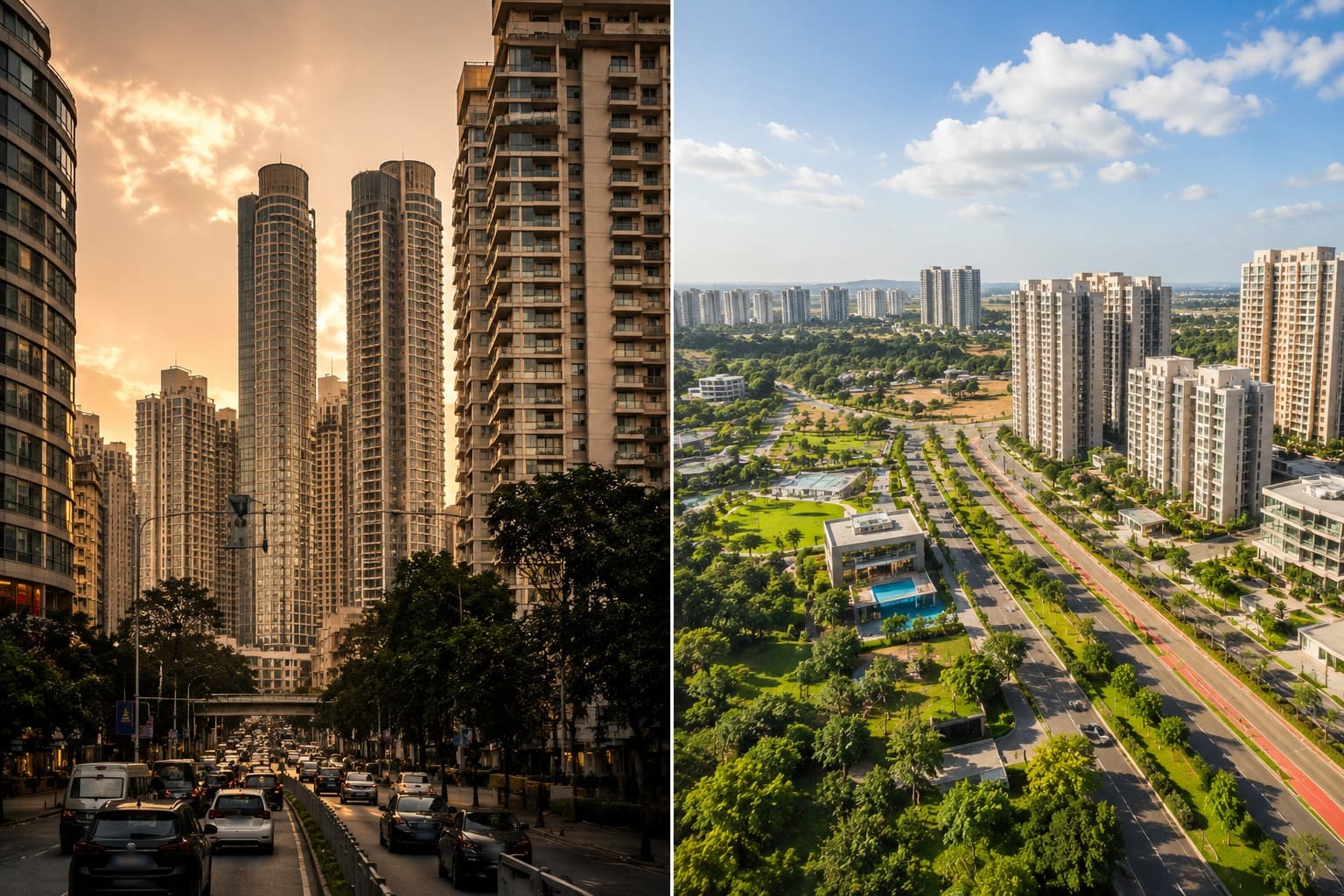
Buyers doing the sums realise a crore saved upfront in a peripheral corridor often buys more square footage and leaves more room for capital appreciation later. Is it guaranteed? Not really, nothing in real estate ever is. But the entry price gap between prime and peripheral has widened enough that even a modest catch up in the next decade changes the return profile substantially, which is exactly what makes value for money corridors attractive right now.
What Nobody Puts in the Brochure
These belts aren't risk free. Roads take longer than promised, and a metro line delayed by two years can quietly erase a chunk of expected upside. Buying into affordable corridors still demands checking whether the promised infrastructure has actual funding behind it, not just a press release.
Summary
Areas offering better value than prime locations are reshaping how buyers think about property investment across Indian cities. From Whitefield to Kharadi to the Yamuna Expressway belt, undervalued real estate corridors in India are consistently outperforming saturated prime markets once metro lines and highways arrive. For home buyers willing to trade prestige for patience, these best micro markets for property investment offer a realistic shot at stronger long term capital appreciation, provided the underlying infrastructure timeline actually holds.