
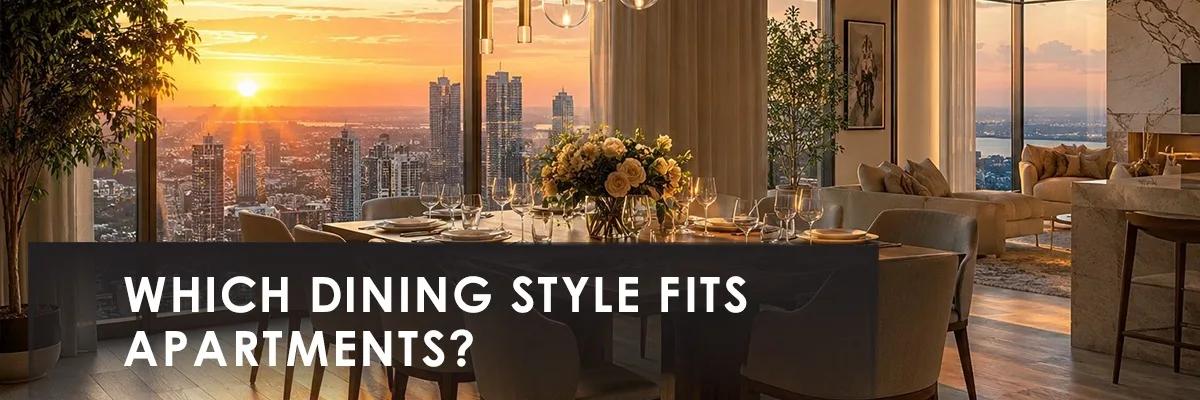
Most apartment dining spaces get treated like an afterthought, a table shoved into whatever corner was left over after the sofa and TV claimed the good spot. That's a shame, honestly, because the dining area is where actual conversations happen, longer than anywhere else in the house. A little intention here goes further than people expect.
Styling a dining area in an apartment comes down to smart proportions, thoughtful lighting, and small personal touches rather than expensive furniture. From choosing a round table for tighter spaces to layering in rugs, wall art, and functional storage, every choice should balance practicality with warmth. Good dining area styling turns a simple eating corner into a space people actually want to linger in, long after the meal itself is over.
Before falling in love with a six-seater table on some website, measure your available space properly, including the clearance needed to pull chairs out comfortably. A dining area that feels cramped the moment someone pushes their chair back defeats the entire purpose of having one. As a rough rule, leaving about ninety centimetres of walking space around the table keeps the area functional rather than obstacle-ridden.
In smaller apartments, a round or oval table often works better than a rectangular one, since there are no sharp corners to bump into while navigating a tight room. They also make conversation feel more inclusive, nobody's stuck at the awkward far end of a long table. Four to six seater round tables have quietly become the go-to choice for compact Indian apartments over the last few years.
A single pendant light hung slightly lower than usual over the table instantly makes a dining corner feel deliberate rather than incidental. Warm toned bulbs work far better here than cool white ones, since dinner conversations feel more relaxed under gentler light. If your apartment doesn't allow much electrical rework, a statement floor lamp positioned nearby can achieve a similar effect without any rewiring.

Matching chair sets look tidy, sure, but a slightly mismatched set, maybe two upholstered chairs at the ends and simpler wooden ones along the sides, adds a layer of personality that catalogue-perfect setups often lack. It also solves a practical problem, mismatched sets are usually easier and cheaper to source individually than hunting for one large uniform set. Dining area styling benefits from this kind of imperfection more than people realise.
An empty wall behind the dining table is wasted real estate. A gallery of small framed prints, a single oversized mirror, or even open shelving holding your favourite crockery can turn a blank stretch into the visual anchor of the room. Mirrors specifically do double duty here, bouncing light around and making a small dining nook feel noticeably larger than it is.
This one splits opinions, but a low pile rug under the dining table can genuinely define the space, especially in open-plan apartments where the dining area blends into the living room. Just make sure it's large enough that chairs stay on the rug even when pulled out, otherwise it ends up looking like an afterthought rather than a design choice. Skip rugs entirely if your apartment already deals with a lot of spills or has young children running around.
A slim console or sideboard along one wall solves the eternal apartment problem of where to keep extra plates, napkins, and serving dishes without cluttering the kitchen. Choose one with a mix of open and closed sections so you can display a few nice pieces, like glassware or a ceramic bowl, while hiding the rest. This single piece of furniture often ends up doing more functional heavy lifting than anything else in the room.

A small plant, even something as low maintenance as a money plant in a simple ceramic pot, adds a surprising amount of warmth to a dining table centrepiece. It's cheaper than fresh flowers on a weekly basis and honestly looks better most of the time. Just keep it low enough that it doesn't block sightlines across the table during meals.
Swapping table runners, placemats, or centrepiece bowls every couple of months keeps a dining area from fading into visual background noise. It costs very little and takes minutes, but it's the kind of small refresh that makes guests notice something's different, even if they can't quite say what.


Find Detailed Answers to Frequently Asked Questions to Help You Make Smart and Confident Real Estate Decisions
The dining area is crucial because it's a dedicated space for conversations and shared meals, offering a more extended connection than other parts of the home.
The most critical first step is to accurately measure your available space, including the clearance needed for chairs, to ensure the area doesn't feel cramped.
Round or oval tables are often ideal for small spaces as they eliminate sharp corners and promote a more inclusive conversation atmosphere.
A pendant light directly over the table or a nearby floor lamp can make the dining corner feel intentional, with warm-toned bulbs enhancing a relaxed ambiance.
Yes, mixing chairs adds personality and can be a practical, budget-friendly choice compared to finding a uniform set.
Using mirrors on the wall behind the table can bounce light around and visually expand the perceived size of the dining nook.
A low-pile rug can define the space, especially in open-plan layouts, provided it's large enough for chairs to stay on when pulled out. Avoid if spills are frequent.
A slim console or sideboard offers hidden storage for dishes and linens while also providing a surface for display, maximizing functionality.