Nobody buys a flat thinking about the day they'll need a hospital at two in the morning. But ask any parent with young kids or any family caring for elderly relatives, and suddenly the distance to a decent multispecialty hospital matters just as much as the size of the balcony. Pune, thankfully, has a handful of neighbourhoods where this isn't something buyers need to worry about.
Treating hospital proximity as seriously as schools or workplaces is simply the smarter way to buy.
Social infrastructure rarely gets the spotlight schools and malls get, yet it shapes daily peace of mind more than almost anything else. A locality with a reliable hospital nearby isn't just convenient, it's a quiet insurance policy that families factor into their decision whether they say it out loud or not.
Kharadi, once known mainly for its IT parks, has quietly built up serious healthcare infrastructure alongside its office towers. Rising Medicare Hospital and Columbia Asia both operate here, offering everything from orthopaedics to critical care, and Manipal has a presence too. It's not an accident, the area grew fast enough that hospitals followed the population rather than the other way around.
Over on the western side of the city, Baner and Aundh have developed into some of Pune's most complete residential pockets. Multiple multispecialty hospitals operate across this stretch, alongside women's health clinics and paediatric centres, giving families a genuinely wide net of options within a short drive.

Viman Nagar sits close to the airport, but its real strength for residents is KEM Hospital and a cluster of clinics that have made the eastern part of the city considerably easier to live in for anyone managing an ongoing health condition. Average residential prices here run higher than in Kharadi, partly because of exactly this kind of convenience.
Kalyani Nagar doesn't get talked about as much these days, overshadowed by flashier IT corridors, but it remains one of the more balanced family friendly localities in Pune. It sits within easy reach of several established hospitals in the surrounding belt, something older residents already know and newer buyers are slowly catching onto.
Several hospitals across Kharadi and the eastern corridor carry NABH or JCI accreditation, which basically means they've been independently checked against global quality benchmarks. It's a small detail buyers rarely ask about, but it's worth checking before assuming every hospital signboard means the same standard of care.
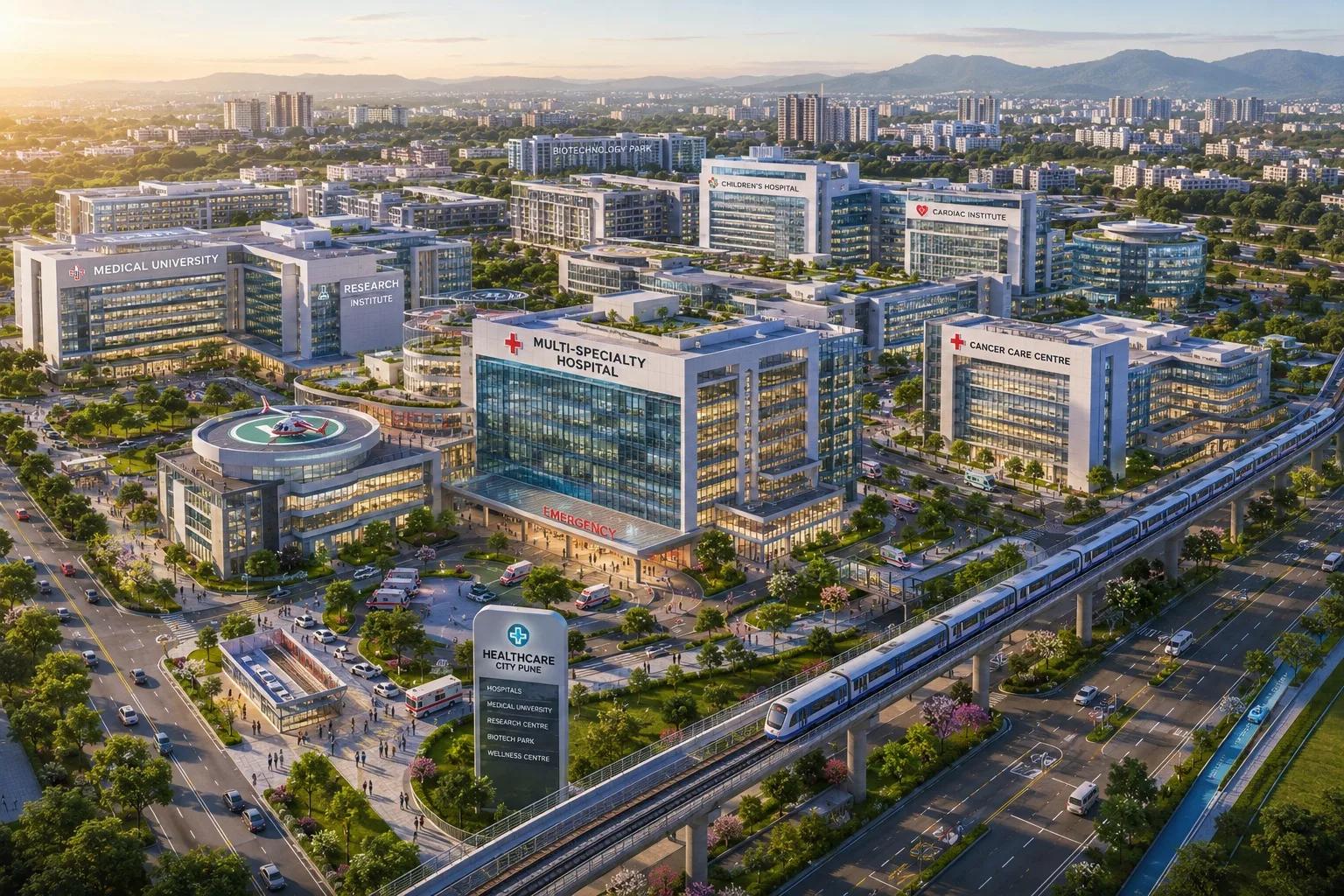
Convenience isn't free, of course. Viman Nagar's average rate sits above ten thousand rupees per square foot, noticeably higher than emerging pockets further out. Kharadi runs a little lower but is climbing steadily. Families weighing cost against peace of mind usually find this premium worth paying once they've priced out what an emergency drive across town actually costs in time and stress.
Before finalising anything, actually visit the nearest hospital rather than trusting a builder's brochure map. Check ambulance response times in the specific society you're considering, not just the general locality. A hospital five kilometres away on paper can feel a lot farther during Pune's evening traffic.
Pune offers several genuinely strong options for buyers prioritising healthcare infrastructure, from Kharadi's growing hospital cluster to the established medical access around Baner, Aundh and Viman Nagar. Each area balances price, connectivity and hospital quality slightly differently, but all offer a real safety net for families. For anyone choosing where to settle long term, treating hospital proximity as seriously as schools or workplaces is simply the smarter way to buy.


Find Detailed Answers to Frequently Asked Questions to Help You Make Smart and Confident Real Estate Decisions
Proximity to reliable hospitals and clinics significantly impacts peace of mind, especially for families with children or elderly relatives, and quietly influences property value in Pune neighborhoods.
Kharadi has emerged as a medical hub with hospitals like Rising Medicare and Columbia Asia. Baner and Aundh offer extensive options in the western belt, while Viman Nagar benefits from KEM Hospital and nearby clinics.
Yes, areas like Viman Nagar have higher residential prices partly due to their excellent convenience and access to quality healthcare, reflecting a premium buyers are willing to pay for peace of mind.
It's crucial to visit the nearest hospital, check actual ambulance response times from a specific society, and consider Pune's traffic conditions, as a hospital's distance on paper can feel much farther in reality.
Accreditation like NABH or JCI signifies that a hospital has been independently verified against global quality benchmarks, indicating a higher standard of care.