
Rise of Smart Townships in India
Summary
India's smart townships are booming, reflecting a post-pandemic shift in buyer demand for integrated, tech-enabled communities offering convenience, green spaces, and essential services within one planned zone. This trend spans major metros and tier-two cities, attracting both residents seeking quality living and investors valuing stability.

Introduction
A friend of mine recently sold her three bedroom flat in a standalone building and moved into a fifty acre gated project on the outskirts of Pune. When I asked why, she said something that stuck with me. She was tired of driving her kids to three different places just for a park, a doctor, and a decent grocery run. That single complaint explains almost everything about why smart townships have exploded across the country in recent years.
What Actually Makes a Township Smart
A smart township is not just a cluster of tall buildings with a common gate. It usually bundles homes, schools, clinics, retail streets, and green spaces into one planned zone, so residents rarely need to step outside for daily needs. App based visitor management, automated billing, and centralised security monitoring have become fairly standard across newer projects, which is where the smart genuinely comes from rather than just marketing language.
Why This Model Took Off After the Pandemic
Buyers stopped chasing square footage alone somewhere around 2021 and started asking harder questions about air quality, open space, and whether their building could handle a lockdown without falling apart. Standalone towers in congested pockets suddenly looked less appealing next to a low density campus with its own parks and internal roads. That shift in mindset gave integrated township developers an opening they had waited years for.

Beyond Metros, Tier Two Cities Join the Race
Dehradun, Coimbatore, and Chandigarh have quietly turned into hotspots, pulling buyers who want a city level lifestyle without the daily grind of Delhi or Mumbai traffic. Builders are also pushing into Vasai and similar satellite towns near Mumbai, betting that smaller cities have more room to plan properly before congestion sets in. Turns out you do not need a metro address to build something genuinely liveable anymore.
Technology Woven Into Daily Life
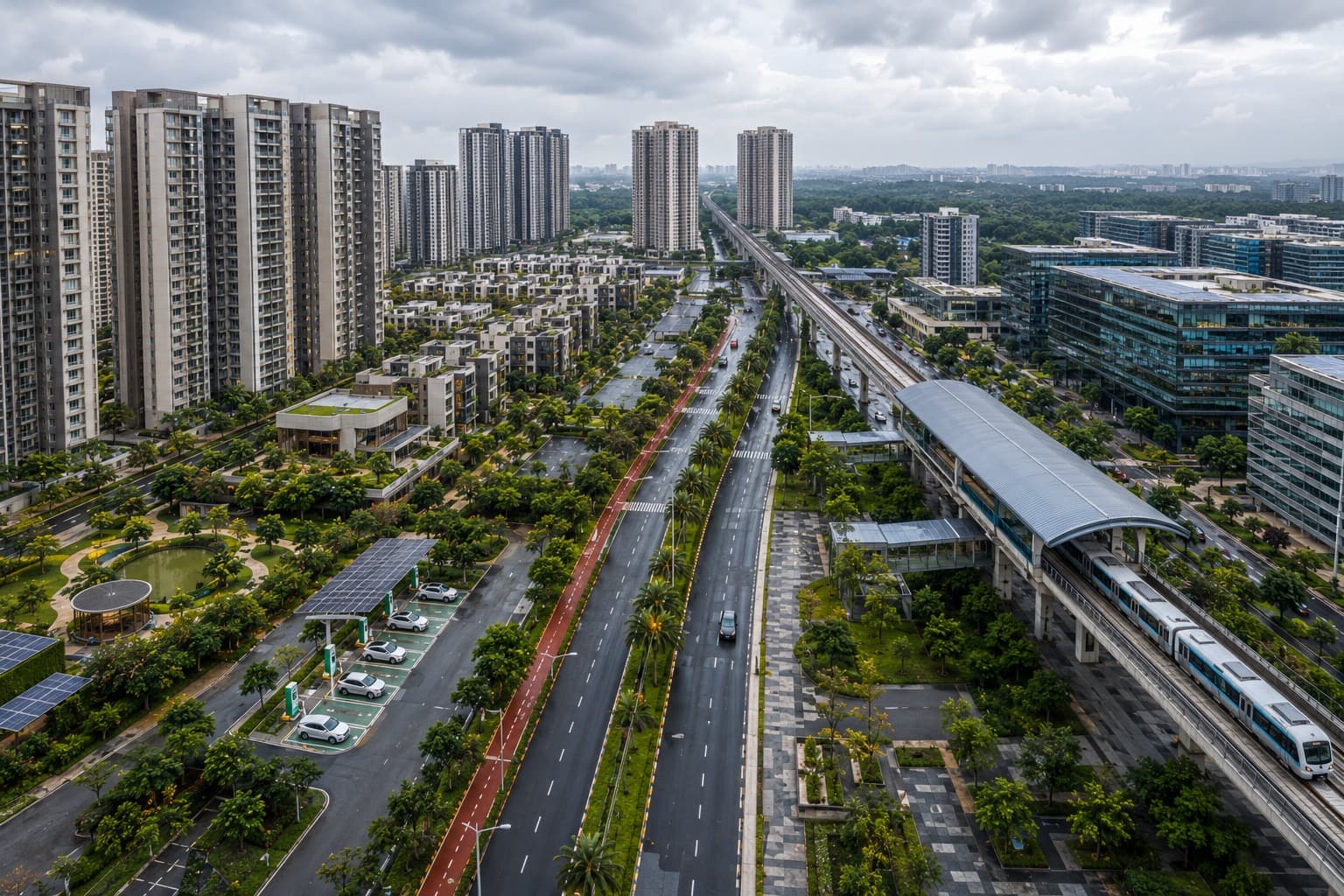
Solar panels on common areas, treated water recycling, and smart meters tracking consumption in real time show up in almost every serious township infrastructure pitch today. Home automation lets residents control lighting and climate remotely, a small convenience until you realise how much it trims monthly electricity costs over a year. None of this is experimental. It has become close to a baseline expectation among younger buyers evaluating a project.
Big Developers Are Betting Big
Names like DLF, the Reliance backed Model Economic Township, and several regional players have poured serious capital into mega projects across Gurugram, Pune, and the wider Delhi NCR belt. Reliance MET City stands out as one of the larger integrated township projects built around this philosophy. When companies of that scale commit land banks running into hundreds of acres, it tells you this is not a passing fashion in real estate India.
The Investment Angle Nobody Talks About Enough
Townships sitting close to metro corridors and ring roads have shown faster price movement compared to isolated apartment blocks in the same city, according to recent market commentary. Rental demand also stays steadier here, since tenants increasingly prefer a complete ecosystem over a bare apartment with no surrounding infrastructure. That stability matters more to long term investors than a flashy launch price ever will.
What to Watch Before Buying Into One
Not every township delivers what the brochure promises on day one, so ask specifically which phases are actually complete versus still on paper. Maintenance costs in these larger campuses tend to run higher than a standalone building, a detail that rarely gets mentioned during the initial sales pitch. A quick visit on a weekday evening, when the sales team is not around, usually tells you more than any presentation ever could.
Summary
The rise of smart townships in India reflects a genuine shift in what families want from a home, moving well past square footage into complete, walkable ecosystems. Integrated township projects across Pune, Gurugram, and emerging tier two cities are pulling buyers who value planned community living, technology, and long term stability over isolated apartment living. As connectivity corridors expand and developers keep investing at scale, this model looks set to shape the next decade of Indian real estate.