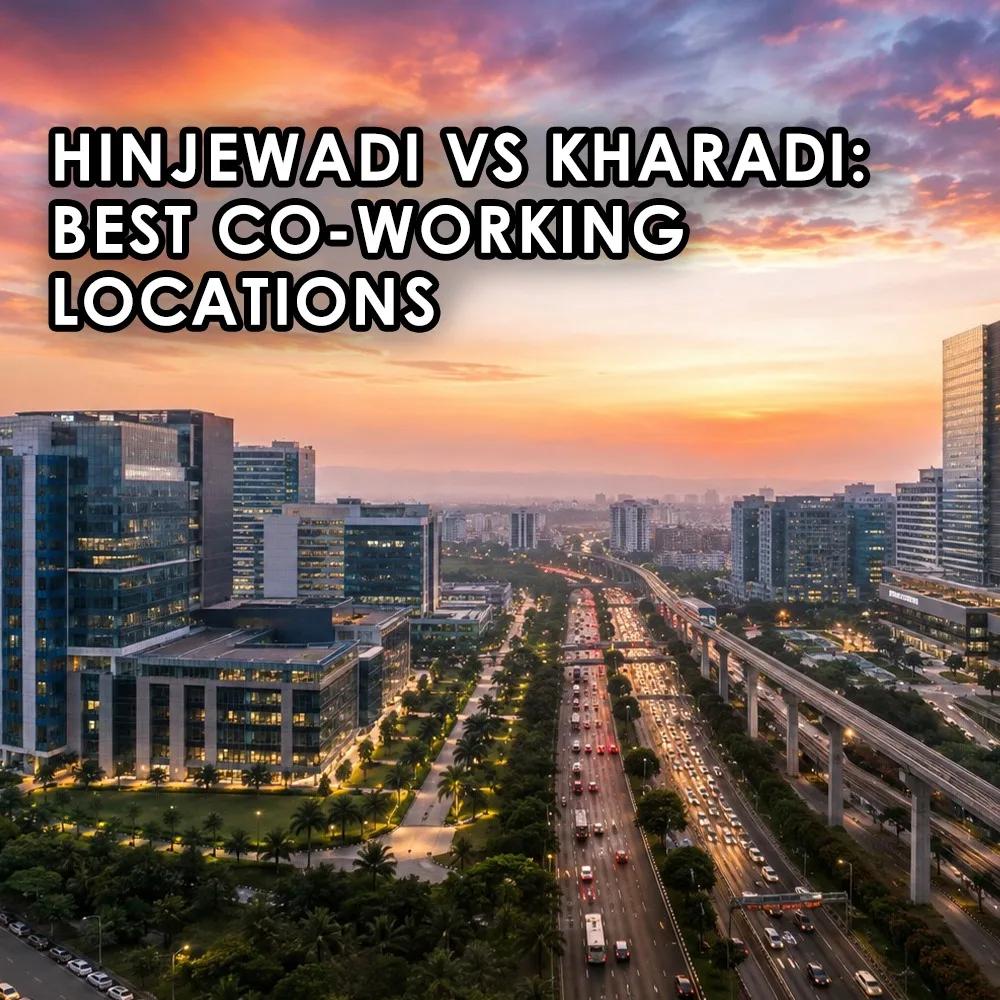
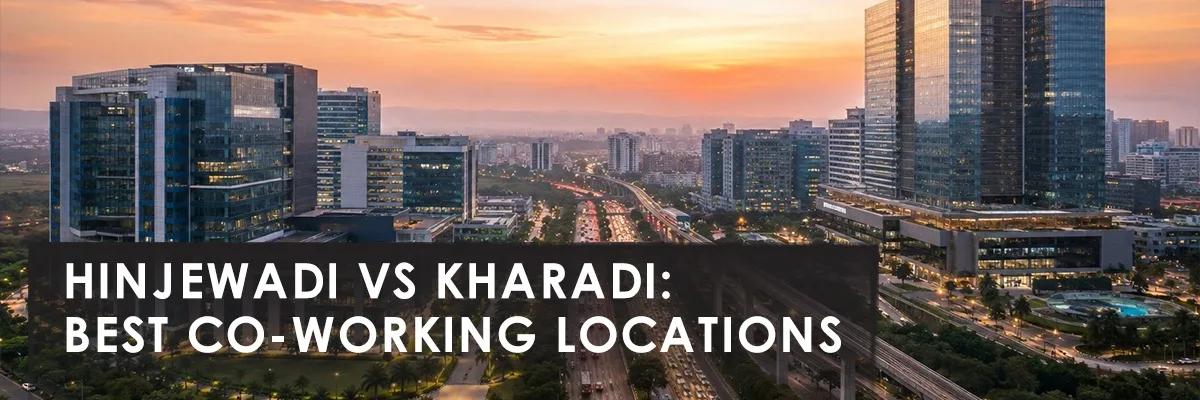
Ask a Pune founder where to set up their first real office and you'll almost always get two names thrown back at you, Hinjewadi and Kharadi. Rarely a third option, just those two, argued over like a cricket rivalry. Both belong to the same city, yet they couldn't feel more different once you're actually sitting in a cabin there.
Choosing between Hinjewadi and Kharadi for a coworking base depends on your team's profile and client base. Hinjewadi suits IT-heavy operations near a talent pool, while Kharadi fits enterprise and client-facing businesses valuing airport access and a polished address. Consider the upcoming metro, seat pricing, and parking costs.
Hinjewadi built its reputation the old fashioned way, through sheer density of IT companies packed inside Rajiv Gandhi Infotech Park. If your business lives and breathes enterprise software or large scale IT services, this is still where most of your potential hires and vendor network already sit. Coworking operators here mostly serve compact teams, often built around eight or so seats, catering to IT vendors and captive centre partner teams rather than sprawling floors.
Here's the catch nobody undersells when they recommend Hinjewadi though. Peak hour traffic on the approach roads is notoriously brutal, ask anyone who's sat through a forty minute crawl covering barely five kilometres. It's also somewhat cut off from the rest of Pune's social fabric, meaning after hours networking or client dinners usually mean driving elsewhere.
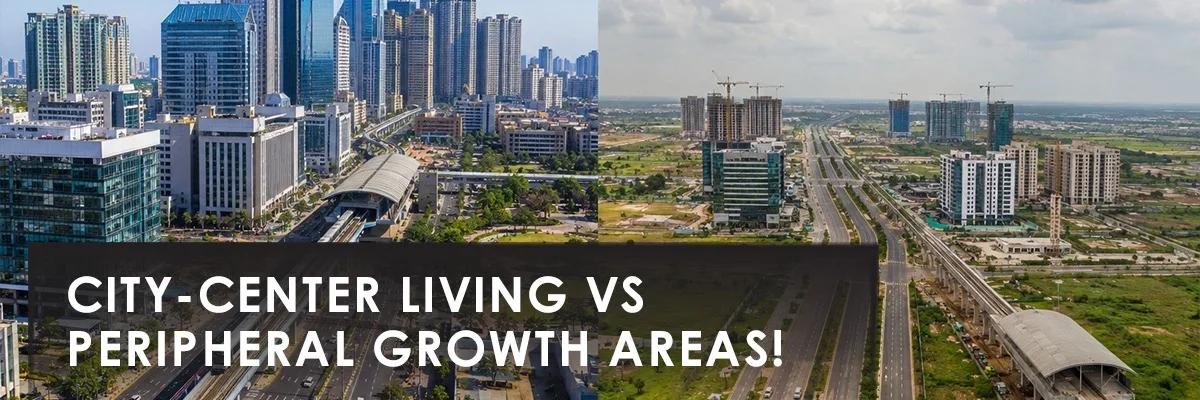
Kharadi tells a completely different story. A decade ago it was mostly open land on Pune's eastern edge, and today it's anchored by landmarks like the EON Free Zone and the World Trade Centre, pulling in fintech firms, multinational back offices and technology companies at a pace supply consistently struggles to keep up with. Its proximity to the airport gives it an edge Hinjewadi simply cannot match for teams that travel often.
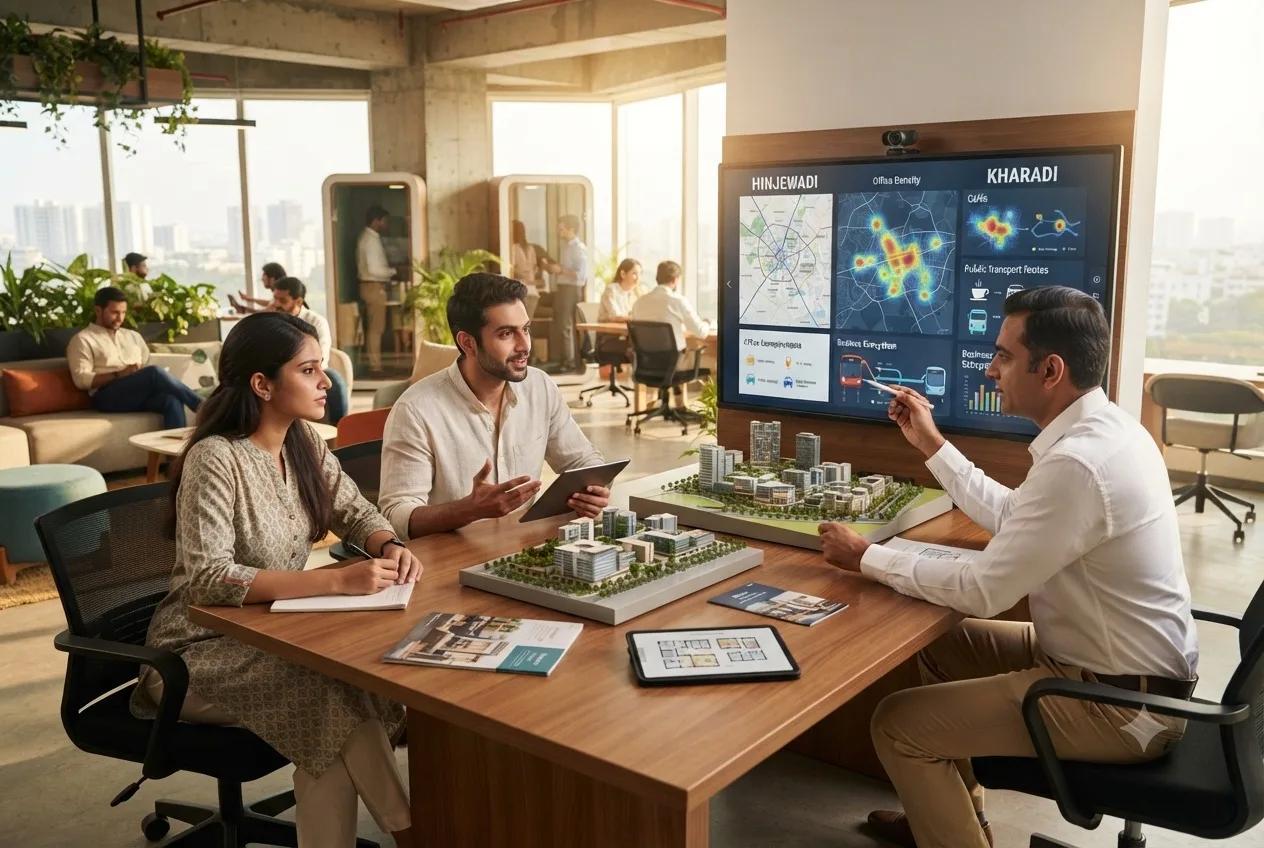
Pricing between the two doesn't follow a single neat rule, which is exactly where a lot of founders get confused. Entry level hot desks in Kharadi can actually undercut Hinjewadi's roughly eight thousand rupee starting point for flexible seating. Flip to enterprise grade managed floors though, and Kharadi often runs higher, sometimes crossing fourteen thousand rupees per seat against Hinjewadi's eight to eleven thousand range for larger IT teams.
Team size and working style end up mattering just as much as the neighbourhood itself. Smaller vendor teams and partner offices tend to gravitate toward Hinjewadi's tighter, IT park centric setup. Bigger enterprise floors, client facing consulting outfits and firms wanting a more polished business address usually lean toward Kharadi instead.
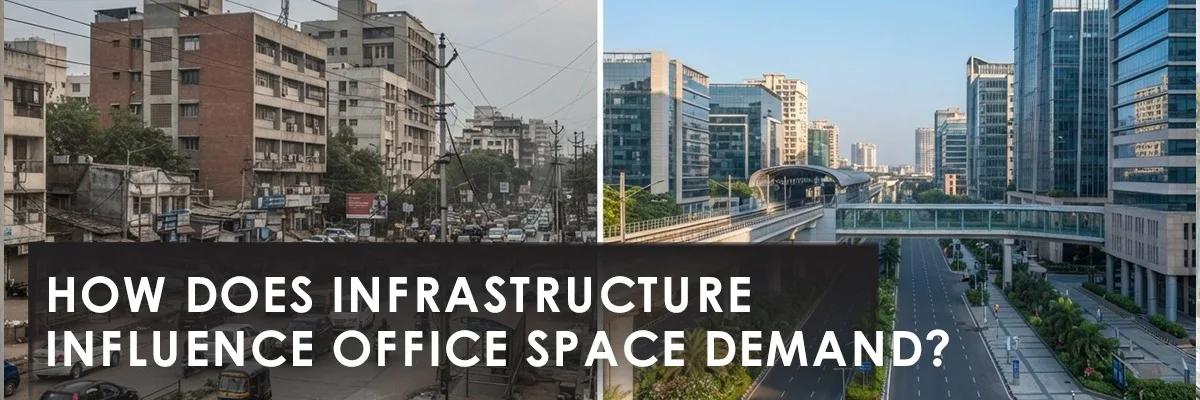
The one development that could actually reshape this whole debate is Pune's upcoming Metro Pink Line, connecting Hinjewadi straight through to Shivajinagar. Once it's fully operational later this year, a commute that currently eats up over an hour could shrink to roughly half that. Coworking operators are already reporting flex demand shifting toward Hinjewadi from neighbouring Baner and Aundh in anticipation of exactly this shift.
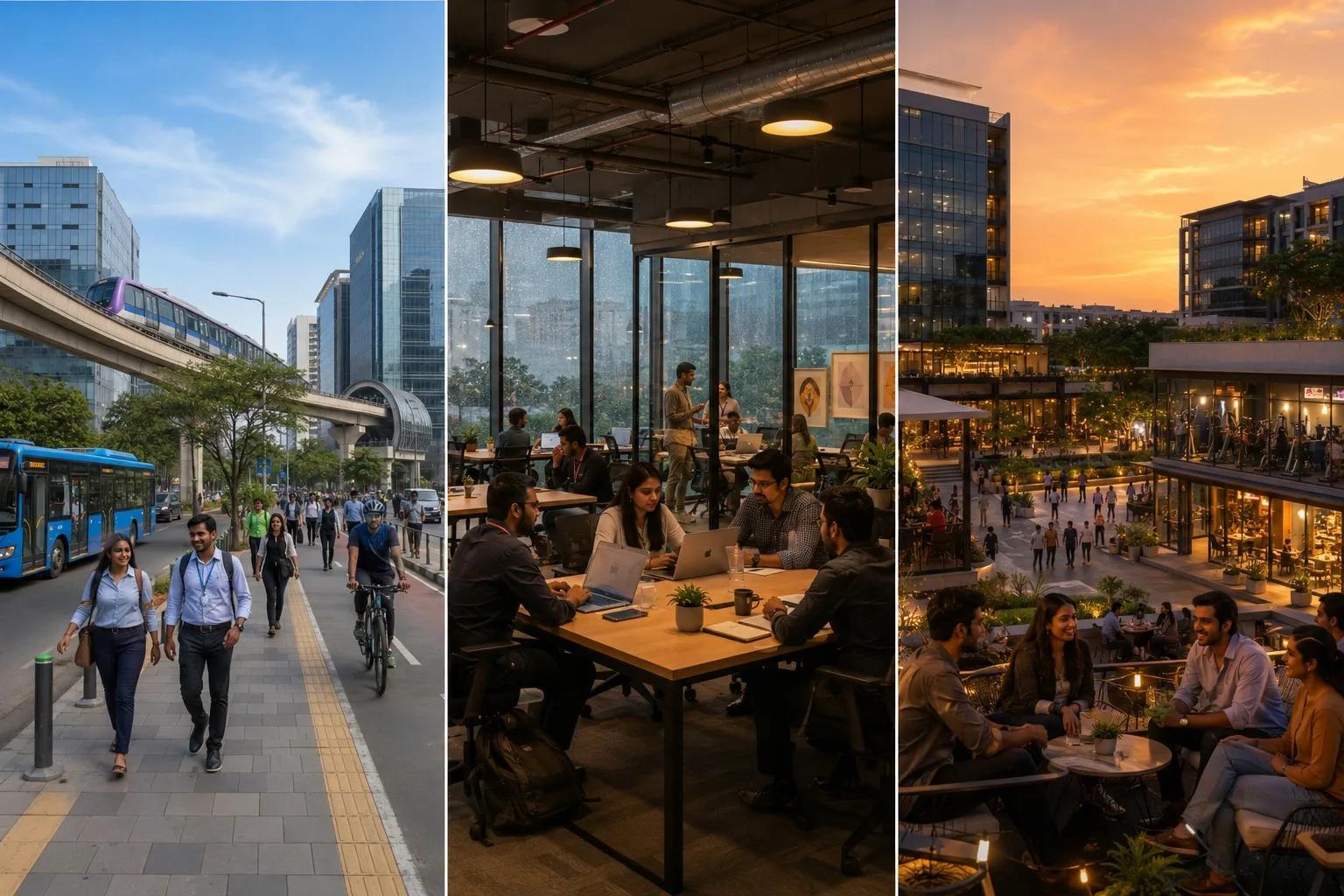
If most of your clients sit in east Pune or fly in and out regularly, Kharadi's airport adjacent location saves real hours every month, hours that add up fast for consulting and BFSI style businesses. Lock in periods differ more too. Hinjewadi coworking contracts commonly run eleven months with a thirty day exit clause, while Kharadi operators, dealing with larger enterprise clients, sometimes push for longer terms in exchange for better per seat pricing, so negotiate rather than accept the first quote offered.
Small line items sneak up on people comparing these two zones. Parking at both Hinjewadi and Kharadi usually comes as a separate monthly charge rather than being bundled into the seat price, unlike some western Pune coworking spaces that throw in car parking for free. Two wheeler parking is typically free everywhere, but ask explicitly about four wheeler slots before signing anything.
Choosing between Hinjewadi and Kharadi for a coworking base really comes down to who your team is and who your clients are. Hinjewadi still suits IT heavy operations wanting proximity to a dense talent pool, while Kharadi increasingly fits enterprise and client facing businesses that value airport access and a polished address. Factor in the coming metro line, seat pricing at your specific team size, and parking costs before locking in a space either corridor offers.


Find Detailed Answers to Frequently Asked Questions to Help You Make Smart and Confident Real Estate Decisions
Hinjewadi is known for its IT density, ideal for IT vendors and compact teams. Kharadi is emerging as a hub for fintech and multinational companies, offering proximity to the airport and a more polished business address.
Hinjewadi's setup often caters to smaller vendor teams and partner offices within its IT park ecosystem, making it a suitable choice.
Entry-level hot desks in Kharadi can be cheaper than Hinjewadi. However, enterprise-grade managed floors in Kharadi tend to be more expensive than those in Hinjewadi.
Yes, the upcoming Metro Pink Line connecting Hinjewadi to Shivajinagar is expected to significantly reduce commute times and potentially shift demand towards Hinjewadi.
Parking (especially for cars) is usually a separate monthly charge in both Hinjewadi and Kharadi, unlike some western Pune spaces. Two-wheeler parking is typically free.