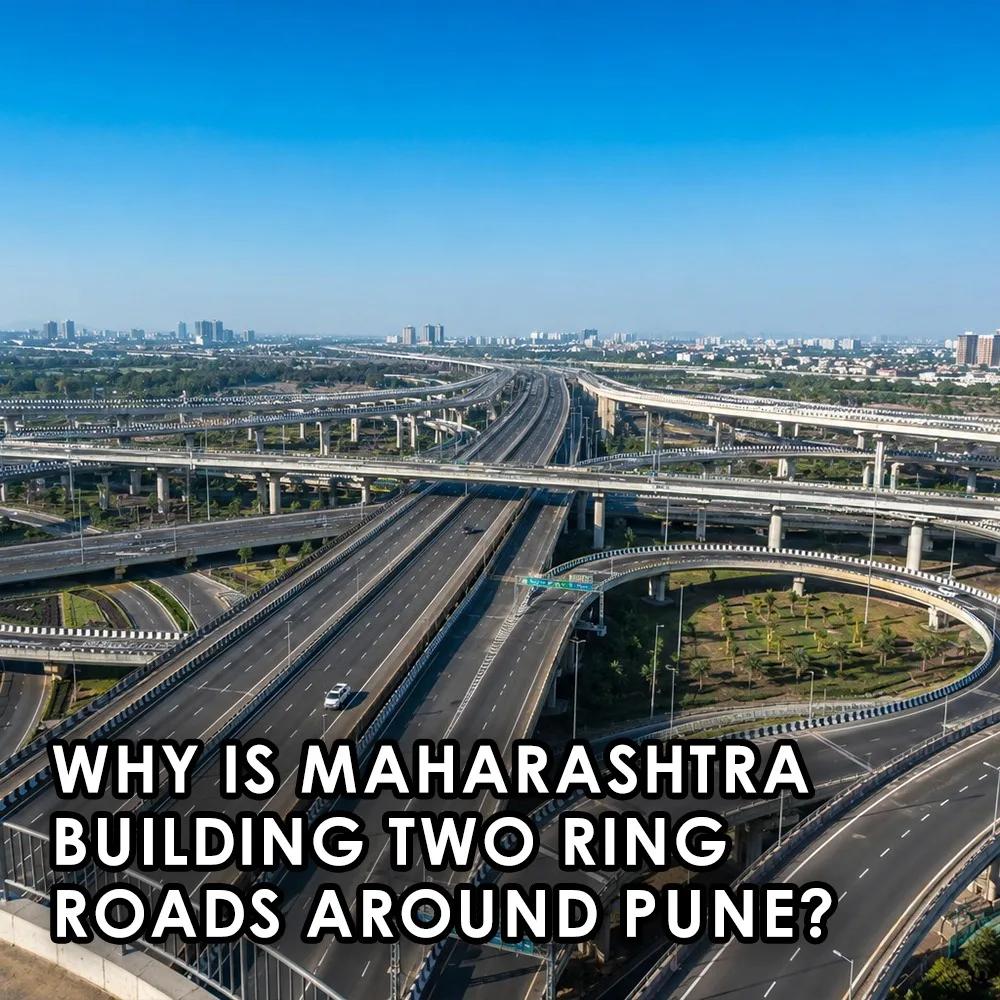
Drive anywhere near Pune's outskirts on a weekday morning and you'll understand the problem in about four minutes flat. Trucks, cars and two wheelers all funnel through the same handful of junctions because the city sits right where three major highways meet. So when the state government announced not one but two separate ring roads circling the city, plenty of people assumed it was a typo. It wasn't.
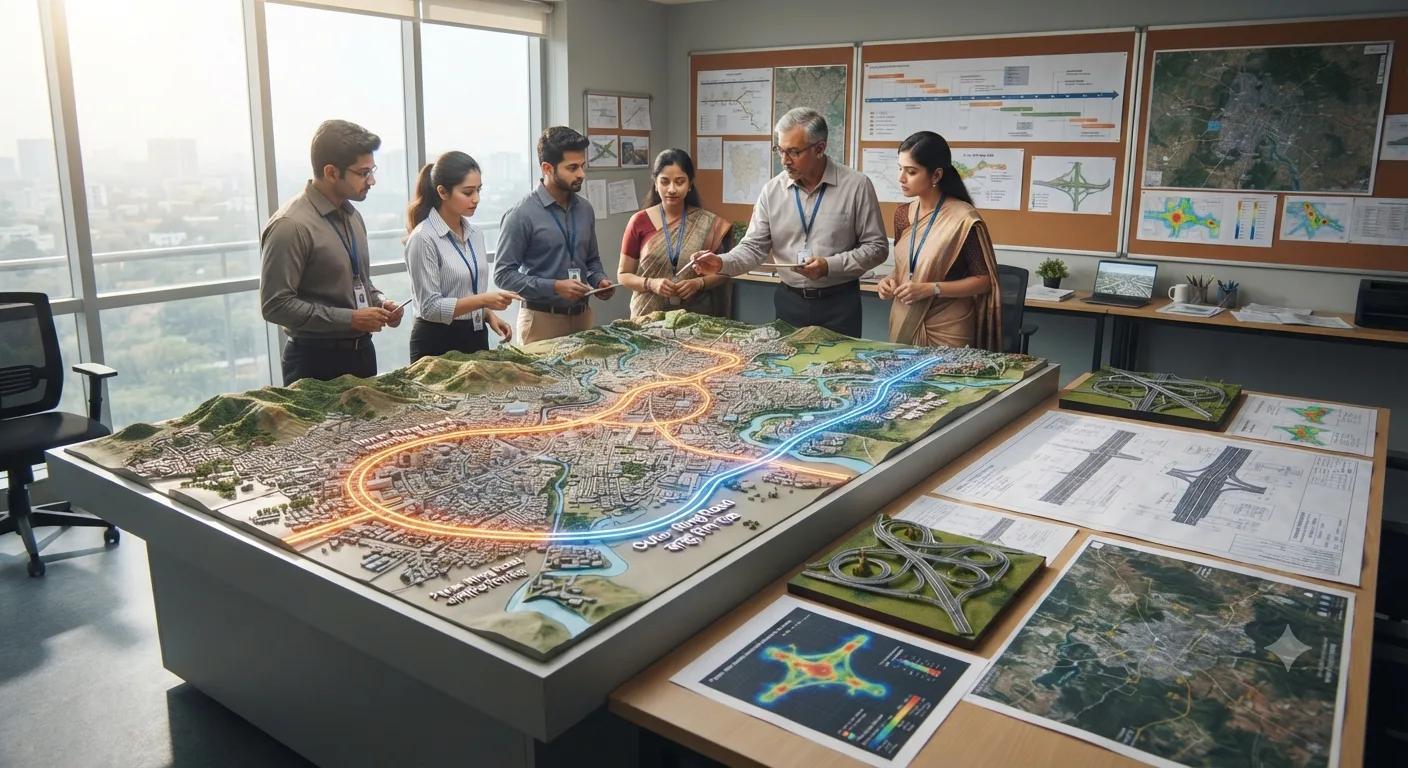
Maharashtra's decision to build two ring roads around Pune, the MSRDC outer loop and the PMRDA inner loop, reflects two distinct traffic problems rather than one oversized project. The outer road diverts national highway traffic away from the city entirely, while the inner road connects the region's own growth corridors like Hinjewadi and Chakan. Together they're reshaping Pune's real estate map, even as delays and land disputes continue testing patience along the way.
Pune's location at the meeting point of NH four, NH fifty and NH nine means outbound traffic from Mumbai, Solapur, Nashik and Ahilyanagar all passes through or near the city core, whether that traffic actually needs to enter Pune or not. Vehicle registrations in the district have climbed into the hundreds of thousands in recent years, and every one of those additions makes the existing road network groan a little louder.
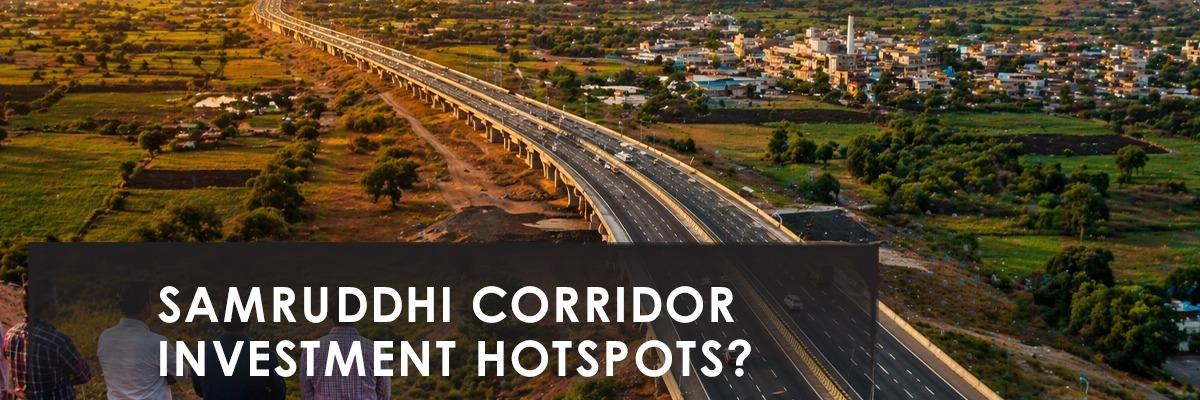
The first project, built by the Maharashtra State Road Development Corporation, is what most people mean when they say Pune Ring Road. It stretches somewhere between 136 and 173 kilometres depending on which alignment section you're counting, cutting through roughly 83 villages across talukas like Maval, Khed, Purandar and Bhor. Construction formally kicked off in May 2025, with land acquisition on the western stretch nearly wrapped up. This road is meant purely to keep highway traffic from ever needing to touch Pune's inner streets at all.
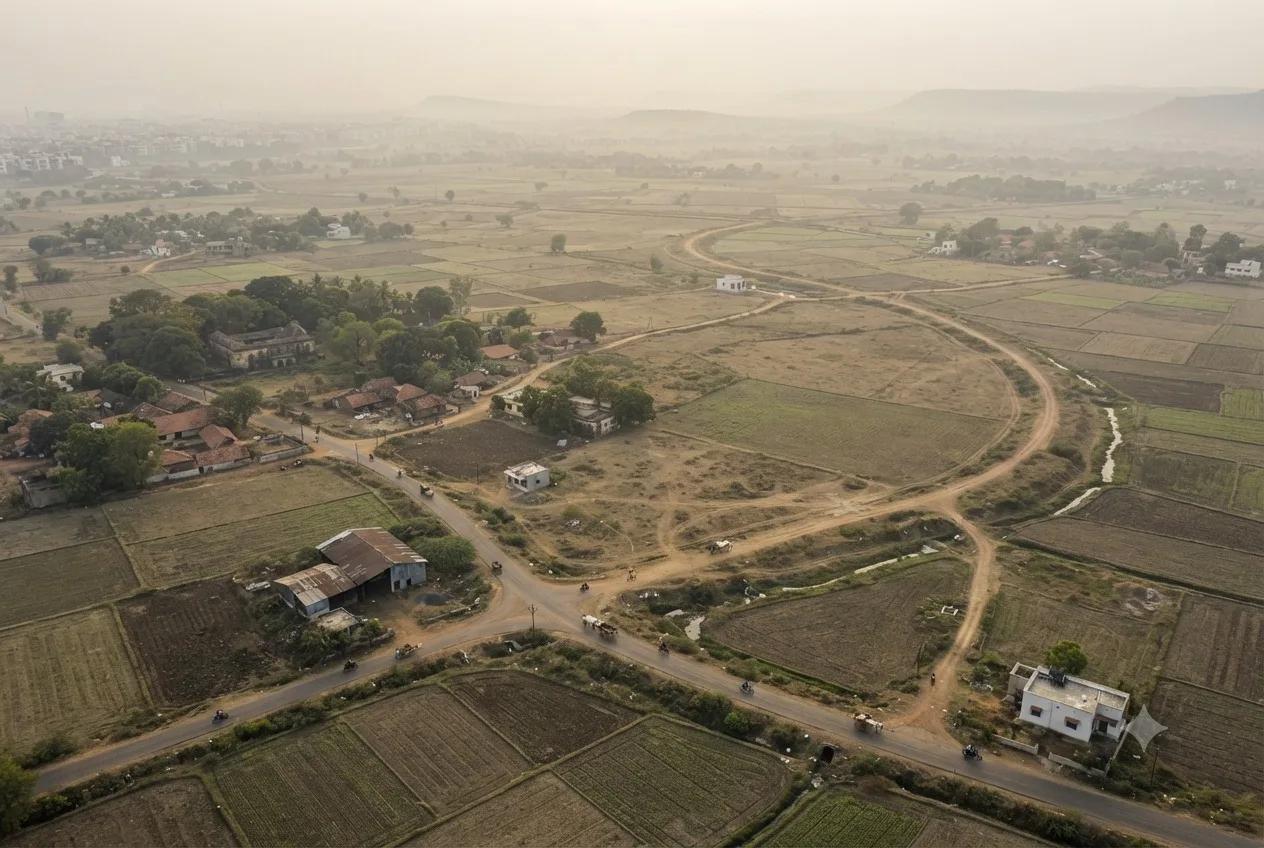
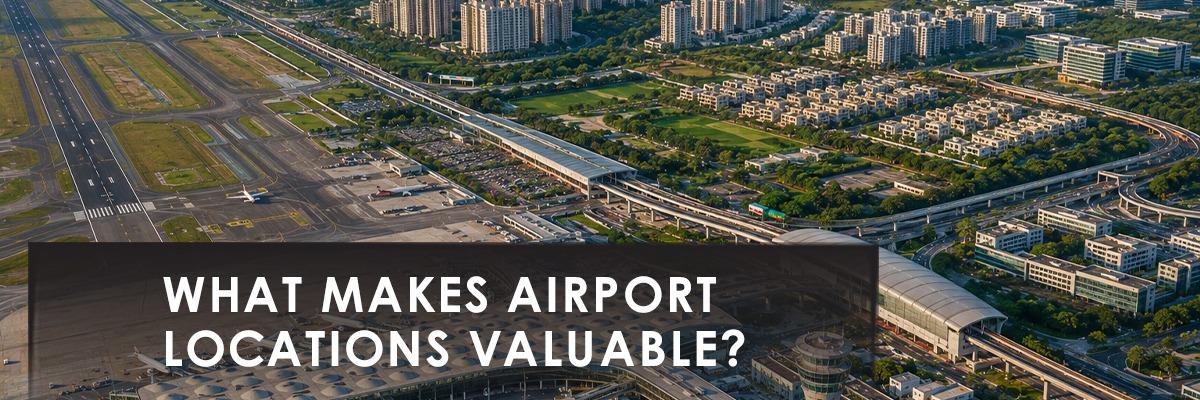
The second one belongs to the Pune Metropolitan Region Development Authority, and it sits, quite literally, inside the outer loop. At around 83 kilometres and passing through 44 villages, its job isn't to divert national highway traffic but to stitch together the region's own booming pockets, Lohegaon airport, Hinjewadi's IT corridor and the Chakan manufacturing belt, into one connected loop. That's a fundamentally different mandate from the outer road, even though both get lumped together in casual conversation.
Here's the part that actually makes sense once you sit with it. A single ring road built purely to bypass highway traffic does nothing for someone commuting from Hinjewadi to Chakan for work every day. The inner road exists specifically to serve that intra city movement, while the outer road handles the pass through traffic that has nothing to do with Pune internally. Planning two rings instead of one was less about ambition and more about admitting one road simply can't do two very different jobs well.
Every interchange along either alignment is already showing up in broker pitches and township announcements. Villages that were purely agricultural five years ago are suddenly being marketed for warehousing, integrated townships and mid segment housing. Whether all of that pans out on the promised timeline is a different question entirely, but the land value shift near proposed junctions is already visible on the ground.
One detail that doesn't get enough attention, the inner ring road's design has set aside a five metre wide strip specifically for a future metro line. That's a fairly rare instance of road planning and transit planning happening on the same drawing board instead of as an afterthought a decade later.
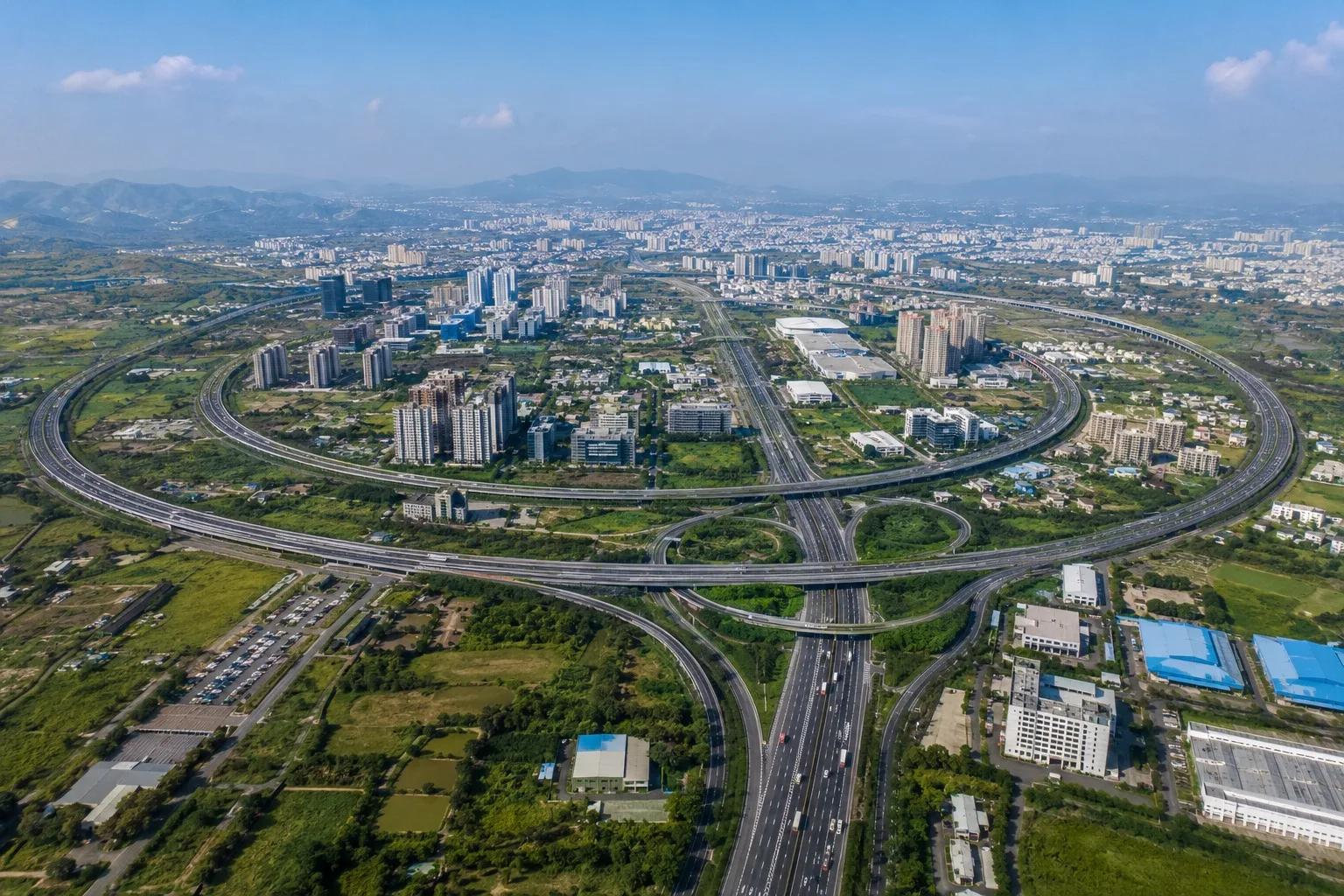
Both projects have already missed at least one earlier deadline, and residents in the affected villages have genuine grievances around compensation and pace. Original targets pointed toward late 2026, but current estimates now stretch toward 2027 and beyond for full completion, with the entire dual ring network expected to be operational sometime around 2030.
If you're eyeing a plot or flat near either alignment, verify which ring road it's actually near, since the outer and inner projects have completely different timelines, budgets and purposes. A property marketed vaguely as ring road facing could mean almost anything right now, and that vagueness is exactly where a lot of overpriced land gets sold.


Find Detailed Answers to Frequently Asked Questions to Help You Make Smart and Confident Real Estate Decisions
One outer ring road diverts national highway traffic, while a separate inner ring road connects Pune's growing urban areas, IT hubs, and manufacturing zones, addressing two distinct traffic needs.
The outer ring road, built by MSRDC, is designed to bypass national highway traffic, preventing it from entering Pune's city core and easing congestion.
The inner ring road, managed by PMRDA, connects key development pockets like Lohegaon airport, Hinjewadi IT corridor, and Chakan manufacturing belt, facilitating intra-regional movement.
The ring roads are expected to significantly boost land values and drive development in surrounding areas, transforming agricultural land into hubs for housing, warehousing, and townships.
While initial targets were for late 2026, current estimates suggest full completion of the dual ring network around 2030, with individual sections operational sooner.
Homebuyers should verify which ring road a property is near, as the inner and outer projects have different timelines, purposes, and impacts.