
India's First Hydrogen Train Just Quietly Changed the Conversation Around Green Travel
Summary
India recently launched its first hydrogen train from Jind, pioneering green travel on non-electrified routes. Utilizing fuel cell technology that emits only water vapor, this pilot aims to replace diesel and signals a clear direction for cleaner Indian Railways, despite existing cost and infrastructure challenges.

Introduction
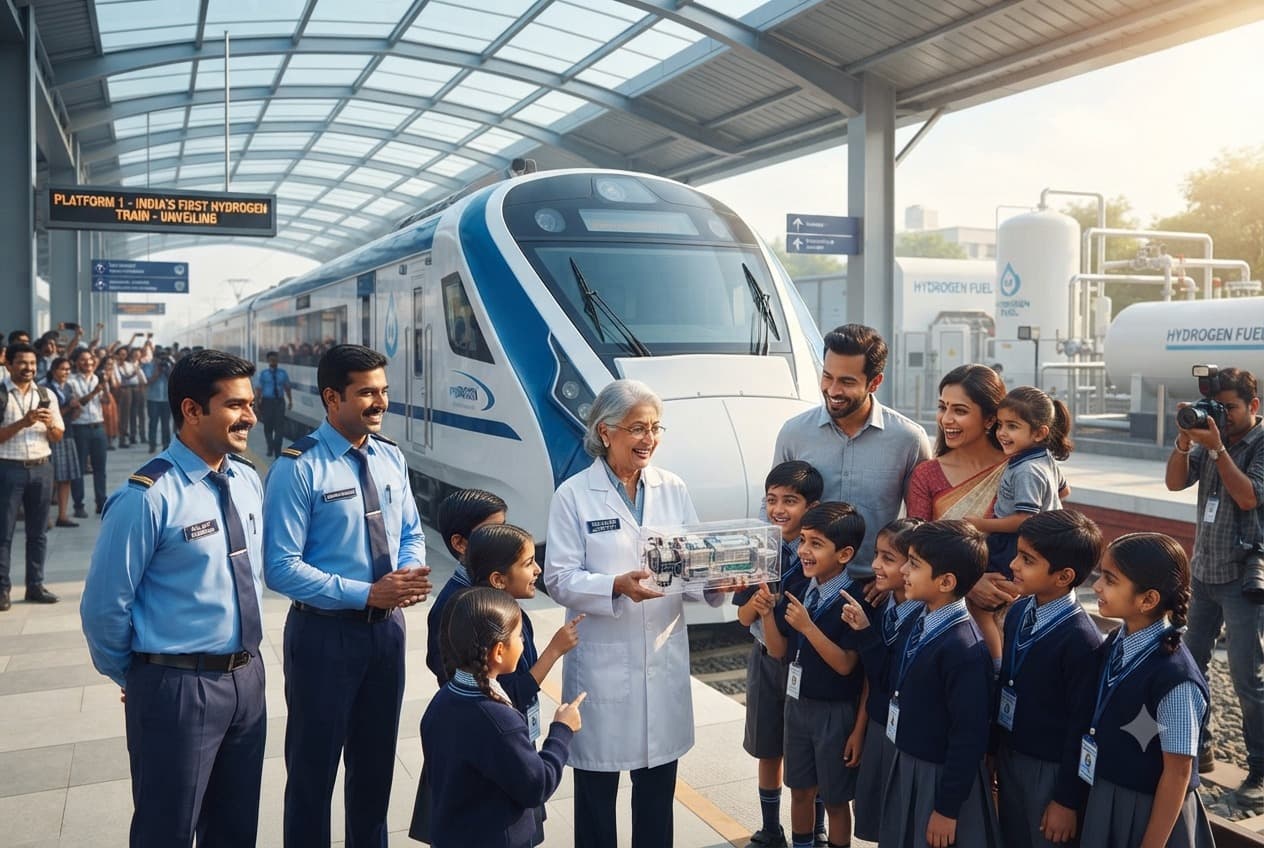
On the seventeenth of July this year, Prime Minister Narendra Modi flagged off something Indian Railways had been working toward for a while, the country's first hydrogen powered passenger train. It rolled out from Jind in Haryana, and honestly, most people barely noticed amid the usual news cycle. But this one deserves a second look, because it signals where an entire transport sector might be heading.
What Actually Happened on July 17
The train began regular passenger service just two days later, on the nineteenth of July, running six days a week with no service on Fridays. It's part of an initiative Indian Railways has named Hydrogen for Heritage, aimed squarely at routes where full electrification either doesn't make financial sense or hasn't reached yet. Ten coaches, one very different kind of engine underneath.
The Route That Got Chosen First
Jind to Sonipat isn't a route most travellers would recognise by name. It stretches roughly 89 kilometres under Northern Railway's jurisdiction, and that choice wasn't random. Non electrified stretches like this one are exactly where hydrogen technology makes the most sense, since laying fresh overhead wiring across such corridors would cost significantly more than adapting existing diesel infrastructure.
How the Technology Works Under the Hood
At the heart of the train sits a proton exchange membrane fuel cell, essentially a system that combines hydrogen and oxygen across a polymer membrane to generate electricity on the move. Lithium ferro phosphate batteries support the setup, storing surplus energy for when the train needs an extra push. Water vapour is the only thing that comes out the other end, no soot, no diesel fumes trailing behind.
Speed, Coaches and the Everyday Experience
Reports on the exact top speed vary a little, somewhere between 75 and 110 kilometres per hour depending on the source, which isn't unusual this early into a pilot rollout. What matters more for passengers is that the coaches come fitted with automatic doors, air conditioning and a public address system, nothing that feels like a stripped down experiment. It rides like a regular train. It just doesn't burn diesel to get you there.
Why Hydrogen Over Battery or Diesel
Here's a number worth sitting with. Hydrogen carries roughly 120 megajoules of energy per kilogram, compared to diesel's 43. That density advantage is exactly why railways worldwide keep circling back to hydrogen for longer, heavier routes where batteries alone would add too much dead weight. Diesel still wins on upfront cost today, but that gap is exactly what pilot projects like this one are trying to close.
The Infrastructure Nobody Sees
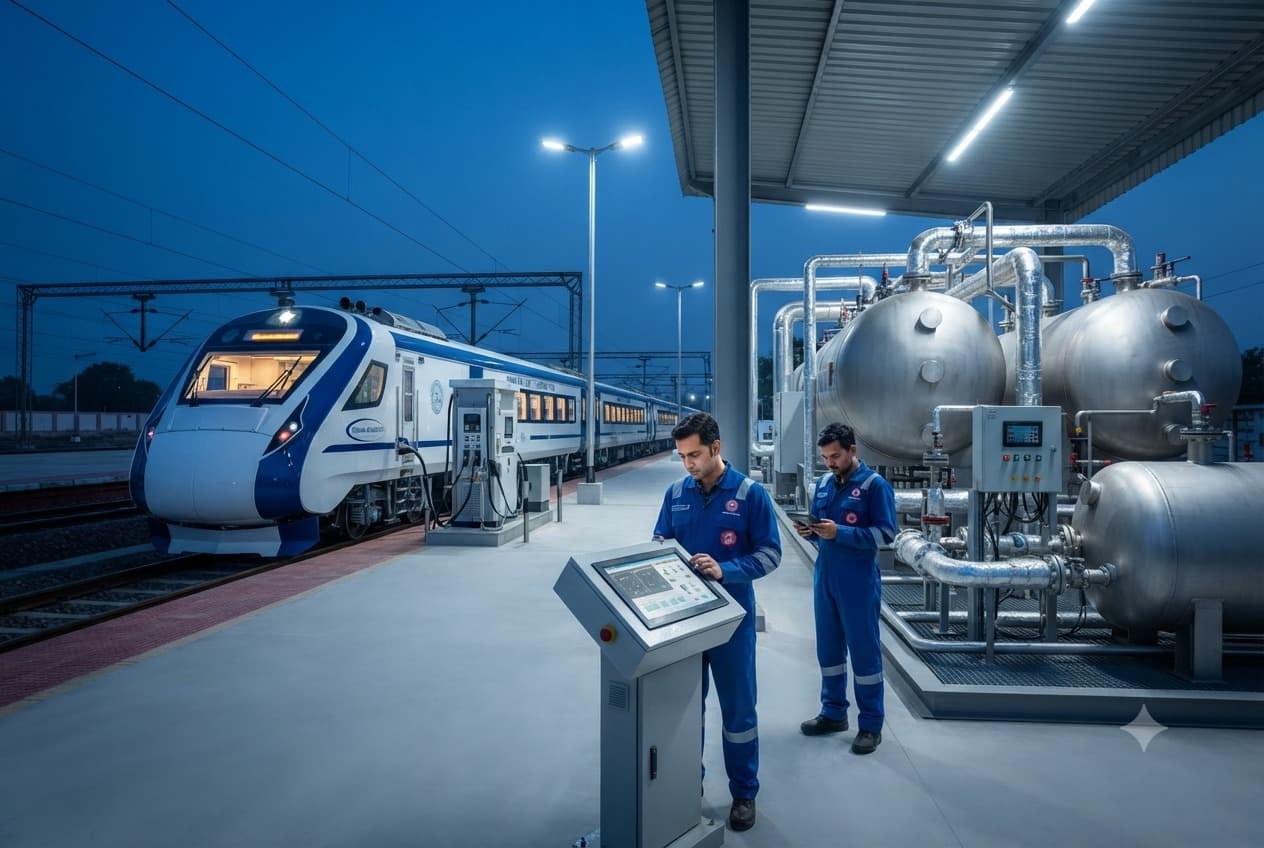
None of this works without a dedicated hydrogen production and fuelling plant, and Jind now has one, backed by a stable eleven kilovolt power connection to keep operations uninterrupted. It's the unglamorous part of the story, nobody photographs a fuelling station, but without it the train simply doesn't move. Building this kind of backend is arguably harder than building the train itself.
The Real Challenges Still on the Table
Green hydrogen, the cleanest version of this fuel, remains expensive to produce at scale right now. Storage demands specialised safety systems given how reactive hydrogen can be, and fuel cells themselves cost considerably more than a standard diesel engine. Whether this pilot scales into a national network depends almost entirely on how quickly those costs come down over the next few years.
What This Means Beyond One Train
If the Jind-Sonipat corridor proves itself over the coming months, expect Indian Railways to expand hydrogen service across other heritage and non electrified routes. It fits neatly into the broader push toward net zero rail operations that's been building for a couple of years now. One pilot rarely changes an entire industry overnight, but it does tell you which direction the industry has decided to bet on.
Summary
India's first hydrogen train launched from Jind in July 2026 marks a genuine shift in how the country approaches cleaner rail transport. Running on the Jind-Sonipat route with a fuel cell system producing only water vapour as waste, the pilot tests whether hydrogen can realistically replace diesel on routes that remain unelectrified. Cost and infrastructure challenges remain real, but the direction Indian Railways has chosen is now unmistakably clear.
Video will be embedded from: https://www.youtube.com/watch?v=rjenj315LGo