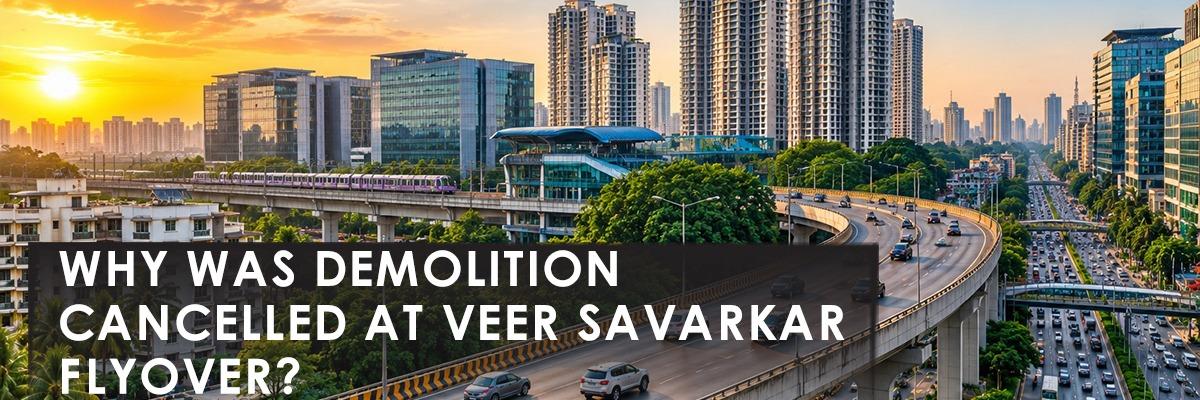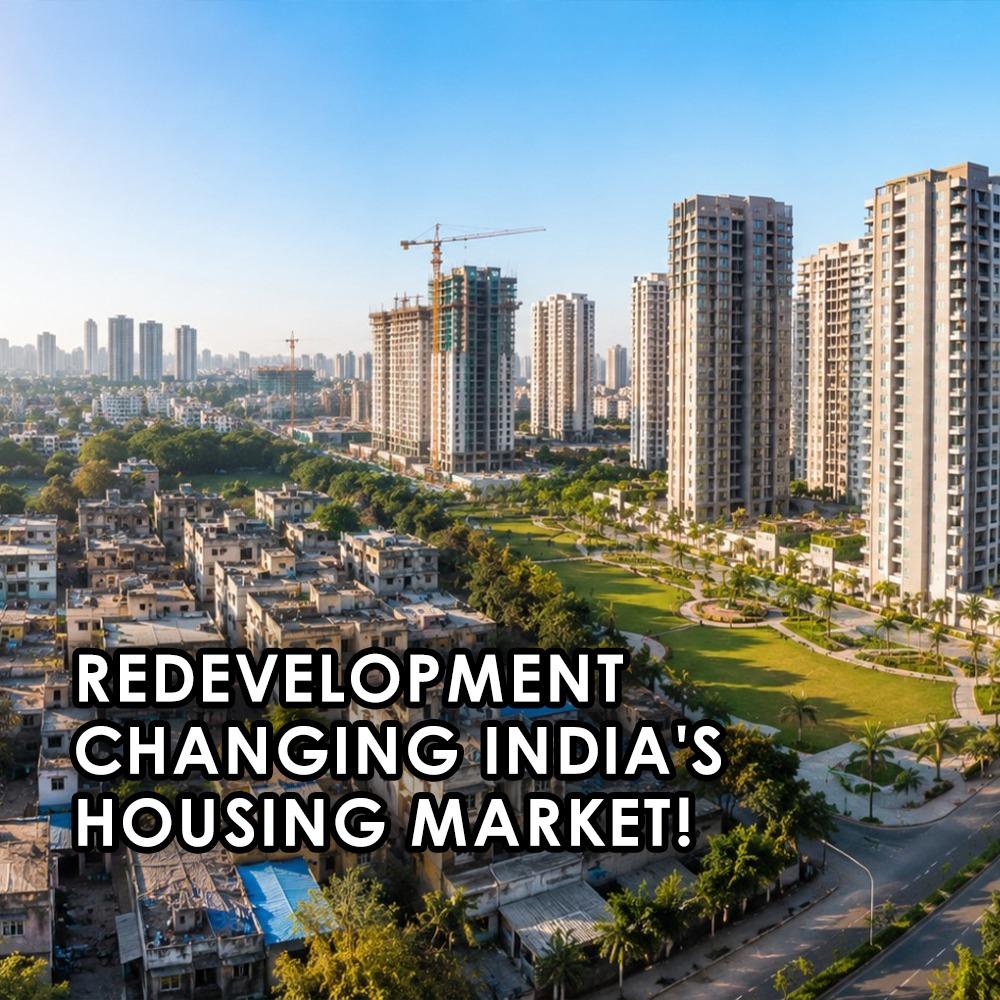
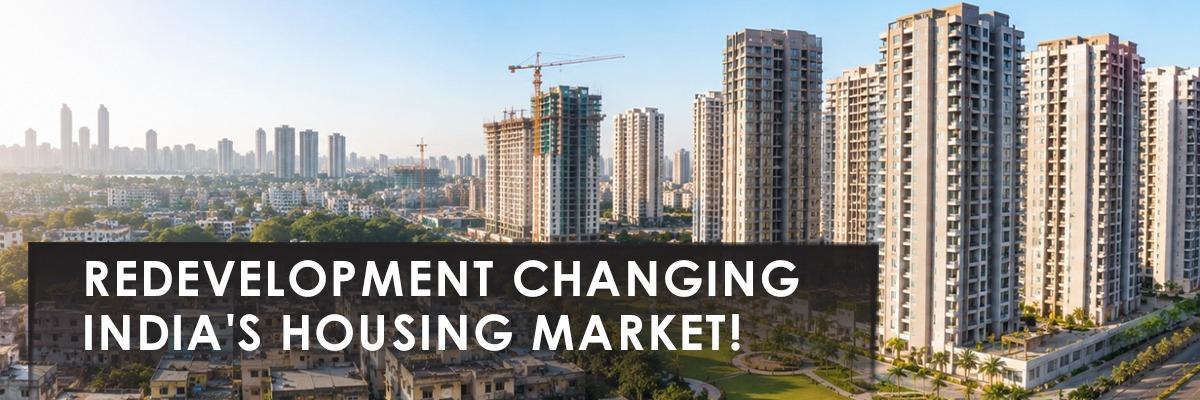
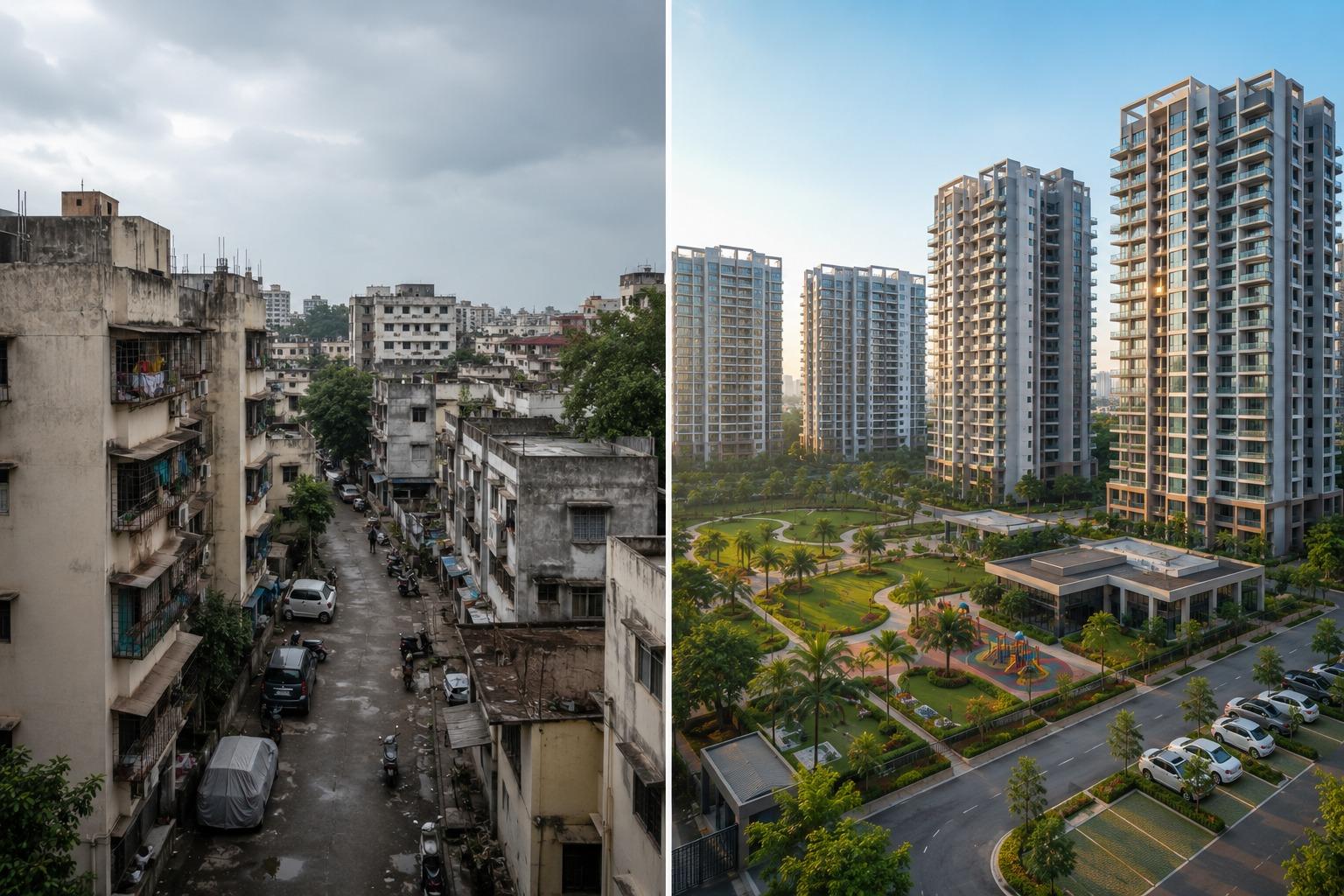
Walk through almost any older Mumbai suburb and you will spot the same thing. A tired, forty year old building standing next to a gleaming new tower, both occupying the same size of plot. That contrast is not an accident. It is the story of redevelopment, quietly becoming one of the most important sources of new housing supply in Indian cities today.
Mumbai has almost no vacant land left to build on, which means every fresh flat has to come from somewhere. Increasingly, that somewhere is an ageing building being torn down and rebuilt taller. A 2017 civic audit found roughly 160,000 buildings in the city are already over three decades old. Redevelopment of housing societies has quietly become the city's most realistic answer to its housing shortage.
The numbers are larger than most homebuyers realise. Over a thousand housing societies across Mumbai have signed developer agreements for redevelopment, unlocking hundreds of acres of land that would otherwise sit locked inside old, underused structures. Industry estimates suggest this pipeline could deliver close to sixty thousand new homes by the early 2030s. Western suburbs such as Borivali, Andheri, and Bandra lead this wave.
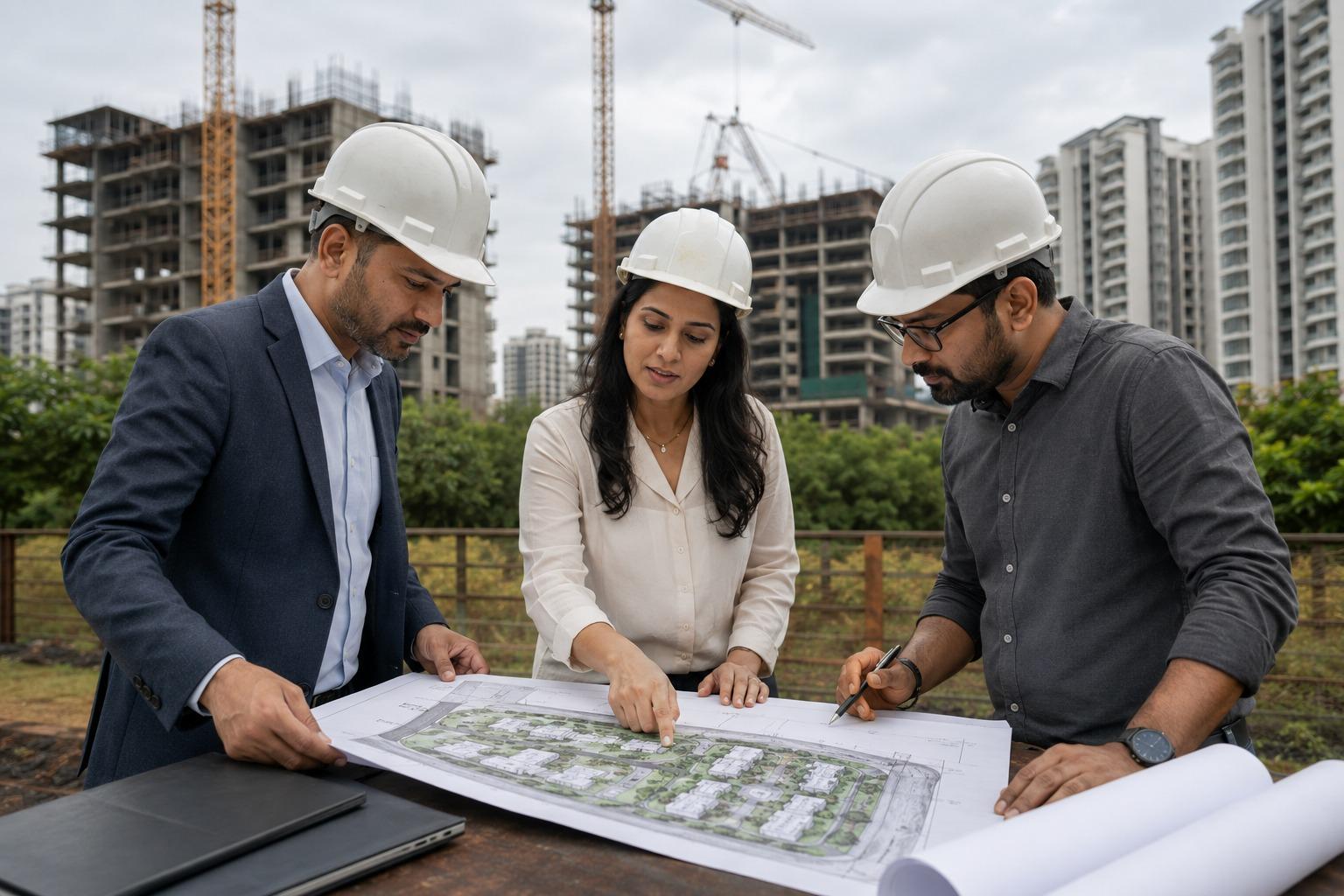
Redevelopment usually becomes a serious conversation once a building crosses thirty years of age or gets flagged as unsafe. Leaking pipes, crumbling plaster, and a missing lift are the everyday signs. A structural audit confirms whether repair is still viable or rebuilding makes more sense. Once a society decides to move ahead, member consent is the next hurdle, and recent reforms have eased that threshold to fifty one percent, down from the far higher bar of the past.
Much of this momentum traces back to specific policy changes. The Development Control and Promotion Regulations of 2034 gave societies access to extra fungible and incentive floor space, letting builders offer existing residents fifteen to thirty percent more carpet area at no extra cost. A 2019 government resolution opened the door to self-redevelopment, where the society manages the project directly instead of handing it to a private developer.
Self-redevelopment flips the usual equation. Instead of a builder controlling timelines and profits, the society hires its own professionals, borrows from cooperative banks, and keeps a larger share of the extra space generated. It demands strong committee leadership and patience, but it removes a layer of friction that has stalled countless builder-led projects.
Redevelopment does more than upgrade individual buildings. Every project that turns a low rise structure into a taller tower adds new housing units on land that was never going to be freed up otherwise. In a supply constrained city like Mumbai, that arithmetic matters, since redevelopment now contributes a meaningful share of rental and resale inventory entering the market each year.
None of this works without protection for existing members. Rules now mandate RERA registration before construction begins, video recorded society meetings, and a bank guarantee worth a fifth of the project cost from the developer. Transit rent for displaced families and clear penalty clauses for delays are also becoming standard, reducing the horror stories that once defined this space.
For buyers, a redeveloped project often means a modern, RERA compliant tower replacing a dated structure, sometimes in a locality with little fresh supply otherwise. For investors, tracking which societies are entering redevelopment can reveal early opportunities before prices catch up. Either way, understanding this quiet transformation is becoming essential to reading the Indian real estate market.
The role of redevelopment in housing supply has grown from a niche urban renewal idea into a genuine driver of new homes in space starved cities like Mumbai. Backed by policy reforms, easier consent norms, and rising self-redevelopment adoption, thousands of ageing societies are being rebuilt into taller, safer towers. For homebuyers and investors tracking Indian real estate, redevelopment now deserves attention as seriously as any new project launch, because it is reshaping how and where future housing supply actually gets created.


Find Detailed Answers to Frequently Asked Questions to Help You Make Smart and Confident Real Estate Decisions
Housing redevelopment involves tearing down old, aging buildings and rebuilding them as taller, modern structures on the same plot. It's crucial for cities like Mumbai that lack vacant land, as it creates new housing supply where none existed before, addressing the urban housing shortage.
Redevelopment is typically considered when buildings are 30+ years old or deemed unsafe. Policy changes like the Development Control and Promotion Regulations of 2034 (providing extra FSI/incentive space) and the 2019 resolution allowing self-redevelopment have significantly boosted this trend.
In self-redevelopment, the housing society itself manages the project by hiring professionals and securing financing, rather than relying on a private developer. This approach allows the society to retain more control over timelines, profits, and extra space generated, often leading to better outcomes for residents.
To safeguard residents, rules now mandate RERA registration for projects, video-recorded society meetings, and developers must provide a bank guarantee (a fifth of project cost). Provisions for transit rent and clear penalty clauses for delays are also becoming standard.
For buyers, redeveloped projects offer modern, RERA-compliant homes in established localities. For investors, tracking societies entering redevelopment can reveal early opportunities and significant appreciation, making it a critical factor in understanding the Indian real estate market.