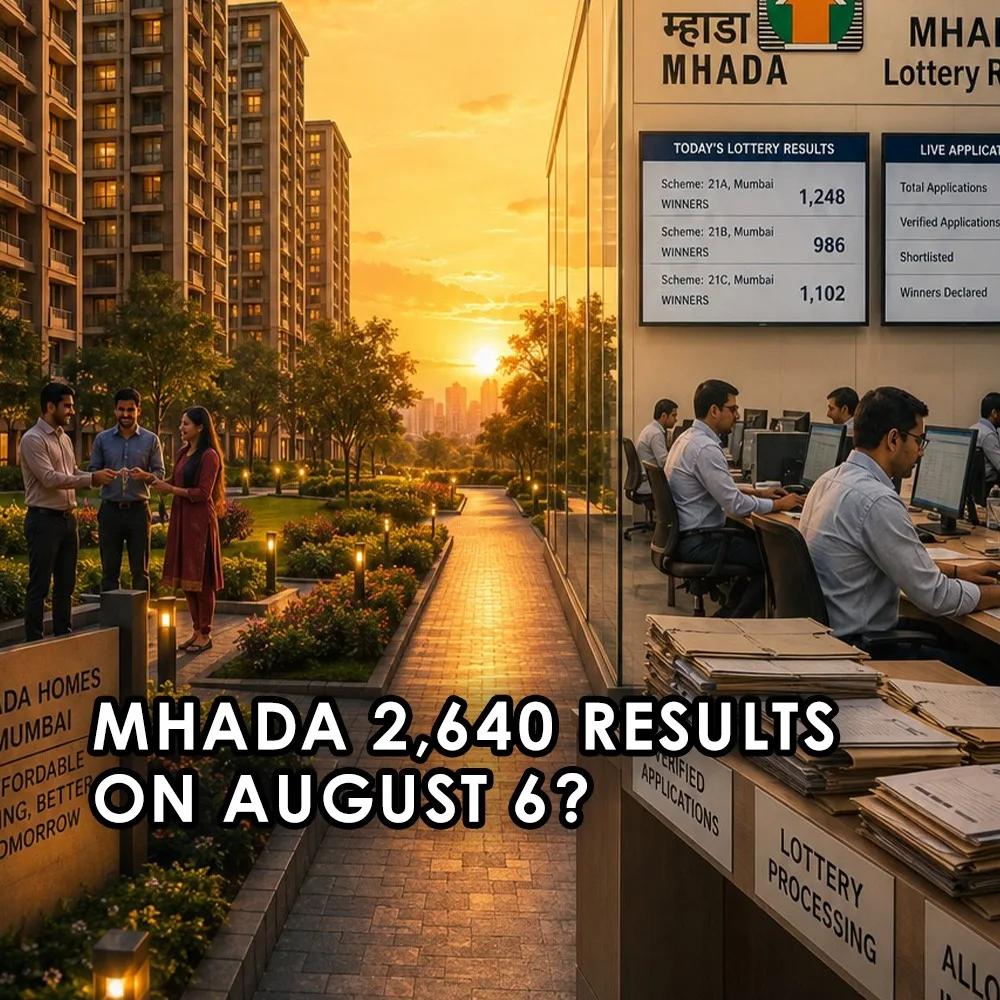
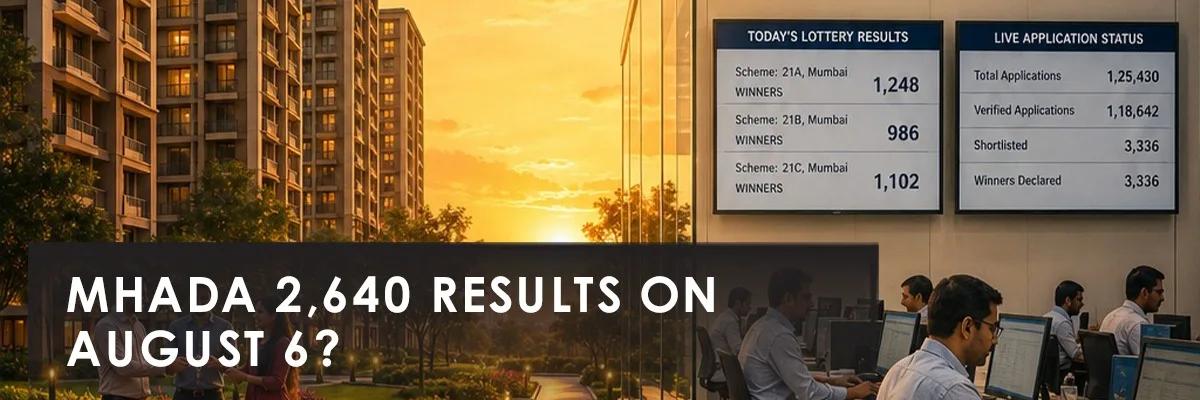
Try telling someone outside Mumbai that nearly 29 people applied for every single flat in a housing lottery, and they'll probably assume you got the math wrong. You didn't. That's exactly the kind of demand MHADA is sitting on right now, and the results land on August 6.
This lottery was originally meant to wrap up back in June, but the Model Code of Conduct tied to the Maharashtra Legislative Council elections put a pause on it. MHADA had made it clear it wouldn't announce anything until the election process fully wound down. So the wait stretched longer than most applicants expected, and honestly, longer than most applicants probably wanted.
Here's the part that really puts things in perspective, 75,366 applications came in for just 2,640 homes. That works out to roughly 28 or 29 hopeful applicants competing for every single unit. MHADA lottery draws have always pulled a crowd, but a ratio this steep says something specific about how tight Mumbai's affordable housing supply has become.
This isn't one uniform batch of flats. The inventory blends freshly built homes, units handed back to MHADA by developers under DCR 33(5) and 33(7) redevelopment norms, and leftover stock from earlier lotteries where waiting lists simply expired without buyers. Applications opened through a public notice back in March, and the window to apply closed in late May, well before all this election related delay set in.
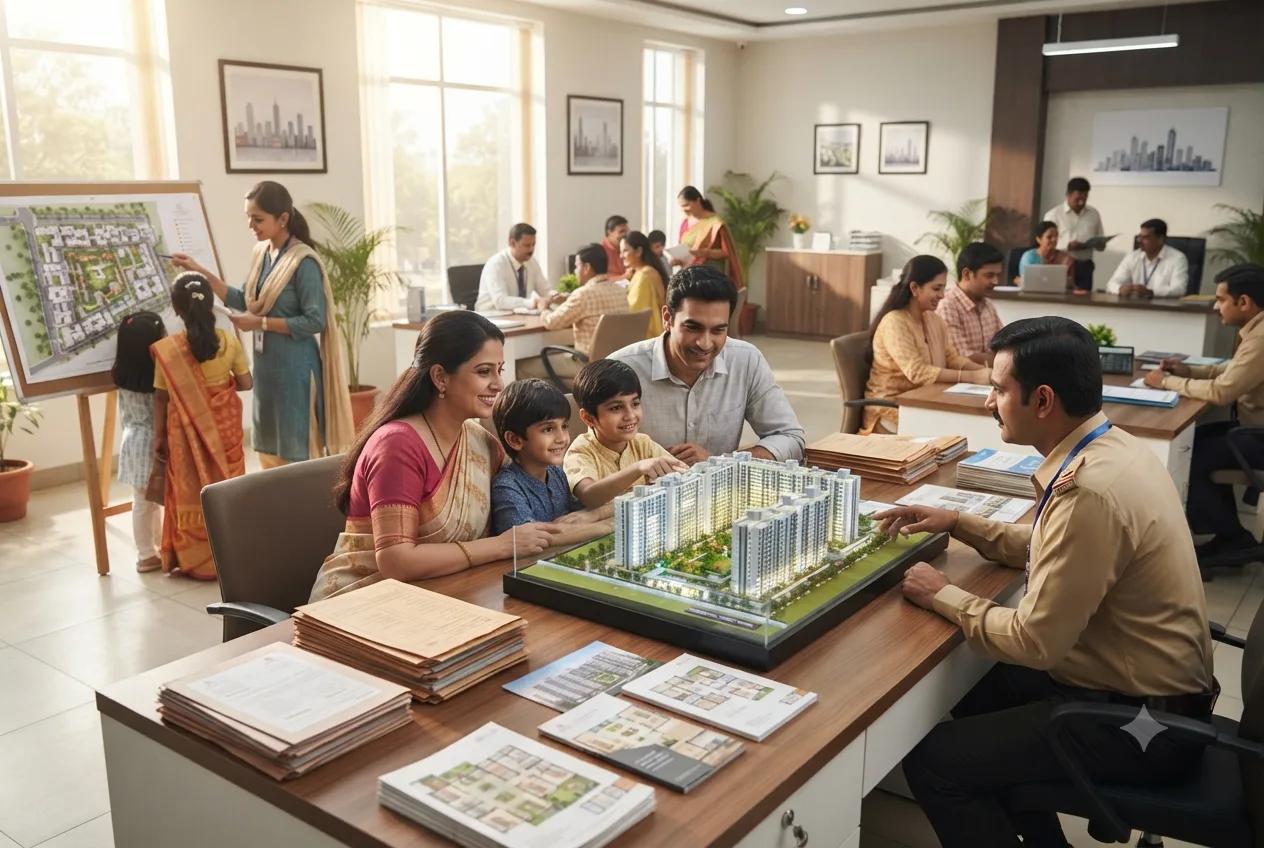
Reduced pricing on select projects clearly played a role, but it wasn't the only draw. MHADA pointed to better amenities, dedicated parking, sturdier construction quality, and locations that would otherwise be out of reach at private market rates. In a city where builders routinely stretch the word "affordable" past what most families can actually manage, a government backed option priced below market still carries real weight.
What stands out about this particular lottery is just how broad the price band runs. Units span from roughly ₹29 lakh on the lower end all the way up to flats crossing ₹6 crore, with the priciest unit sitting in Tardeo. That kind of spread means the scheme isn't only serving lower income applicants, it's pulling in buyers who could easily afford private developer projects but chose MHADA anyway.
The scheme spreads across 97 project locations, touching both far flung suburban pockets and prime central addresses. That geographic spread matters more than people realise, because it means someone hunting for a compact home in a peripheral suburb and someone chasing a premium central address are technically part of the same draw, just very different tiers within it.
Getting picked in the draw isn't the finish line, it's the start of a documentation process. Winners typically need to submit Aadhaar, PAN, domicile proof, and income verification, after which the authority runs its own scrutiny before issuing an actual allotment letter. That process has historically taken several weeks, so patience matters even after your name shows up on the results.
Mumbai's private real estate market has priced out a huge chunk of middle income earners over the last few years, and schemes like this remain one of the few structured routes back into homeownership. A Mumbai housing lottery with this level of participation isn't just a bureaucratic exercise, it's a fairly accurate temperature check on how desperate the demand for reasonably priced homes has become in this city.
MHADA's August 6 lottery for 2,640 Mumbai flats drew an overwhelming 75,366 applications, pushing competition to nearly 29 applicants per home. Spanning 97 locations and price points from roughly ₹29 lakh to over ₹6 crore, the scheme reflects both the scale of Mumbai's housing crunch and the enduring appeal of government backed affordable housing. For applicants and observers of Mumbai real estate alike, this MHADA lottery result is worth watching closely.


Find Detailed Answers to Frequently Asked Questions to Help You Make Smart and Confident Real Estate Decisions
The blog details Mumbai's largest MHADA housing lottery of the year, where 75,366 applicants competed for 2,640 available flats. The results were announced on August 6th.
The lottery, initially planned for June, was postponed due to the Model Code of Conduct for the Maharashtra Legislative Council elections, with MHADA waiting until the election process concluded.
There were approximately 28 to 29 applicants for every single flat, with 75,366 applications received for 2,640 homes, indicating an extremely high demand for affordable housing in Mumbai.
The inventory comprised newly constructed homes, units returned to MHADA by developers, and leftover stock from previous lotteries, spread across 97 different locations in Mumbai.
Factors included reduced pricing, better amenities, dedicated parking, sturdy construction, and desirable locations, offering a more affordable and reliable option compared to Mumbai's private real estate market.
The flats ranged significantly in price, from approximately ₹29 lakh to over ₹6 crore, catering to a wide spectrum of income levels from lower-income to those who could otherwise afford private developer projects.
Winning is just the first step. Winners must submit documentation like Aadhaar, PAN, domicile, and income proof for verification, after which MHADA conducts scrutiny before issuing an allotment letter, a process that can take several weeks.