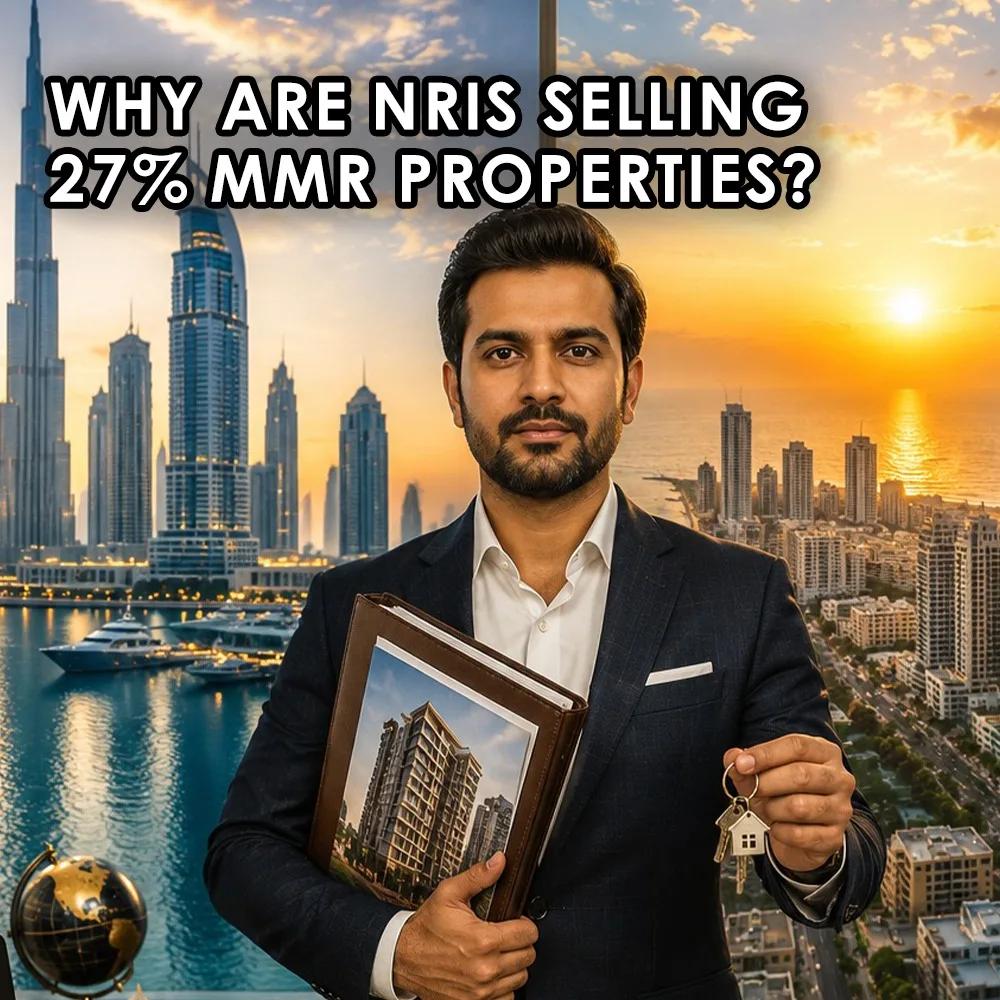
There's a quiet shift happening in Indian real estate that most buyers haven't fully clocked yet. NRIs, long treated as steady long term holders of Indian property, are increasingly choosing to sell rather than sit tight, and Maharashtra sits right at the centre of that shift.
A recent industry report tracking cross border property behaviour found that Maharashtra accounts for close to 27 percent of all NRI resale listings nationally, comfortably ahead of Delhi-NCR, which trails at roughly 23 percent. Kerala, Gujarat, and Karnataka round out the list, but none come close to matching Maharashtra's share, and the Mumbai Metropolitan Region is doing most of the heavy lifting within that state figure.
This isn't panic selling, and that distinction matters. Nearly half of NRI property owners surveyed said they're looking to exit immediately, with another meaningful chunk planning to sell within six months, but the reasoning behind it points toward portfolio strategy rather than distress. Rising financial commitments abroad, a desire to diversify holdings, and genuinely strong current property valuations are pushing overseas Indians to treat these homes less like emotional anchors and more like assets on a spreadsheet.
Look closely at when these properties were originally bought and a clear pattern emerges. More than 60 percent of the homes entering the resale pipeline were purchased between 2010 and 2019, right in the middle of India's strongest housing growth cycle, while barely 5 to 6 percent were bought after 2020. That gap tells its own story, NRIs are largely monetising older investments that have already delivered strong appreciation, rather than flipping recent purchases.

Close to 89 percent of these NRI property exits are residential, and apartments alone make up the bulk of that figure. It fits the broader pattern of NRI buying over the last two decades, since apartments were always the easier, lower maintenance option for someone managing an asset from thousands of kilometres away.
Here's the part that should worry Indian real estate the most. More than half of NRIs selling their India property intend to move the proceeds abroad rather than reinvest domestically. That's a meaningful behavioural shift from the older pattern of NRIs recycling sale proceeds into fresh Indian property, and it hints at a broader rebalancing toward global diversification rather than continued India concentration.
Mumbai's property market has genuinely outperformed several peer cities in recent price cycles, which paradoxically makes it an attractive place to sell right now rather than hold further. Strong current valuations, mature infrastructure, and continued buyer demand from domestic upgraders mean NRIs offloading MMR assets are likely to find willing buyers without dragging prices down, something sellers in slower markets like parts of Kerala apparently can't count on as easily.

Not every sale is moving smoothly though. Plenty of NRI sellers are still anchoring their asking price to either their original purchase cost or expected infrastructure driven appreciation rather than what buyers are actually willing to pay today, and that gap is stretching out selling timelines in several markets.
For resident Indian buyers, this wave could translate into a genuinely useful supply boost in MMR's resale segment over the coming months. Properties bought a decade ago, often in well established, now mature localities, are entering the market at a moment when fresh launches keep skewing toward the premium end. That combination might just make resale hunting in Mumbai a more rewarding exercise than it has been in years.
NRIs are increasingly treating their India property holdings as financial assets rather than emotional investments, and Maharashtra, driven heavily by MMR, has emerged as the epicentre of this resale wave with roughly 27 percent of national listings. Properties bought during the 2010 to 2019 boom years are leading this exit, with many sellers planning to move proceeds abroad instead of reinvesting locally. For domestic buyers, this shift could open up fresh resale opportunities across Mumbai's established neighbourhoods in the months ahead.


Find Detailed Answers to Frequently Asked Questions to Help You Make Smart and Confident Real Estate Decisions
Maharashtra accounts for nearly 27% of all NRI resale listings nationally, significantly ahead of other states like Delhi-NCR, Kerala, Gujarat, and Karnataka. The Mumbai Metropolitan Region (MMR) contributes the most within Maharashtra.
NRIs are selling due to rising financial commitments abroad, a desire to diversify their investment portfolios, and strong current property valuations in India. This is seen as a strategic move to monetize assets rather than panic selling.
The majority of properties being sold are residential, with apartments making up nearly 89% of these exits. Most were purchased between 2010 and 2019, indicating NRIs are cashing out on older investments that have already appreciated significantly.
Over half of NRIs selling their Indian property intend to move the sale proceeds abroad, rather than reinvesting locally. This indicates a shift towards global diversification over continued concentration in India.
For domestic Indian buyers, this trend could lead to an increased supply of resale properties, particularly in well-established areas of Mumbai. This could make resale hunting more appealing, especially as new launches often cater to the premium segment.