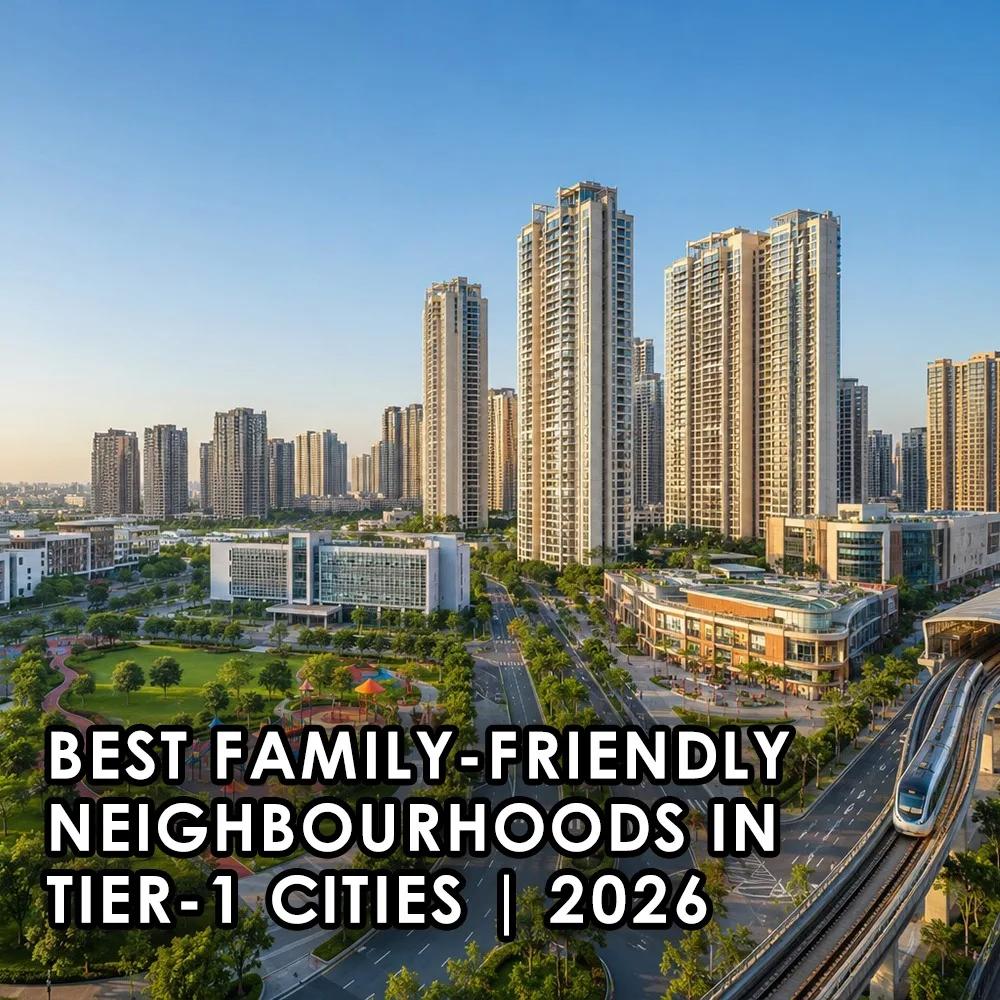
Ask any parent house hunting in a big Indian city what actually matters, and pub proximity quickly drops off the list. Suddenly it's about school distance, hospital access and whether the street feels safe enough for a child to cycle on. That shift changes everything about how you shortlist a neighbourhood.
It comes down to a fairly consistent checklist across cities, quality schools within a reasonable radius, hospitals close enough to matter in an emergency, decent green space, and a community that actually feels lived in rather than transient. Traffic patterns matter too, since ten kilometres in peak hour Bengaluru traffic can eat nearly an hour of a parent's evening.
Borivali has quietly become one of Mumbai's strongest family pockets, largely thanks to its proximity to Sanjay Gandhi National Park and noticeably cleaner air than most of the city offers. Chembur works differently, sitting at the intersection of the Eastern Freeway, SCLR and the Sion-Panvel highway, making it a practical midpoint for couples working in different parts of the city. Powai, Kharghar and Thane West round out the shortlist most relocation guides keep returning to.
Jayanagar remains something of a benchmark here, one of Asia's largest planned residential layouts, with a density of schools and hospitals that newer developments still struggle to replicate decades later. Whitefield has built itself into a self sufficient corridor with international schools and large gated communities clustered together, while Yelahanka in the north offers a genuinely underrated mix, wide roads, cleaner air and apartments still available under seventy lakh in several pockets.

South Delhi keeps showing up on every family friendly list for good reason. Areas like Vasant Kunj, Saket and Greater Kailash combine established schools, hospital access and mature green cover in a way newer NCR developments are still catching up to. It's not the cheapest part of the city by any measure, but the infrastructure maturity explains why families keep gravitating there anyway.
A pattern worth borrowing regardless of city, shortlist the school first, then find housing around it. Admission zones in cities like Bengaluru genuinely restrict which schools your address qualifies you for, which means picking the apartment before the school can quietly limit your child's options later.
Namma Metro's ongoing expansion has already pulled Whitefield, Indiranagar and Jayanagar into easier reach of each other, while Mumbai's Metro Line 2A has trimmed the Borivali to Andheri commute down to roughly twenty minutes. As these networks mature further, expect today's overlooked suburbs to climb steadily up tomorrow's shortlists.

Not every family friendly pocket demands a premium budget. Yelahanka in Bengaluru and parts of Thane in Mumbai prove that decent schools, safety and green space are still attainable without stretching into the city's most expensive corridors, provided you're willing to trade a little central proximity for space and calm.
Rather than chasing whichever locality currently trends online, it helps to map your own non negotiables first, commute tolerance, school preference, budget ceiling, and then let that filter down to two or three realistic neighbourhoods worth actually visiting in person.
Family-friendly neighbourhoods across India's Tier-1 cities consistently share the same fundamentals, strong schools, reliable healthcare access, green space and a genuine sense of community. Mumbai's Borivali and Chembur, Bengaluru's Jayanagar and Yelahanka, and Delhi's South Delhi pockets each offer a distinct version of this balance. As metro networks continue expanding, families willing to look slightly beyond the obvious central choices are likely to find comfort, safety and value in equal measure.


Find Detailed Answers to Frequently Asked Questions to Help You Make Smart and Confident Real Estate Decisions
Family-friendly neighbourhoods prioritize quality schools, accessible hospitals, sufficient green spaces, a strong community feel, and manageable traffic patterns for daily commutes.
Borivali is noted for its clean air and proximity to nature, while Chembur offers excellent connectivity. Powai, Kharghar, and Thane West are also strong contenders for family living.
Jayanagar is praised for its planned layout, high density of schools and hospitals. Yelahanka offers cleaner air, wide roads, and more affordable housing options, making it an underrated choice.
Areas like Vasant Kunj, Saket, and Greater Kailash combine well-established schools, hospital access, and mature green spaces, providing robust infrastructure despite higher costs.
Expanding metro networks, like Namma Metro in Bengaluru or Mumbai Metro Line 2A, improve connectivity, making previously distant or overlooked suburbs more accessible and desirable for families.
Yes, areas like Yelahanka in Bengaluru and parts of Thane in Mumbai demonstrate that it's possible to find family comfort, safety, and green space without paying premium prices, often by compromising on central proximity.