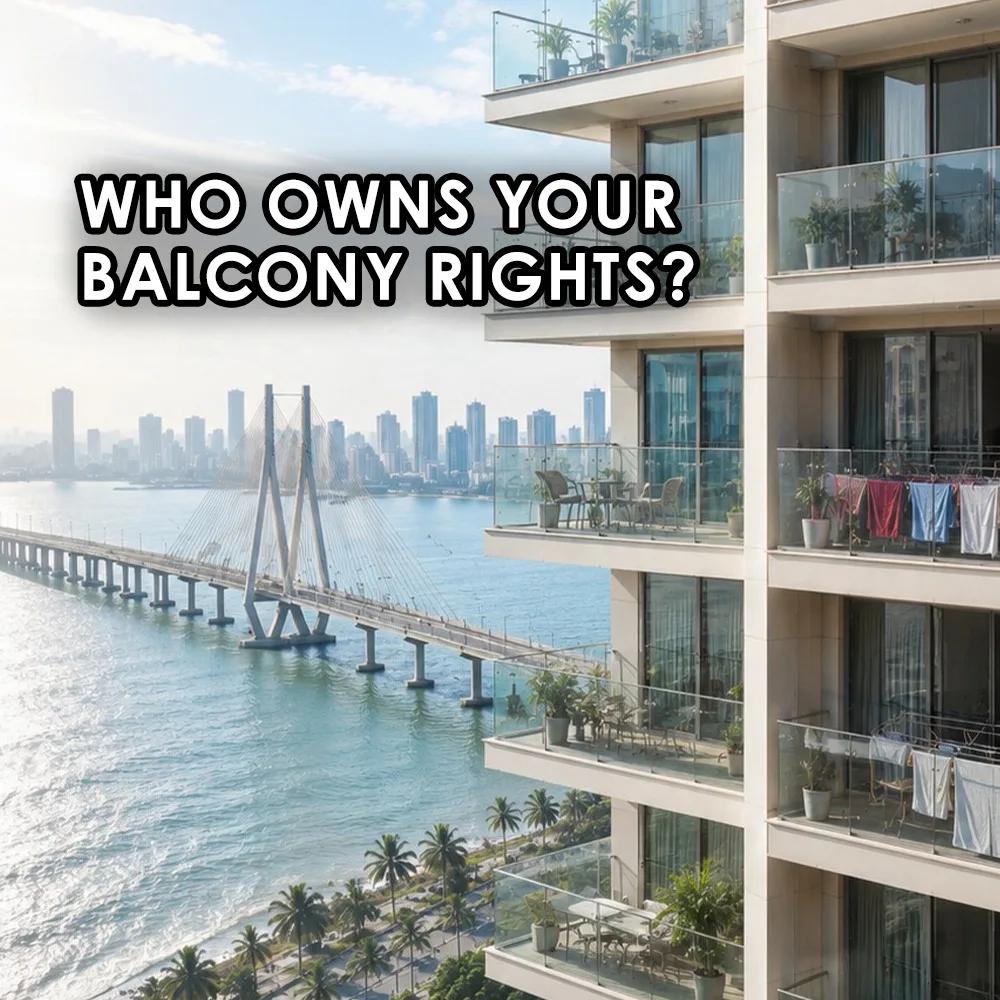
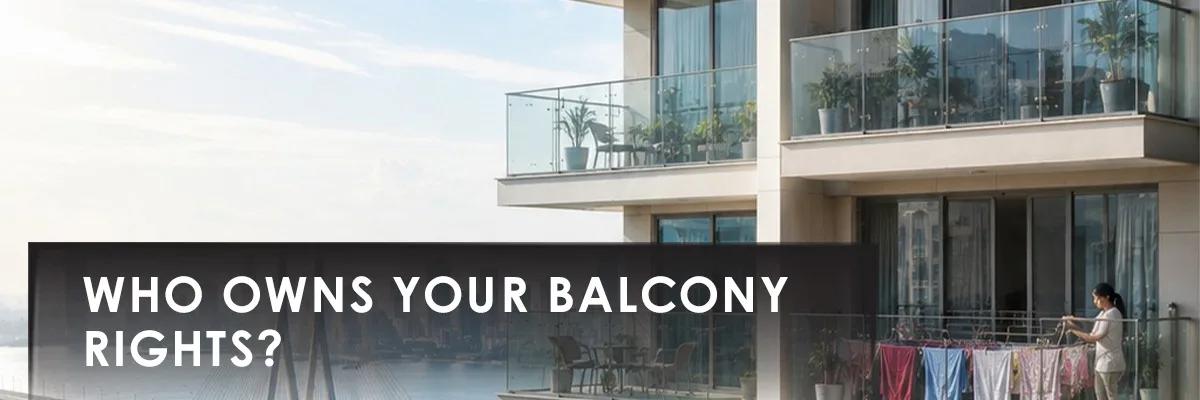
Imagine paying ₹4 crore for a Mumbai apartment, moving in with your family, and then getting a notice from the managing committee about hanging laundry on your own balcony. Sounds absurd, doesn't it? Yet this exact scenario plays out in societies across the country more often than most buyers expect.
A housing society generally cannot penalise you for drying clothes on your own balcony unless its bye-laws explicitly say so, and even then such a rule can be challenged if it was never properly adopted.
Many housing societies justify a ban on visible drying by pointing to building aesthetics, arguing that clothes hanging outside lower the perceived value of the property. It's an argument rooted more in appearance than in any actual law. And that distinction matters a great deal once a dispute reaches a legal forum.
Under the Maharashtra Co-operative Societies Act and its associated bye-laws, there's no specific clause prohibiting a resident from drying clothes within their own balcony. Several legal opinions on this exact question conclude that unless a society's bye-laws explicitly restrict the practice, penalising a resident for it has no real legal standing.

It helps to separate two spaces people often confuse. A terrace is typically classified as common property under most state apartment ownership acts, shared by the entire building unless a sale deed marks it otherwise. A balcony attached to your specific flat is different, it forms part of your private carpet area, not a shared common zone.
A recent report highlighted residents facing fines for everything from pets relieving themselves in the wrong spot to laundry visible from outside, treating these as billable offences rather than genuine safety concerns. One resident quoted in that piece called it exactly what it often is, an unfair practice of monetising ordinary use of your own space.
If a managing committee's rule was never passed through a proper general body meeting, or contradicts what the bye-laws actually permit, that rule itself can be challenged as invalid. A penalty built on a shaky rule doesn't automatically become enforceable just because a notice was pasted on the lift wall.

Start with a written protest to the committee itself, keeping a paper trail of every notice and fine issued. If that goes nowhere, residents have the option of escalating to the Deputy Registrar of Cooperative Societies, who can strike down an unjustified penalty. Consumer forums have also entertained similar disputes when committees overstep.
That said, picking your battles matters too. If drying a few shirts discreetly keeps the peace better than a prolonged fight over principle, sometimes the practical route beats the legally correct one. Not every hill is worth dying on, even when you're technically right.
A housing society generally cannot penalise you for drying clothes on your own balcony unless its bye-laws explicitly say so, and even then such a rule can be challenged if it was never properly adopted. Understanding the difference between private and common areas helps buyers push back confidently against arbitrary RWA fines. This is general information, not legal advice, so for an active dispute, consulting a property lawyer remains the safer route.


Find Detailed Answers to Frequently Asked Questions to Help You Make Smart and Confident Real Estate Decisions
Generally no, unless the society's bye-laws explicitly prohibit it and were properly adopted through a general body meeting. Under the Maharashtra Co-operative Societies Act, there's no specific law banning balcony drying, making most such fines legally unenforceable.
A balcony attached to your flat is part of your private carpet area, giving you greater usage rights. A terrace is typically common property shared by all residents, where societies can impose stricter usage rules.
First, submit a written protest to the managing committee and maintain documentation of all notices. If unresolved, escalate to the Deputy Registrar of Cooperative Societies or consider consumer forums for disputes where committees overstep their authority.
Yes, if the rule was never properly passed through a general body meeting or contradicts permitted uses, it can be challenged as invalid. A penalty requires both proper rule adoption and legal standing to be enforceable.
Consider compromise when the dispute strains community relationships disproportionately to the issue, or when discreet drying can satisfy both parties. Legal rights exist, but practical peace sometimes outweighs principled battles.