Most first-time commercial buyers walk into a deal chasing one number: the rent someone promised them on a phone call. That's a rookie mistake. Serious investors look past the headline figure and study a handful of quieter indicators that actually tell you whether an asset will hold up five years down the line.
Vacancy gets all the attention, but net absorption is the number worth watching. It measures how much space tenants are actually occupying and paying for, not just what's listed as available. India's office markets have posted strong absorption figures lately, with tens of millions of square feet leased yearly across top cities, and that sustained uptake says more about real demand than any brochure could.
Divide a property's net operating income by its price and you get the capitalisation rate. Simple math, but the number hides a lot of nuance. A tempting nine percent cap rate in a smaller, less established micro-market often carries risks a four percent cap rate in a prime business district simply doesn't. Chasing yield without asking why that yield exists is how inexperienced investors end up holding assets nobody wants to lease.
A single vacancy figure tells you almost nothing on its own. What matters is direction, is it climbing quarter after quarter or steadily shrinking even as fresh supply enters the market. Falling vacancy alongside rising new construction usually signals a market genuinely short on quality stock, which tends to push rents upward over time.

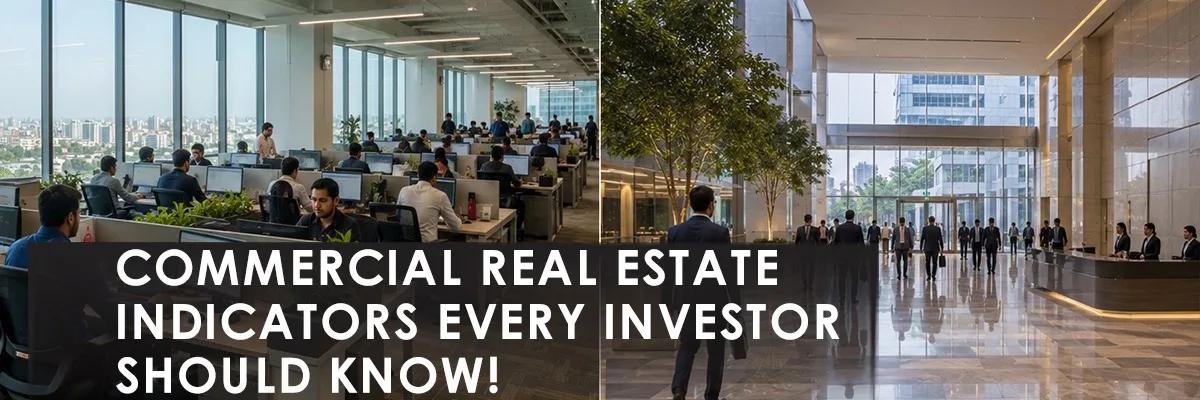
Tenant profile deserves far more attention than most buyers give it. Office markets dominated by global capability centres, for instance, behave differently from those leaning on smaller domestic firms, because larger multinational occupiers tend to sign longer leases and commit to bigger footprints. Knowing whether your building's tenant mix skews toward stable, long-term occupiers or short-lease startups changes your entire risk calculation.
Not all square footage is created equal anymore. Buildings with strong sustainability credentials and modern amenities are pulling ahead of older inventory, commanding higher rents and faster lease-up times. An older building sitting on prime land can still lose out to a newer, greener structure two streets away, simply because occupiers increasingly factor certification and efficiency into their leasing decisions.
Borrowing costs rarely make casual conversation, yet they decide whether a deal actually works. When rates climb, lenders tighten underwriting and demand stronger cash flow coverage, which cools speculative buying. When rates ease, capital flows back faster than fundamentals sometimes justify, so ask whether pricing reflects real income or simply cheap money chasing yield.

Office space used to dominate commercial portfolios almost by default. That's changing fast, with logistics, warehousing, and data centres pulling in serious institutional capital alongside traditional office and retail. An investor ignoring these newer categories risks missing where genuine growth is actually happening, especially as e-commerce and digital infrastructure keep expanding their physical footprint across the country.
Listed REITs offer a surprisingly honest pulse check on commercial real estate sentiment. When REIT units trade well and new listings keep appearing, it usually reflects genuine investor confidence in underlying rental income rather than pure speculation. Watching how these instruments perform can tell you more about market direction than any single property deal ever will.
Commercial real estate investing rewards those who look beyond rent quotes and study the fundamentals underneath. Net absorption, cap rate, vacancy trends, tenant quality, and Grade A positioning together paint a far more honest picture than any single metric alone. Add interest rate movements and REIT performance to that list, and investors gain a genuine edge. Understanding these commercial real estate indicators separates confident, informed buyers from those simply hoping a deal works out.


Find Detailed Answers to Frequently Asked Questions to Help You Make Smart and Confident Real Estate Decisions
Net absorption measures the actual space tenants occupy and pay for, indicating real demand rather than just available listings. Strong absorption figures suggest a healthy and growing market.
While a higher cap rate might seem attractive, it often signals increased risk in less established markets. Lower cap rates in prime areas typically imply greater stability and lower risk due to stronger market fundamentals.
A single vacancy number is a snapshot; observing its trend (rising or falling) over time, especially in relation to new supply, reveals genuine market health and potential for rent growth, indicating whether a market is genuinely short on quality stock.
Interest rates significantly impact borrowing costs and lender underwriting. Higher rates cool speculative buying and demand stronger cash flow coverage, while lower rates can lead to capital flows that sometimes inflate pricing beyond fundamentals.
The 'flight to quality' describes the trend where tenants increasingly prefer modern buildings with strong sustainability credentials and amenities (Grade A stock), even over older properties in prime locations, leading to higher rents and faster lease-up for superior assets.