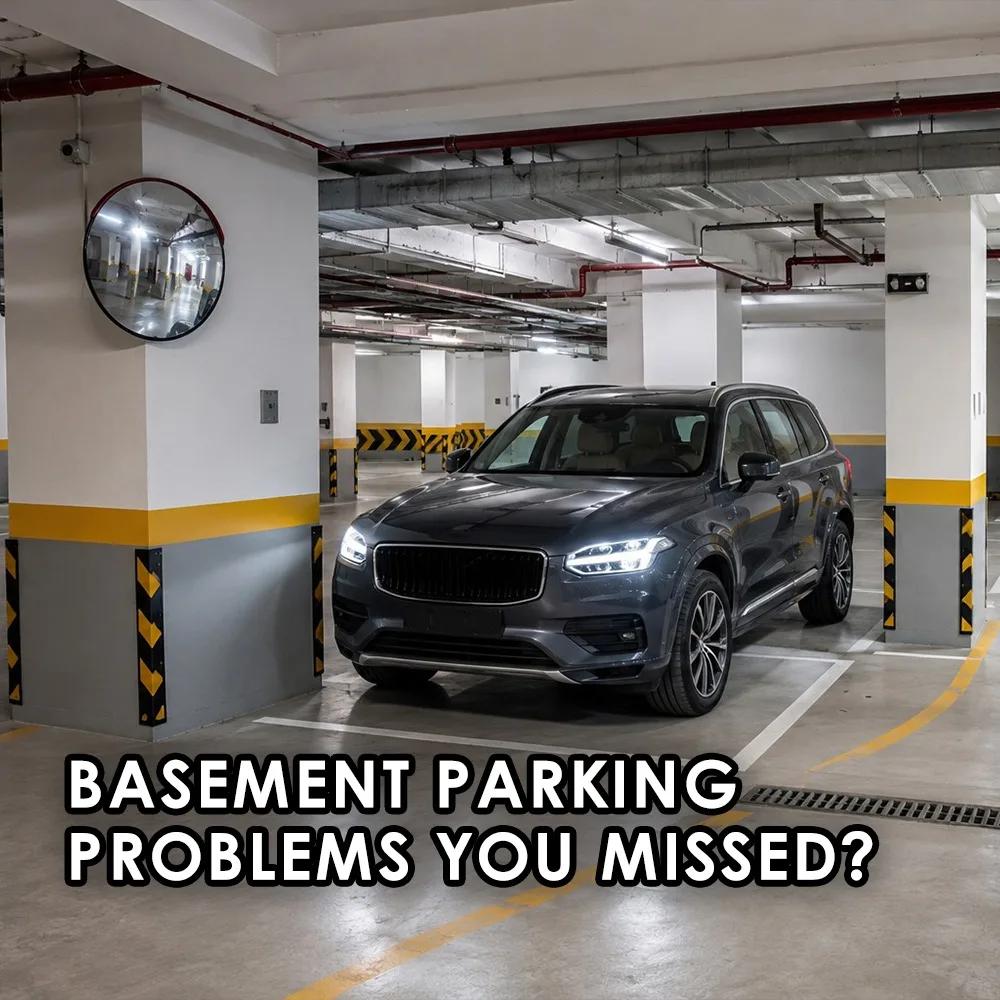
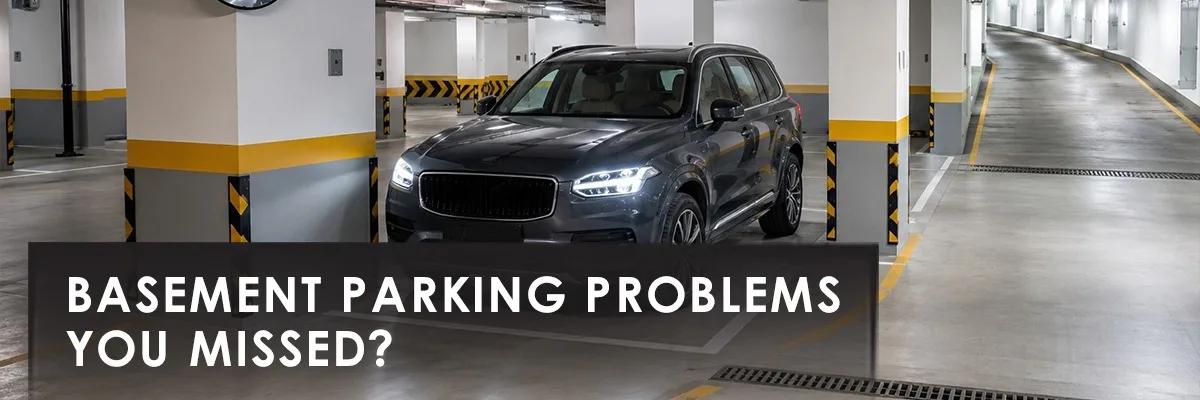
Nobody thinks about their basement parking until something goes wrong down there, a musty smell, a flickering light, water pooling near the ramp. By then the fix usually costs more than it would have if someone had just walked through with a checklist twice a year. So let's actually talk about what that walkthrough should cover.
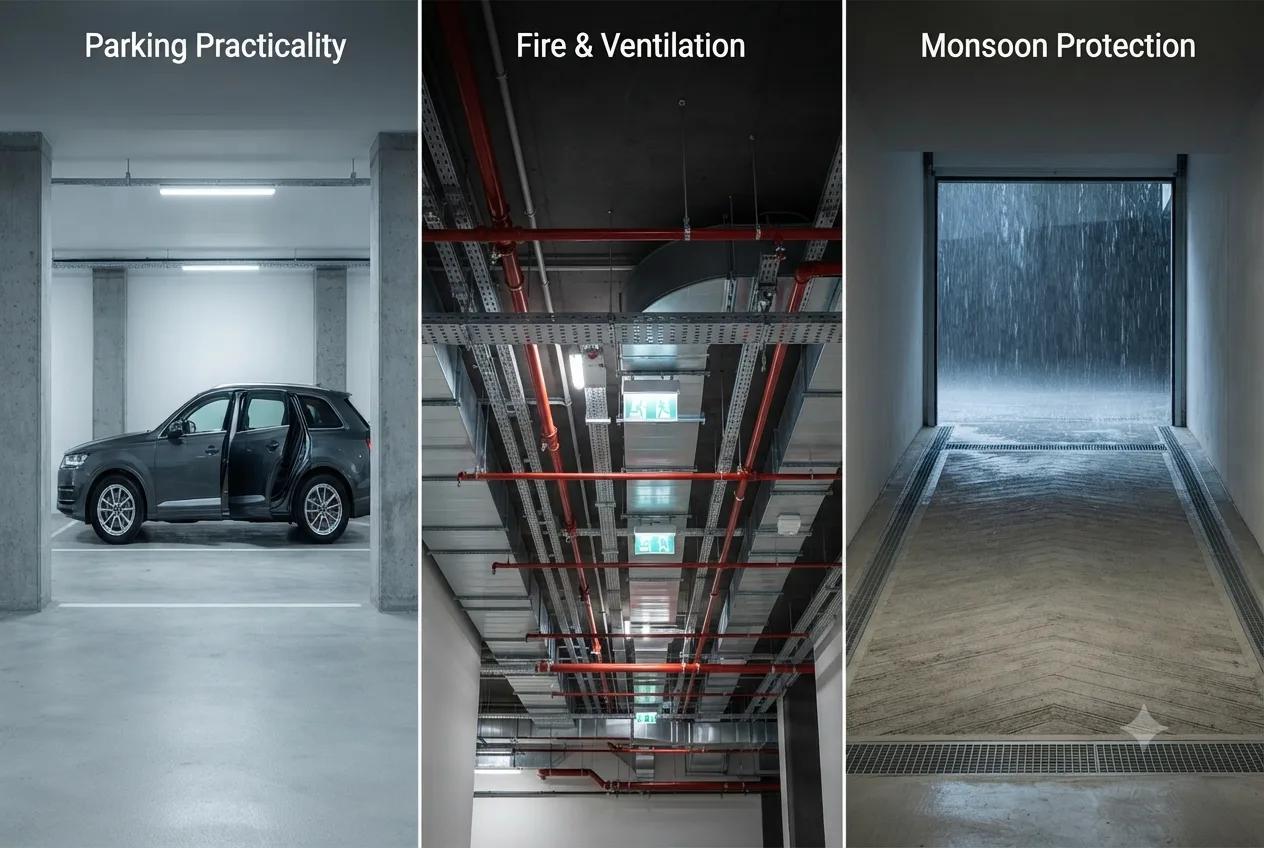
Basements don't breathe on their own, and that's exactly the problem. Under the National Building Code, parking basements are expected to maintain roughly six air changes per hour during normal use, doubling to around twelve during a fire event. Walk the space and notice whether the air feels stale or carries a faint exhaust smell, because that's usually your first warning sign that the exhaust fans or fresh air blowers aren't pulling their weight.
A fan spinning doesn't mean a fan working properly. Look for damaged blades, loose mountings, or that faint grinding noise most residents learn to tune out over time. CO sensors tied to these systems need periodic calibration too, and honestly, most housing societies forget this exists until an inspector points it out.
Basements shouldn't collect surface drainage at all, and yet monsoon season reveals exactly which buildings ignored this rule during construction. Check the walls and flooring for damp patches, hairline cracks, or that telltale white salt residue that shows up when water has been seeping through for a while. A basement that floods every July isn't unlucky, it's poorly waterproofed, and that's a fixable problem if caught early.
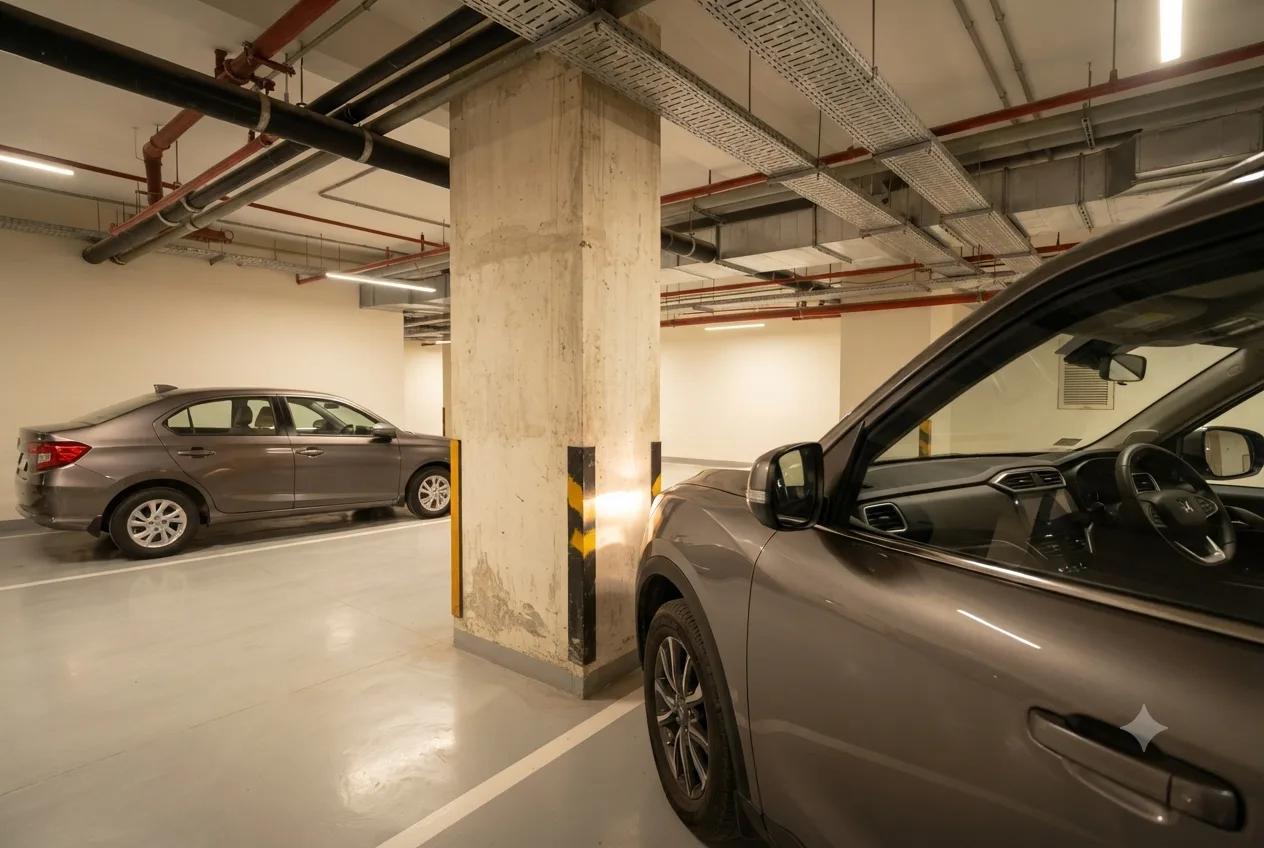
Entry ramps need adequate slope and width, and ideally two separate ramps positioned at opposite ends for larger structures. Minimum headroom clearances matter more than people assume, a taller SUV scraping the ceiling on the way in is a design failure, not driver error. Walk the ramp yourself and notice whether the surface still has proper grip, because smooth, worn concrete becomes genuinely dangerous once it rains.
Sprinklers usually respond first to any fire, but they need periodic testing to confirm they'll actually activate when needed. Smoke detectors should trigger the ventilation system's emergency mode automatically, pulling smoke and heat out rather than letting them settle. If your building's fire mode has never been tested since installation, that's not a small oversight, that's a genuine safety gap.
Poor lighting in a basement isn't merely annoying, it hides problems. Dim or flickering bulbs near stairwells or parking bays make it harder to spot oil leaks, cracked flooring, or obstructed fire exits during a routine glance. Emergency lighting circuits, separate from the main supply, should also be tested regularly since these are exactly what residents rely on during a power cut.
Combustible material sitting around a parking basement, cardboard, spare tyres, stored furniture, turns a manageable fire into a serious one. Clear aisle space needs to stay genuinely clear, not just technically passable, because fire response teams need room to actually move equipment through during an emergency. This is the kind of thing residents' associations tend to deprioritise until an inspection forces the issue.
Basements approved only for parking, storage, or equipment shouldn't quietly turn into anything resembling habitation, that's a compliance issue that surfaces during resale or refinancing far more often than people expect. Confirm the required No Objection Certificate from local fire authorities is current, not just filed away from years ago. Buyers checking a resale flat with basement parking access should genuinely ask for this paperwork before assuming it exists.
None of this needs to be a dramatic annual event, a calm quarterly walkthrough with this list in hand catches most problems while they're still cheap to fix. Societies that treat basement inspection as routine maintenance, rather than crisis response, consistently spend less over time and deal with far fewer emergencies.
A thorough basement car parking inspection covers far more than checking if the lights work, ventilation rates, waterproofing, ramp condition, fire safety systems, and proper NOC documentation all matter just as much. Regular quarterly walkthroughs catch problems while they're still inexpensive to fix, protecting both residents and property value. For any housing society or building owner, this checklist isn't a bureaucratic formality, it's genuinely the difference between a safe basement and a slow-building hazard.


Find Detailed Answers to Frequently Asked Questions to Help You Make Smart and Confident Real Estate Decisions
Regular inspections help identify potential issues like poor ventilation, water damage, or faulty fire safety systems early, preventing costly repairs and ensuring resident safety. Proactive checks are more cost-effective than crisis management.
Key areas include air quality and ventilation systems (fans, CO sensors), waterproofing (dampness, cracks), structural elements (ramps, headroom), fire safety equipment (sprinklers, smoke detectors), lighting (general and emergency), housekeeping, and necessary documentation (NOCs, permits).
It is recommended to perform a thorough walkthrough with a checklist quarterly. This routine maintenance helps catch problems while they are still inexpensive to fix and prevents the buildup of significant hazards.
Basements require proper ventilation to prevent stale air, exhaust fumes, and maintain air quality. National Building Codes often mandate specific air change rates to ensure safety, especially during normal operation and in fire events.
Ensuring current No Objection Certificates (NOCs) from local fire authorities and verifying the basement's approved use (parking only) prevents compliance issues. This is vital for safety, property resale, and refinancing.