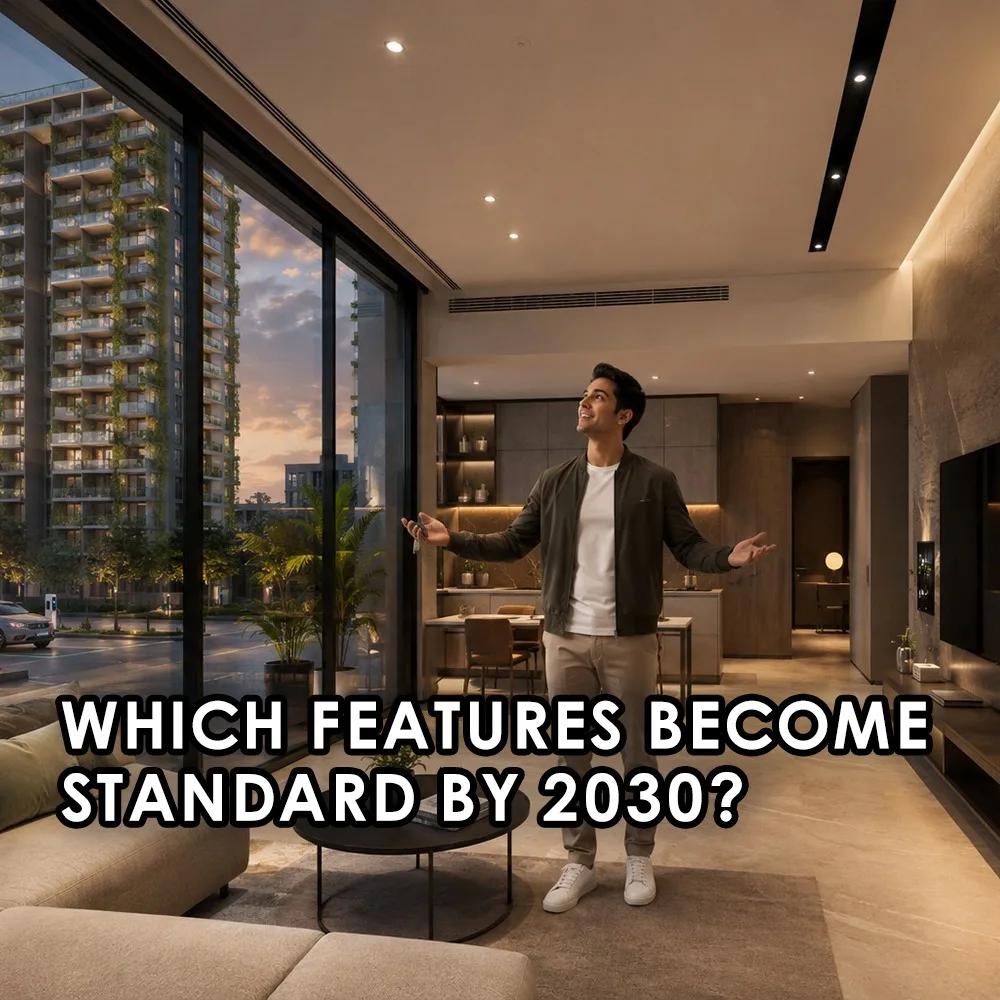
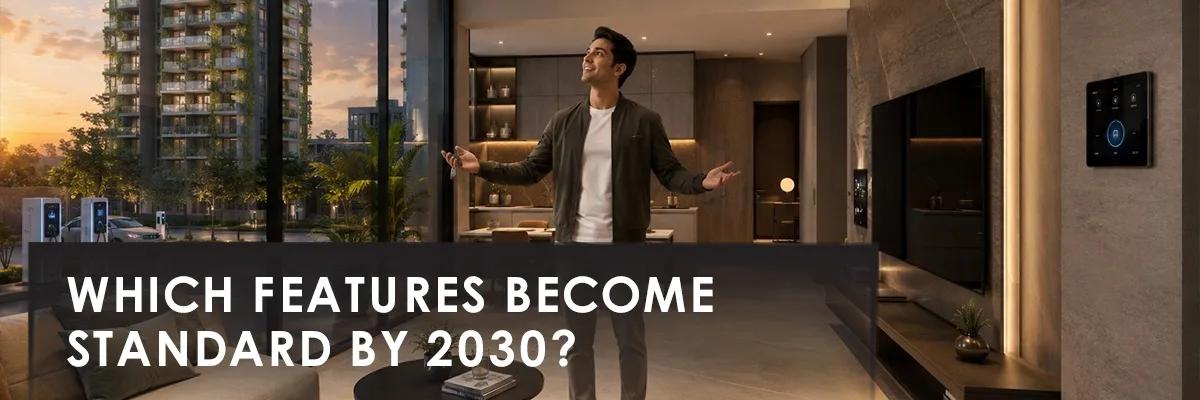
Walk into a newly launched apartment today and you'll already notice things that would've felt futuristic a decade back, app controlled lighting, video doorbells, motion sensors quietly humming in the background. Give it another four years, and a chunk of what currently counts as a premium upgrade is likely to just become the default, whether the buyer specifically asked for it or not.
Home automation has moved past the novelty phase of controlling a single smart bulb from your phone. Centralised systems now let residents manage lighting, fans, air conditioning and entertainment through one app or a voice assistant, and this kind of integration is steadily sliding down from luxury towers into mid segment housing. By 2030, the expectation is that these systems stop feeling like a feature you paid extra for and start feeling like plumbing, something you'd only notice if it were missing.
CCTV coverage tied to mobile alerts, biometric locks and motion triggered notifications are already common in newer developments across Bengaluru, Mumbai and Gurugram. What's changing is how proactive these systems are becoming, flagging unusual activity before a resident even checks their phone, rather than simply recording footage for later review. Buyers evaluating a flat five years from now will likely treat this level of responsiveness as baseline rather than a selling point.

Rooftop solar generation, EV charging points in parking areas and structured waste management systems are increasingly showing up in developer plans, not as green marketing add ons but as genuine infrastructure decisions. Given how aggressively electric vehicle adoption is expected to climb, a building without dedicated charging capacity could start looking distinctly dated well before the decade closes.
Since the pandemic reshaped how people use their homes, treating a flat as a workspace, a fitness space and a genuine retreat all at once, developers have leaned harder into wellness driven layouts. Expect dedicated air quality monitoring, better natural light optimisation and flexible room configurations to keep showing up further down the price ladder as this thinking spreads beyond the luxury segment.
India's pool of genuinely affluent households is projected to grow substantially by 2030, and that shift is already nudging developers toward offering more customisable layouts rather than identical units stacked floor after floor. Digital design tools and virtual walkthroughs are making it easier for buyers to actually influence finishes and room configurations before construction even reaches their floor.
Beyond individual apartments, entire buildings are adopting cloud based management systems that monitor energy use, occupancy patterns and maintenance needs across common areas. This kind of building level intelligence, largely invisible to residents day to day, is what actually keeps operating costs and resale value in reasonable shape over the long run.

It's worth noting this shift isn't confined to premium towers. Government backed housing initiatives are already incorporating smarter, more community focused design principles into affordable segments, suggesting the gap between what a luxury flat and a budget flat offer technologically may narrow meaningfully by the time 2030 arrives.
For anyone buying today with resale in mind years down the line, it's worth checking whether a project's infrastructure, wiring capacity, EV readiness, IoT compatible systems, is actually built to accommodate these upgrades later, rather than assuming retrofitting will be simple or cheap.
Apartments by 2030 are likely to carry smart automation, proactive security, solar and EV infrastructure, and wellness focused layouts as standard rather than premium extras. This shift is being driven by rising affluence, climate conscious development priorities and steadily maturing PropTech adoption across Indian cities. Buyers planning long term should factor this trajectory into today's decisions, since a flat built with tomorrow's infrastructure in mind is likely to hold its value far more comfortably than one that isn't.


Find Detailed Answers to Frequently Asked Questions to Help You Make Smart and Confident Real Estate Decisions
Apartments by 2030 are expected to standardize smart home systems, proactive security measures, solar panels and EV charging points, and wellness-focused design elements, moving them from premium upgrades to baseline expectations.
Smart home technology will transition from novelty features to invisible infrastructure, with centralized systems managing lighting, AC, and entertainment, becoming as fundamental as plumbing.
Security systems will become more proactive, moving beyond simple recording to flagging unusual activity with biometric locks and motion-triggered notifications, establishing a new baseline for responsiveness.
Given the projected rise in electric vehicle adoption and climate-conscious development, rooftop solar generation and dedicated EV charging points will shift from bonus features to essential infrastructure in new buildings.
Wellness design will move beyond a buzzword, incorporating dedicated air quality monitoring, optimized natural light, and flexible room configurations across various price points, reflecting post-pandemic lifestyle changes.
Yes, the blog indicates that government-backed housing initiatives are already integrating smarter, community-focused design into affordable segments, suggesting the technological gap with luxury flats will narrow.