There's something almost reassuring about a bank as large as SBI choosing to buy homes the old fashioned way, through a government housing scheme rather than a flashy private project. According to the bank's own leadership, SBI is now looking at acquiring 24 apartments from the pool MHADA has released under its First Come, First Served scheme, and the reasoning behind it says a lot about how institutional buyers view Mumbai's housing market right now.
MHADA's current FCFS window covers roughly a hundred plus previously unsold flats spread across the city, from Kandivali and Malad in the western suburbs to Tardeo and Byculla closer to South Mumbai. These weren't newly built units, they were flats left over from earlier lottery rounds that never found buyers, for reasons ranging from pricing to location preference. Pricing across the scheme swings widely, starting near ₹38 lakh and climbing past ₹8 crore for the premium South Mumbai stock.
Unlike the traditional MHADA draw where allotment comes down to luck, FCFS works more like a straightforward booking system, whoever applies and pays first secures the flat. For an institutional buyer with clear internal approvals and available funds, that structure removes the uncertainty a random draw would introduce. It's a far more predictable path when you're planning housing allocation for actual employees rather than hoping for a lucky draw result.
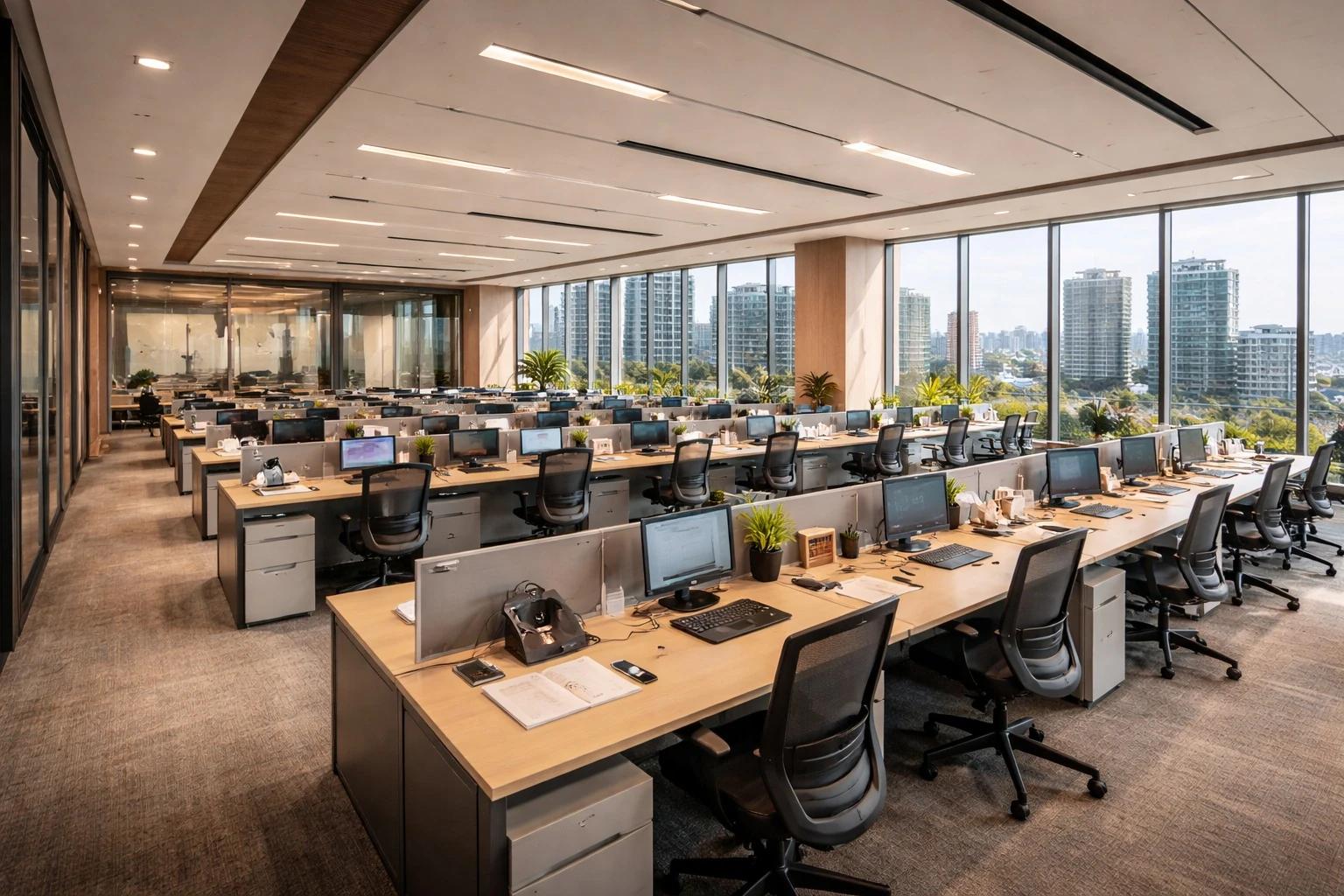
This isn't the bank's first rodeo with bulk residential purchases in Mumbai. SBI has separately been working on acquiring around 200 ready apartments across the Mumbai Metropolitan Region for staff housing, spanning clusters from the Sion-Ghatkopar belt to Thane-Kalyan and even Navi Mumbai's Kharghar-Panvel corridor. Picking up MHADA flats through FCFS looks like another thread of that same broader housing strategy, just through a different, more government-linked channel this time.
Employee accommodation might sound like an old fashioned corporate perk, but for a bank managing thousands of transferable staff across the country, owning property outright avoids the endless cycle of negotiating rentals every time someone gets posted to Mumbai. Property consultants tracking large institutional buyers have pointed out that big financial players increasingly prefer buying completed apartments over developing new housing projects from scratch, since it sidesteps construction delays entirely.
MHADA's FCFS inventory happens to span a genuinely wide geography, covering both dense, well established neighbourhoods like Ghatkopar and Vikhroli and newer, still developing pockets. For a bank thinking about staff convenience alongside cost, that spread lets SBI potentially cluster acquisitions closer to branches or regional offices instead of settling wherever inventory happens to exist.

MHADA has bigger plans sitting right behind this FCFS round, with close to 5,000 affordable units expected to launch later this year through a traditional lottery, a large share concentrated in Goregaon. An institutional buyer like SBI clearing out unsold FCFS stock actually helps MHADA's broader inventory situation, freeing up administrative bandwidth ahead of that much larger release.
It's tempting to treat a bank's bulk purchase as some kind of market signal, but the honest read is narrower than that. SBI isn't betting on Mumbai property appreciation the way an investor would, it's solving a practical, recurring staff housing problem using government inventory that happens to be available and reasonably priced. Individual buyers eyeing the same FCFS scheme should evaluate it purely on their own needs, location, budget, and loan eligibility, rather than reading corporate confidence into it.
SBI's move to acquire 24 apartments through MHADA's First Come, First Served scheme reflects a practical staff housing decision rather than a speculative property bet, following the bank's broader pattern of bulk residential purchases across Mumbai. For MHADA, offloading unsold FCFS inventory to an institutional buyer supports its larger housing pipeline, including thousands of upcoming affordable units. Individual buyers considering the same scheme should still evaluate location, pricing, and eligibility independently before applying.


Find Detailed Answers to Frequently Asked Questions to Help You Make Smart and Confident Real Estate Decisions
SBI is purchasing MHADA flats through the First Come, First Served (FCFS) scheme to provide housing for its employees in Mumbai, a strategic move to manage staff accommodation efficiently rather than relying on rentals.
The MHADA FCFS scheme offers previously unsold flats from earlier lottery rounds on a direct booking basis. Unlike a lottery, applicants who apply and pay first secure the flat, making it a predictable option for institutional buyers.
SBI's acquisition of unsold FCFS inventory helps MHADA clear its existing stock. This frees up administrative resources and inventory space in preparation for its larger launch of nearly 5,000 new affordable units later in the year.
No, the blog advises against treating SBI's bulk purchase as a broader market signal for individual buyers. SBI's motivation is practical staff housing, not speculative investment. Individual buyers should evaluate MHADA's FCFS scheme based on their personal needs, budget, location, and loan eligibility.
The FCFS scheme includes over a hundred previously unsold flats across Mumbai, ranging from Kandivali and Malad to Tardeo and Byculla. Prices vary widely, from around ₹38 lakh to over ₹8 crore for premium South Mumbai units.