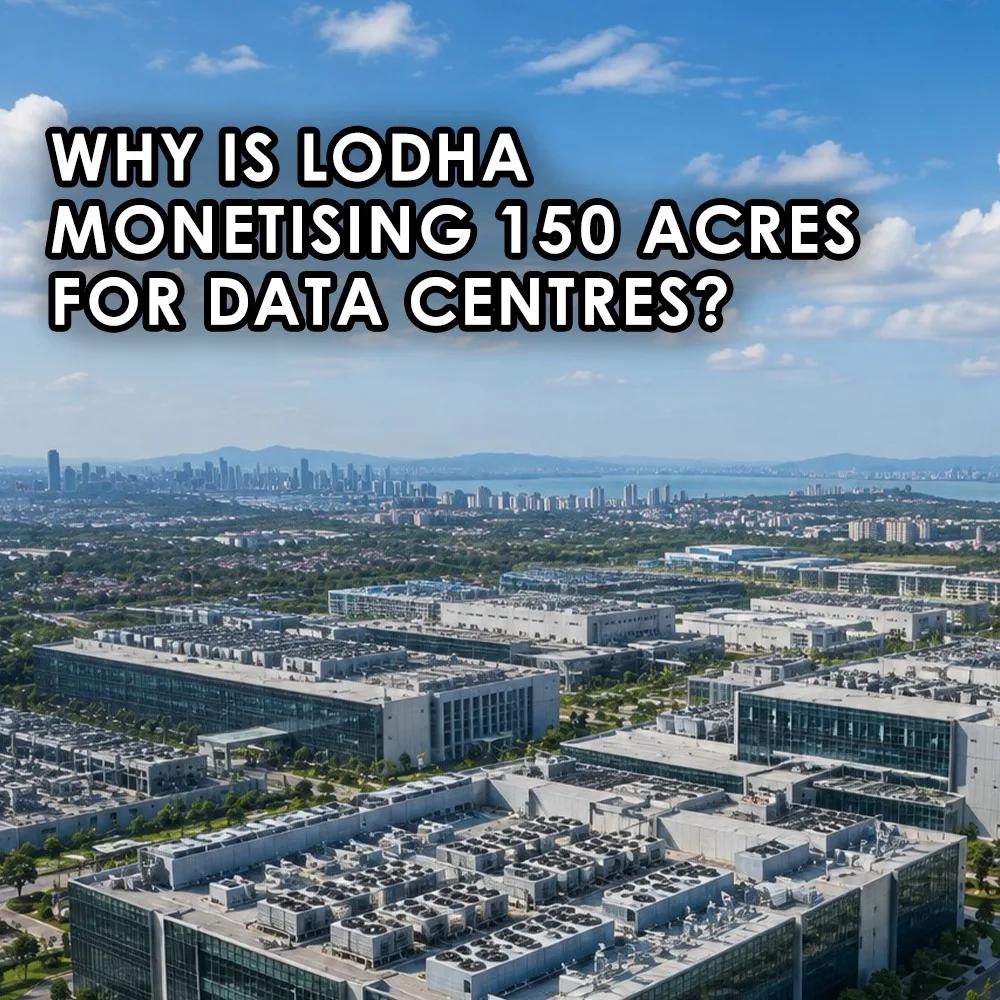
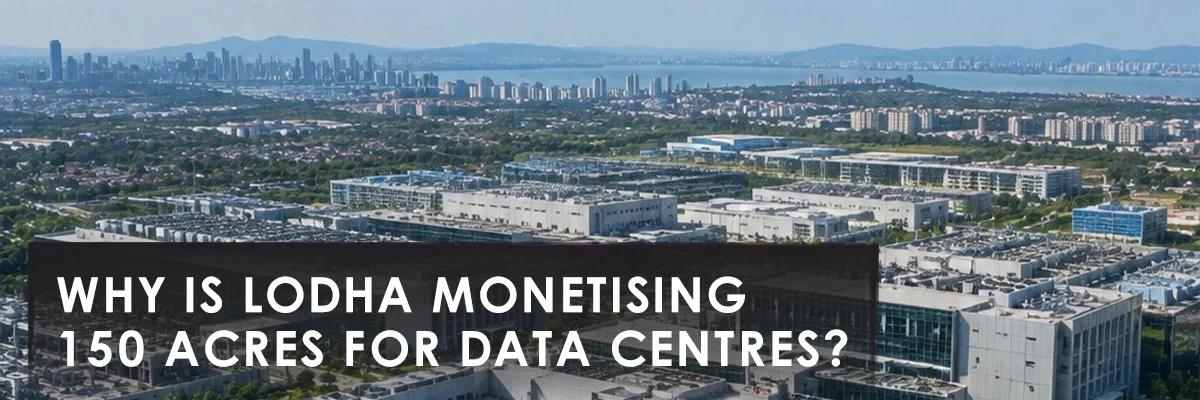
There's a quiet shift happening inside one of Mumbai's biggest real estate names, and it has almost nothing to do with apartments. Lodha Developers just laid out plans to pull ₹10,000 crore out of land it already owns, not by building more homes, but by feeding India's hunger for data centres.
Lodha Developers' ₹10,000 crore plan to monetise 150 acres at its Palava data centre park signals a strategic pivot towards digital infrastructure and recurring revenue, backed by hyperscaler interest and a larger ambition for Maharashtra's data centre market. Success hinges on execution and sustained demand, with the potential to reshape the company's long-term earnings.
During the company's Q1 FY27 investor call, MD and CEO Abhishek Lodha confirmed the plan to monetise roughly 150 acres within its data centre park at Palava, spread across the Mumbai Metropolitan Region. The timeline he gave was three to four years, and the pricing works out to around ₹60 crore per acre. What struck me reading through the transcript is how casually he framed it, calling land monetisation not a one-off event but a recurring pillar the business leans on regularly.
This isn't proceeds sitting idle in a bank account. The funds are earmarked to build out close to 1 gigawatt of powered shell capacity across roughly 90 acres, the kind of ready-to-plug infrastructure that global data centre operators are scrambling for right now. Lodha expects this build to eventually throw off more than ₹2,000 crore in annual rental income by FY32, which is a serious bet on recurring revenue rather than one-time sales.
Palava isn't a small side project for Lodha. The company had already signalled plans to develop close to 1 GW of build-to-suit capacity across nearly 100 acres, and separately, an even larger 2.5 GW data centre park is in motion for Maharashtra, backed by a combined investment commitment touching ₹1.3 lakh crore alongside the state government. Against that scale, the ₹10,000 crore monetisation feels almost like a funding mechanism, a way to self-finance ambition without leaning too hard on debt.
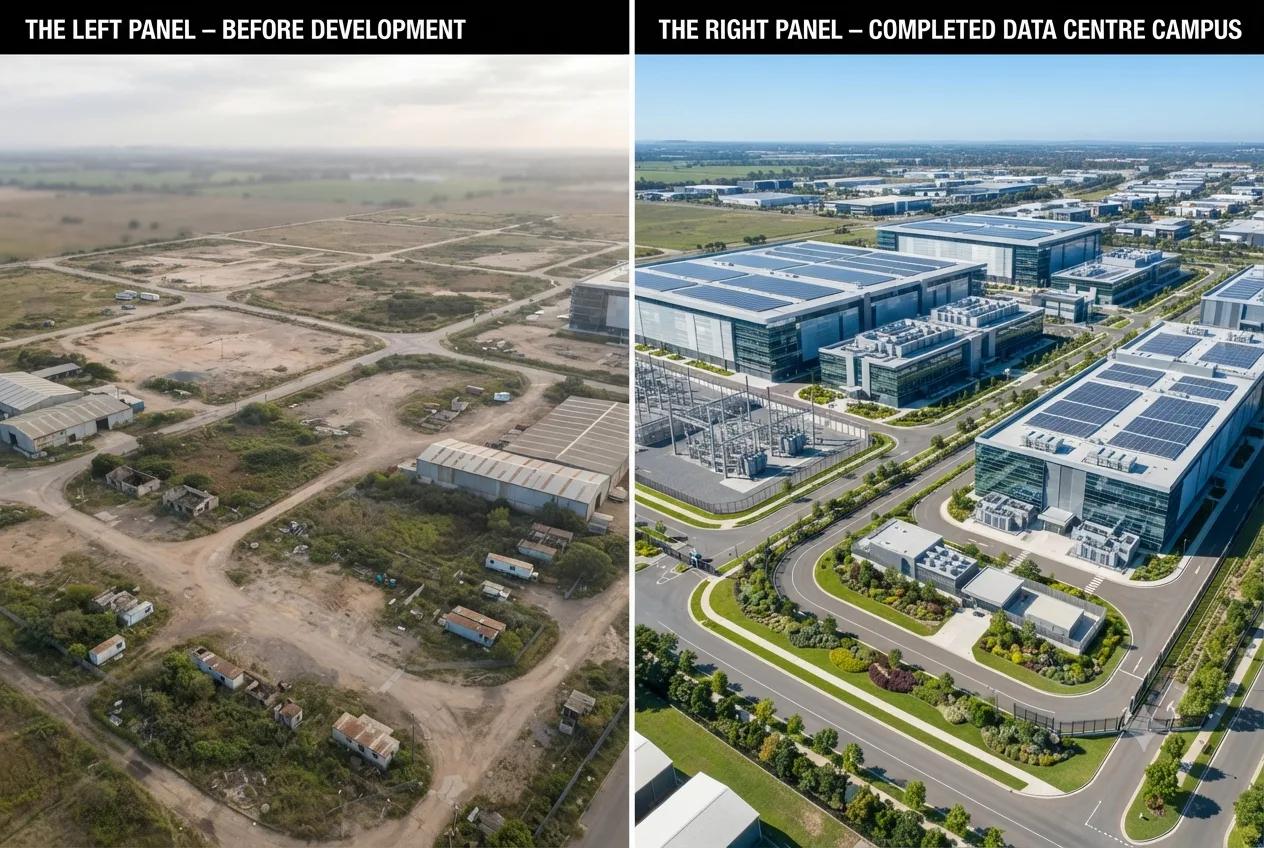
This isn't speculative interest either. Amazon Data Services India has already purchased over 10 acres within Palava for more than ₹125 crore, and operators like Digital Edge India have anchored themselves in the same ecosystem. When hyperscalers of that stature start signing land deals, it tends to validate the location far faster than any marketing brochure could.
India's appetite for computing capacity has been climbing steadily, pushed along by cloud adoption, AI workloads, and data localisation rules that increasingly require servers to sit within the country. Real estate developers with large land banks near major cities suddenly find themselves sitting on an asset class they never originally planned for. Lodha clearly saw that shift early and positioned Palava to capture it.
Selling land to fund construction, rather than borrowing against it, keeps Lodha's balance sheet cleaner. It avoids diluting equity or piling on fresh debt, while still converting what was essentially dormant land value into a high-margin, long-term income stream. That's a meaningfully different growth engine compared to the residential sales cycle the company has traditionally depended on.

Palava's transformation says something about where Mumbai's outer suburbs are headed. A township once known primarily for affordable and mid-income housing is now hosting some of the most capital-intensive digital infrastructure projects in the country. That duality, homes on one side, hyperscale servers on the other, might become a template other large township developers start copying.
Ambitious targets like this depend heavily on execution and continued demand from operators, and infrastructure timelines in India have a habit of stretching longer than announced. The ₹2,000 crore annual rental projection by FY32 is still six years out, and plenty can shift in that window, from policy changes to competing supply entering the market.
Lodha Developers' plan to monetise 150 acres at its Palava data centre park for ₹10,000 crore marks a genuine strategic pivot toward digital infrastructure and recurring annuity income. Backed by early commitments from hyperscalers like Amazon and a larger 2.5 GW data centre ambition for Maharashtra, this move positions Lodha at the centre of India's data centre boom. If execution holds up, it could reshape how investors view the company's long-term earnings mix well beyond residential real estate.


Find Detailed Answers to Frequently Asked Questions to Help You Make Smart and Confident Real Estate Decisions
Lodha Developers plans to monetize approximately 150 acres of land at its Palava data centre park to raise ₹10,000 crore, which will be used to build powered shell capacity for data centres.
India's increasing demand for computing power driven by cloud adoption, AI, and data localization rules has made data centres a lucrative asset class. Lodha aims to capitalize on this trend for recurring revenue.
Major hyperscalers like Amazon Data Services India and operators such as Digital Edge India have already invested in Lodha's Palava ecosystem, validating the location and project.
By selling land to fund construction, Lodha can avoid debt and equity dilution, converting dormant land value into a high-margin, long-term income stream, diversifying from its traditional residential sales model.
Ambitious targets depend on consistent operator demand and successful execution. Potential risks include project delays, policy changes, and increased market competition.