There's a particular kind of anxiety that comes with buying a flat in a city you haven't visited in three years. A cousin's opinion, a WhatsApp video that's shaky and badly lit, a broker who talks fast and answers slow. That used to be the entire toolkit for an NRI trying to evaluate property investment back home. It isn't anymore, and the shift matters more than most people realise.
For years, remote buying meant trusting whoever happened to be your eyes on the ground, usually a relative with no real property background. That approach worked occasionally and failed spectacularly other times. What's changed is that an NRI today can pull title documents, check litigation history, and view a project from a laptop in Toronto or Dubai without leaning on anyone's goodwill.
Every serious remote check should begin at the state RERA website rather than a glossy PDF from a sales team. Haryana's portal, Telangana's HMDA layout records, Karnataka's RERA database, each one lets you verify registration numbers, promoter history, and project delivery timelines before a single call gets made. Skipping this step is how NRIs, who are frequent targets for fraudulent listings precisely because verification felt hard from abroad, end up in trouble.
A clean RERA number tells you the project exists legally. It says nothing about whether the builder actually finishes on time or whether there's a pending court case buried three layers deep. RERA verification narrows your shortlist, but the real work, title chains going back thirty years, encumbrance certificates, occupancy status, still needs a lawyer's eye.

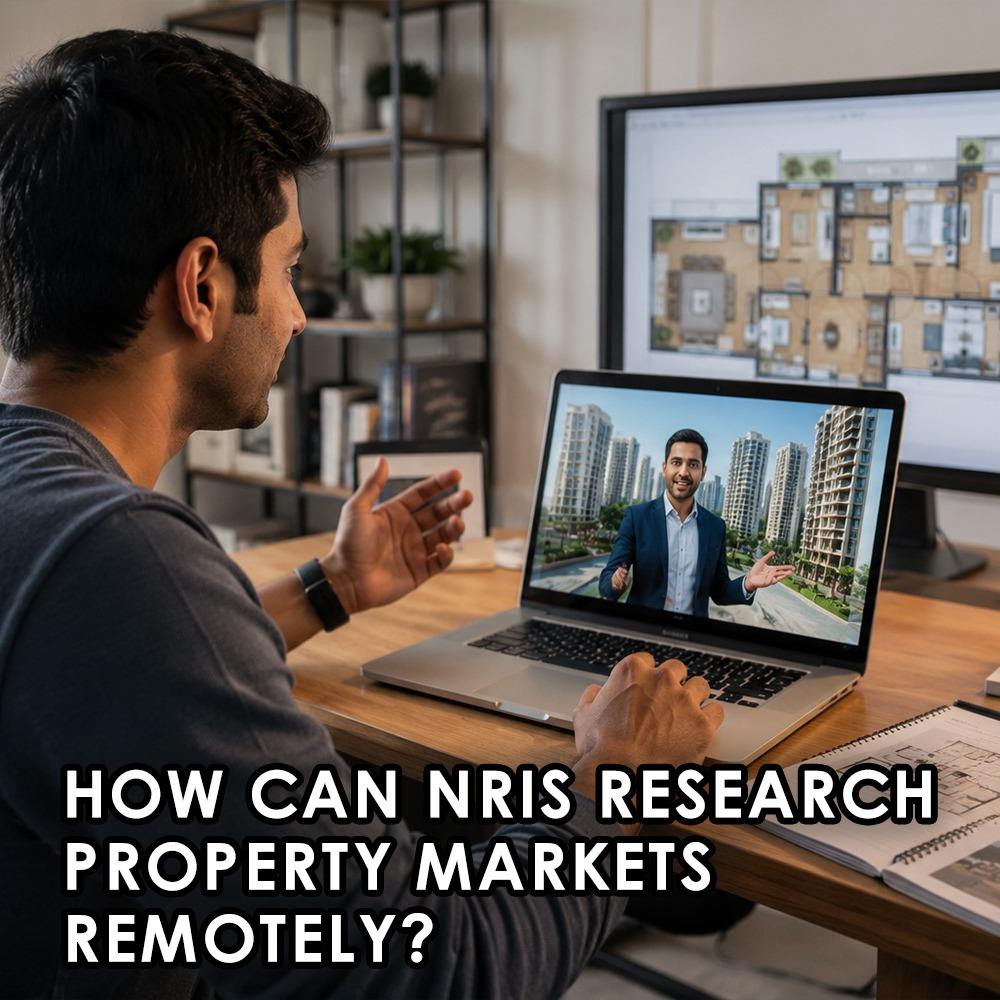
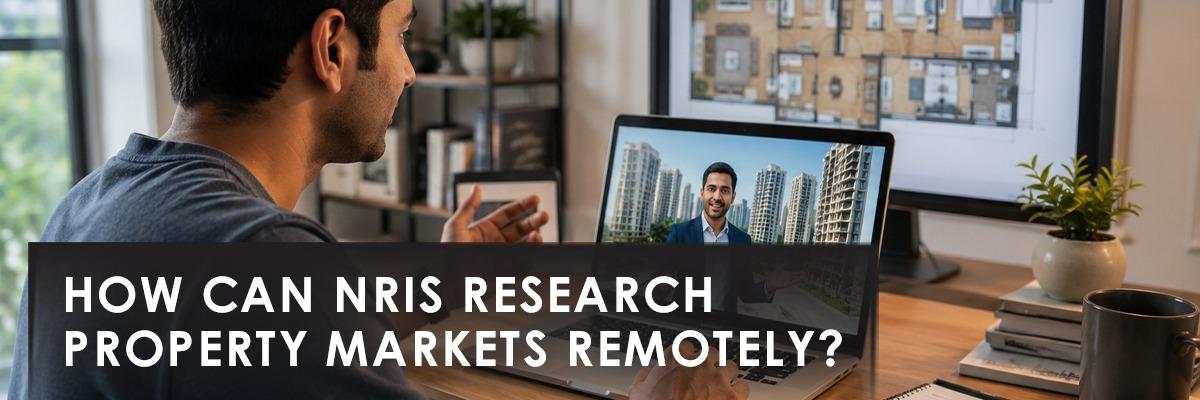
Virtual property tours used to mean a grainy phone camera panning across an empty room. Now it's HD walkthroughs, live WhatsApp or Zoom calls with site coordinators, and in some luxury projects, VR headsets that simulate actually standing in the unit. None of it replaces walking the site yourself eventually, but it cuts weeks off the shortlisting process.
Sale deeds, encumbrance certificates, occupancy certificates and litigation records are all searchable through district portals or a hired local lawyer working purely on documentation. This kind of due diligence used to require someone physically standing in a registrar's office. Most of it is now a scanned upload and a phone call away.
None of this research means much if you can't sign anything without flying down. A properly executed, notarised, and apostilled Power of Attorney lets a trusted person in India sign agreements, pay stamp duty, and complete registration on your behalf. Get this document wrong and every earlier verification step becomes irrelevant.

FEMA rules require every rupee to route through an NRE or NRO account, not casual bank transfers from abroad. Get this wrong and you're not looking at a paperwork delay, you're looking at a compliance headache with the Reserve Bank. It's the least glamorous part of remote property research, and easily the part people rush through.
A resident buyer can wander a site on a Sunday and chat with people already living there. You can't fully replicate that from a screen, no matter how good the camera is. Treat remote checks as narrowing your shortlist, not replacing an eventual visit or a trusted lawyer's final sign off.
How NRIs can research property markets remotely has genuinely changed for the better, powered by RERA verification, sharper virtual property tours, and document access that once needed a physical visit. Combined with a properly drafted power of attorney and FEMA compliant fund routing, NRI real estate investment no longer demands blind trust in a distant relative. It demands structure, patience, and a lawyer who actually reads the fine print.


Find Detailed Answers to Frequently Asked Questions to Help You Make Smart and Confident Real Estate Decisions
Remote property research for NRIs has moved beyond unreliable reliance on relatives to a structured approach utilizing state RERA portals, advanced virtual tours, and online access to critical property documents.
NRIs should always begin by verifying project registration numbers, promoter history, and delivery timelines on the state RERA website to filter out potential fraud before engaging with brokers.
Beyond RERA verification, comprehensive due diligence requires a lawyer to examine title chains, encumbrance certificates, occupancy status, and litigation records, many of which are now accessible via district portals or local legal assistance.
A properly executed, notarised, and apostilled Power of Attorney (PoA) is essential, allowing a trusted individual in India to sign agreements, pay stamp duty, and complete registration on the NRI's behalf.
NRIs must ensure all funds for property investment are routed through NRE or NRO accounts, adhering strictly to FEMA (Foreign Exchange Management Act) rules to avoid compliance issues with the Reserve Bank.