
Modular Furniture: Maximizing Space in Indian Homes
Summary
Modular furniture maximizes space in shrinking Indian homes by offering adaptable storage and convertible units. It's a practical and financially sound solution for compact urban living, enhancing liveability daily.

Introduction
Indian apartments are shrinking. The average 2BHK in Pune, Bengaluru, or Mumbai today is noticeably smaller than what the same budget fetched five years ago. And yet, the number of things a household needs to store, organise, and accommodate keeps growing. That tension between shrinking space and expanding needs is exactly the problem modular furniture for small homes India was designed to solve. It is not a trend anymore. For compact urban living, it has become a genuine necessity.
What Modular Furniture Actually Means
The term gets used loosely, so it helps to be precise. Modular furniture refers to units built from standardised, interchangeable components that can be configured, reconfigured, and scaled depending on the space available. Think of it as furniture with a flexible spine. You are not buying a fixed piece. You are buying a system that adapts to your room rather than forcing your room to adapt to it.
This is fundamentally different from traditional furniture, which is built for a fixed position and rarely moves. A modular shelving unit, for instance, can serve as a room divider today and a wall storage unit tomorrow.
Why Small Homes Need It Most
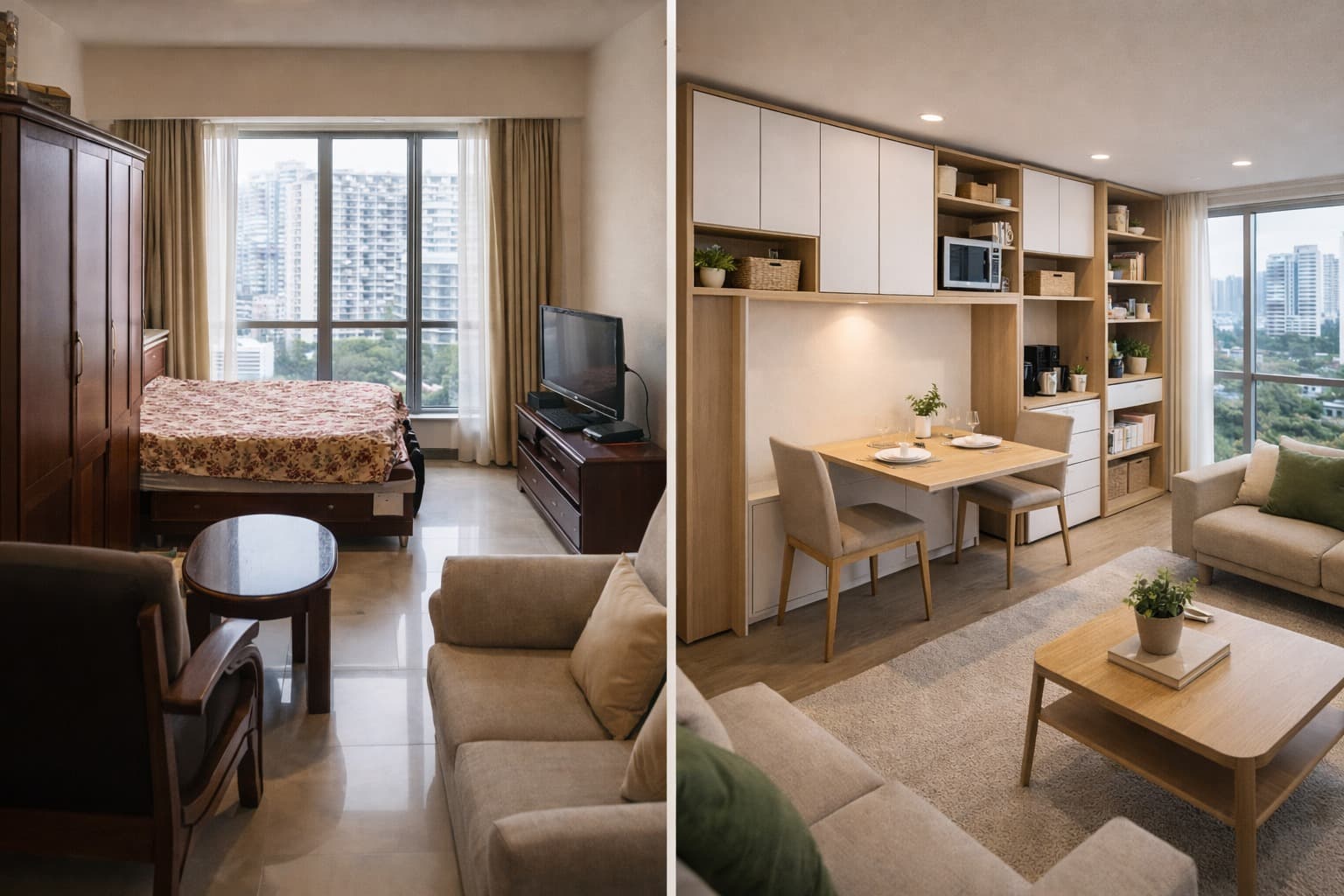
A 550-square-foot 1BHK does not forgive poor furniture decisions. One oversized sofa, one bulky wardrobe, and the room suddenly feels like a storage unit with a bed in it. Space saving modular furniture design 2026 solves this by eliminating the dead space that traditional furniture creates beneath, beside, and above itself.
Modular units are typically designed to reach the ceiling, use corners efficiently, and tuck into alcoves that standard furniture ignores entirely. Every vertical surface becomes a storage opportunity rather than wasted wall real estate.
The Modular Wardrobe Revolution
The modular wardrobe has probably done more for Indian bedroom organisation than any other furniture innovation in the past decade. Unlike carpenter-built wardrobes that are fixed permanently and difficult to modify, modular wardrobes are assembled from pre-fabricated panels, drawers, shelves, and hanging rails.
You can add a shoe drawer at the bottom, a pull-out trouser rack in the middle, and open shelves at the top, all within the same unit. When you move homes, a good modular wardrobe moves with you. That portability alone justifies the investment.
Modular Kitchens: Beyond Just Looking Good
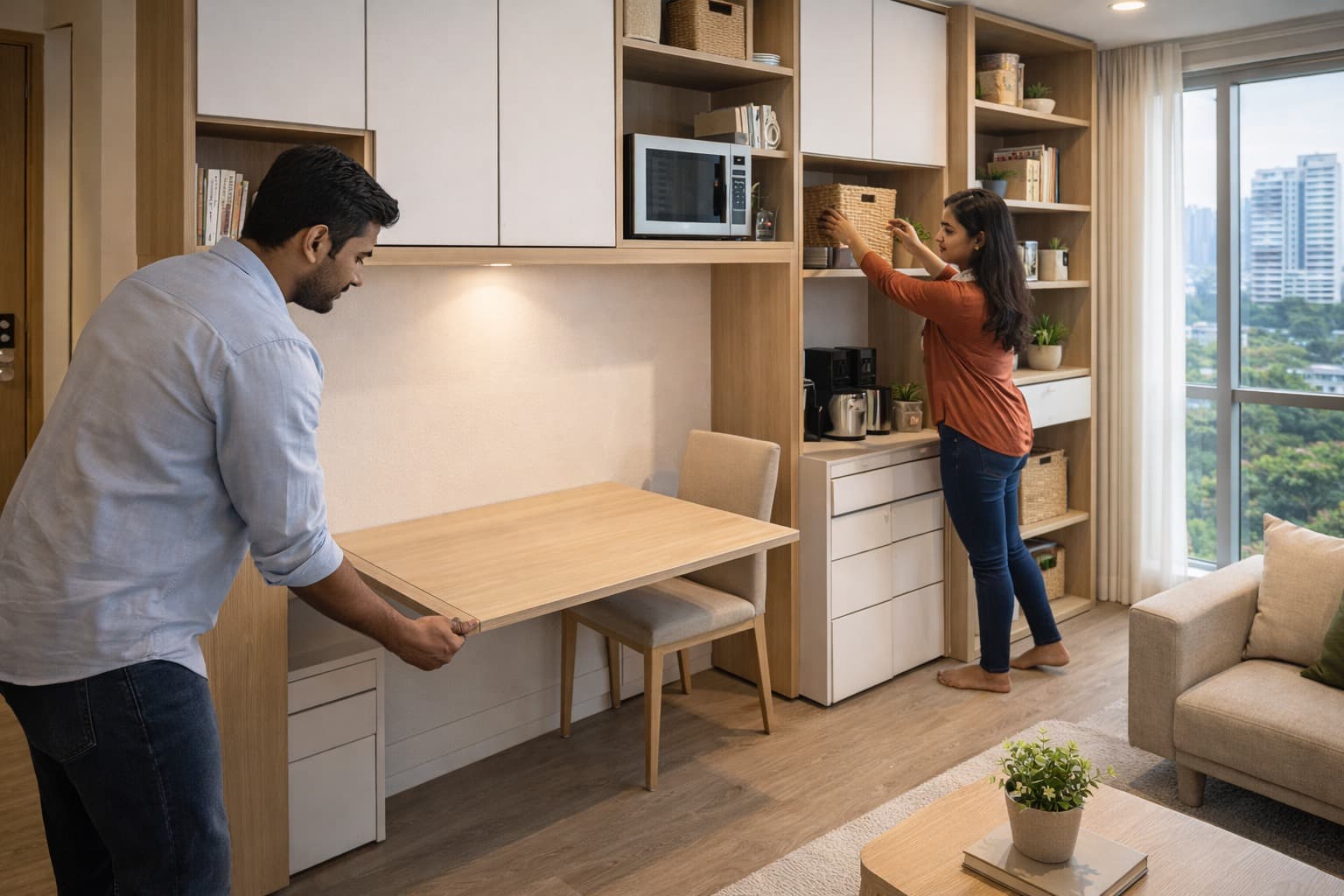
Most people associate modular kitchen and wardrobe India with aesthetics, the clean lines, the glossy finishes, the Instagram-worthy layouts. But the real value is functional. A well-designed modular kitchen uses every centimetre of available counter and cabinet space through corner carousel units, pull-out pantry shelves, and overhead cabinets that extend to the ceiling.
For Indian cooking, which generates more utensils, spice jars, and storage requirements than most global cuisines, a thoughtfully planned modular kitchen genuinely changes how the space works on a daily basis.
Sofa Beds and Convertible Units
A sofa bed sounds like a compromise. A good one is anything but. Modern space saving furniture options include sofa beds with storage drawers underneath, wall-mounted beds that fold up to reveal a desk, and dining tables that collapse to half their size when not in use.
These convertible pieces matter most in studio apartments and 1BHKs where the living room doubles as a guest room. Instead of dedicating permanent square footage to a guest bed that gets used twice a year, a convertible unit earns its floor space every single day.
Modular Storage for Living Rooms
The living room is where most Indian households lose the most space to clutter. Books, toys, decorative items, electronics, charging cables, it all accumulates without a system. Modular storage solutions in the form of wall-mounted shelving grids, entertainment unit configurations, and floating cabinets bring order to this chaos without consuming floor space.
A well-planned modular wall unit in a living room can eliminate the need for a separate bookshelf, a standalone TV unit, and additional storage cabinets, all in one cohesive installation.
How to Choose the Right Brand and Design
How to choose the right modular furniture brand and design for your home in India comes down to three things: material quality, customisation flexibility, and after-sales service. Hardware quality, particularly hinges, drawer channels, and rail systems, determines how long the furniture holds up under daily use.
Brands like Godrej Interio, Spacewood, Livspace, and Hafele-supported modular systems each have their strengths across different budget brackets. Always check the board thickness, the edge banding quality, and whether the brand offers modification support after installation.
The Investment Argument
Good modular home design is not cheap upfront. A full modular setup for a 2BHK, including wardrobe, kitchen, and living room storage, can run between Rs 3 lakh and Rs 8 lakh depending on material and brand choices. But compare that to the cost of a larger apartment, and the numbers align quickly.
Spending Rs 4 lakh on furniture that makes a 650-square-foot home feel like 850 square feet is a far more efficient use of money than spending Rs 30 lakh extra on a larger flat to compensate for poor space planning.
Summary
Modular furniture for small apartments and homes in India is the most practical response to urban space constraints that the interiors market currently offers. From modular wardrobes and modular kitchens to convertible sofa beds and wall-mounted modular storage solutions, every component is built around the idea that space should work harder, not expand endlessly. How to maximise space with modular furniture is ultimately a design question, but it is also a financial one. And in India's increasingly compact urban homes, the right modular investment pays for itself in liveability every single day.