

The flat was priced at Rs 80 lakh. You arranged the down payment, got the loan sanctioned, signed the agreement, and assumed that was the financial heavy lifting done. Then the actual ownership began, and a very different set of numbers started appearing. Hidden home costs India are not a secret industry practice. They are a collection of completely legitimate charges that most buyers simply do not account for when planning their purchase. The gap between the sticker price and what you actually spend in year one of ownership is typically far wider than anyone expects.
The EMI is the beginning of the cost, not the entirety of it. Hidden home costs in India can add 20 to 35 percent to the headline purchase price, requiring a budget of Rs 15 to Rs 25 lakh above the purchase price in the first year for a mid-segment flat in a major city.
Before possession, three categories of cost arrive simultaneously. Stamp duty and registration charges in most Indian states together consume 6 to 9 percent of the property value. On an Rs 80 lakh flat in Maharashtra, that means roughly Rs 4.8 to 6.4 lakh paid to the government before you have moved a single piece of furniture in. This is mandatory, non-negotiable, and due upfront.
Flat hidden charges beyond purchase price begin with GST if the property is under construction. At 5 percent on the agreement value, an Rs 80 lakh flat adds Rs 4 lakh in tax that appears nowhere in the original headline price. Ready-to-move flats with a Completion Certificate avoid GST entirely, which is one of the most underappreciated financial advantages of buying a completed home.
Legal fees for document verification, drafting of sale deeds, and title checks add another Rs 15,000 to Rs 30,000 depending on how thoroughly you protect yourself.
Possession day is expensive in ways that feel surprising the first time you experience them. Builders typically collect advance maintenance deposits of one to two years upfront. Society maintenance in metro cities runs between Rs 3 and Rs 10 per square foot monthly depending on amenities and location. A 1,000 square foot flat in a mid-range Mumbai or Bengaluru project paying Rs 6 per square foot pays Rs 6,000 monthly, and the builder collects 12 to 24 months of this at possession. That is Rs 72,000 to Rs 1.44 lakh before you have lived there a single day.
Parking costs between Rs 2 lakh and Rs 5 lakh in most mid-to-premium projects and is charged separately from the flat price. Corpus fund contributions for building maintenance, typically Rs 1 to 1.5 lakh, are collected at possession. Utility meter connections for electricity, piped gas, and water each carry installation charges.
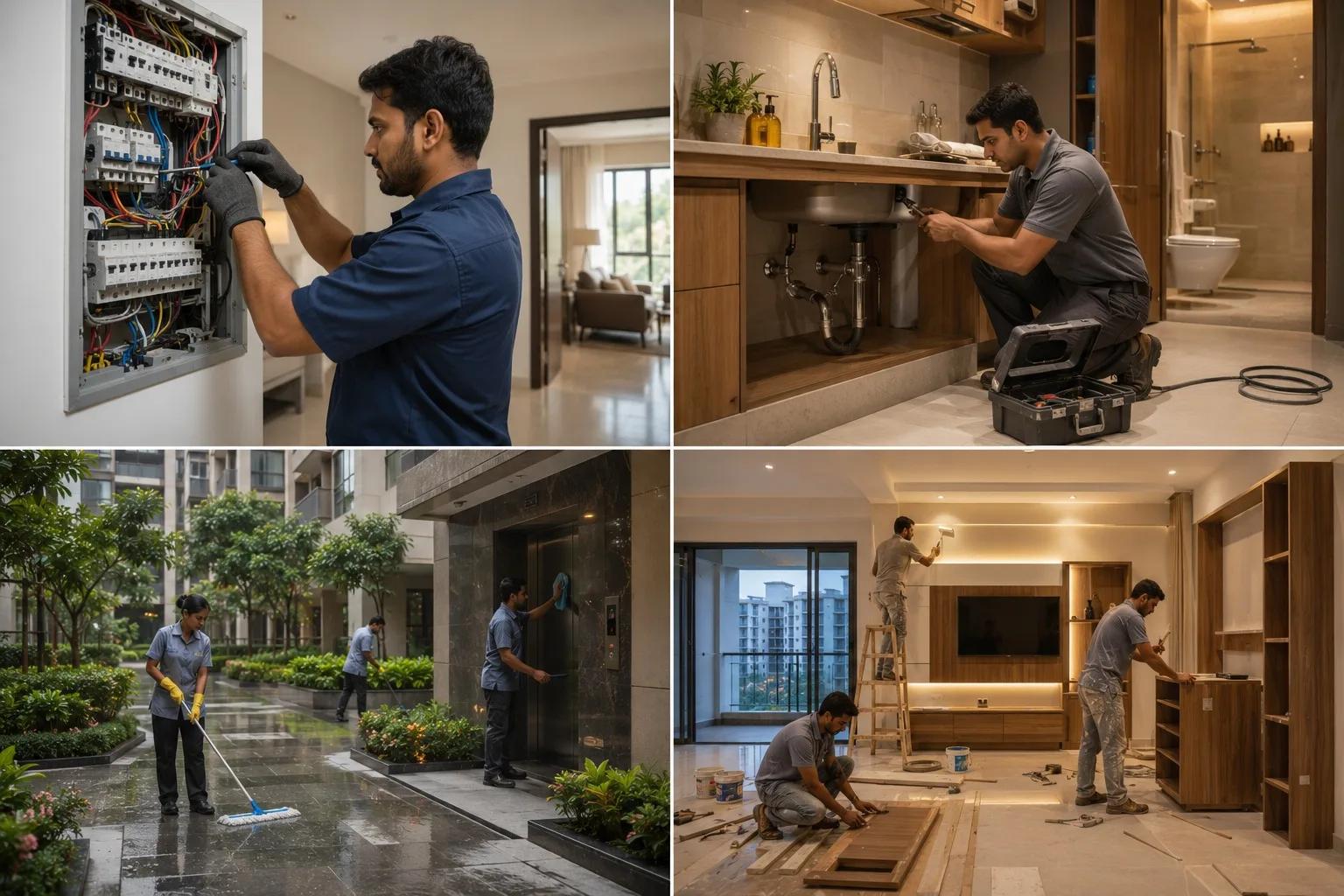
Property maintenance costs India begin from the month you take possession and never stop. Beyond the society maintenance charge, property tax in Indian municipal areas runs between 0.1 and 0.5 percent of the property's assessed value annually depending on the city and property size. For a Rs 80 lakh flat, this could range from Rs 8,000 to Rs 40,000 per year depending on your municipality.

Home loan processing fees charged at sanction range from 0.25 to 1 percent of the loan amount. On a Rs 60 lakh loan that is Rs 15,000 to Rs 60,000 paid once. Loan insurance, which many banks push at sanction, can add Rs 1 to 2 lakh depending on loan size and tenure.
Interior furnishing after possession is the cost that most devastates first-time buyer budgets. A basic modular kitchen, wardrobes in two bedrooms, flooring upgrades, curtains, and essential furniture typically runs Rs 5 to 15 lakh depending on quality and taste. This is spending that follows possession within weeks and for which very few buyers have adequately saved.
What are the hidden costs of owning a home in India span stamp duty, registration, GST, advance maintenance, parking, corpus fund, property tax, and interior expenses that together add 20 to 35 percent to the headline purchase price. Expenses beyond EMI that every homeowner in India pays continue monthly in the form of society charges, property tax, and periodic maintenance. How much does it really cost to own a home in India 2025 means budgeting honestly for Rs 15 to Rs 25 lakh above the purchase price in the first year for a mid-segment flat in a major city. The EMI is the beginning of the cost, not the entirety of it.


Find Detailed Answers to Frequently Asked Questions to Help You Make Smart and Confident Real Estate Decisions
Major hidden costs include stamp duty, registration charges, GST (for under-construction properties), legal fees, advance maintenance deposits, parking fees, corpus fund contributions, utility connection charges, property tax, home loan processing fees, loan insurance, and interior furnishing.
These expenses can collectively add 20% to 35% to the headline purchase price, especially in the first year of ownership.
Yes, significant costs like stamp duty, registration charges, GST (if applicable), and legal fees are incurred before you receive the keys to your new home.
Ongoing monthly expenses include society maintenance charges, property tax, and potentially EMIs for home loans. Periodic maintenance and utility bills also contribute.
For a mid-segment flat in a major city, it's advisable to budget an additional Rs 15 to Rs 25 lakh above the purchase price for the first year, covering various upfront and initial ongoing expenses.