Introduction
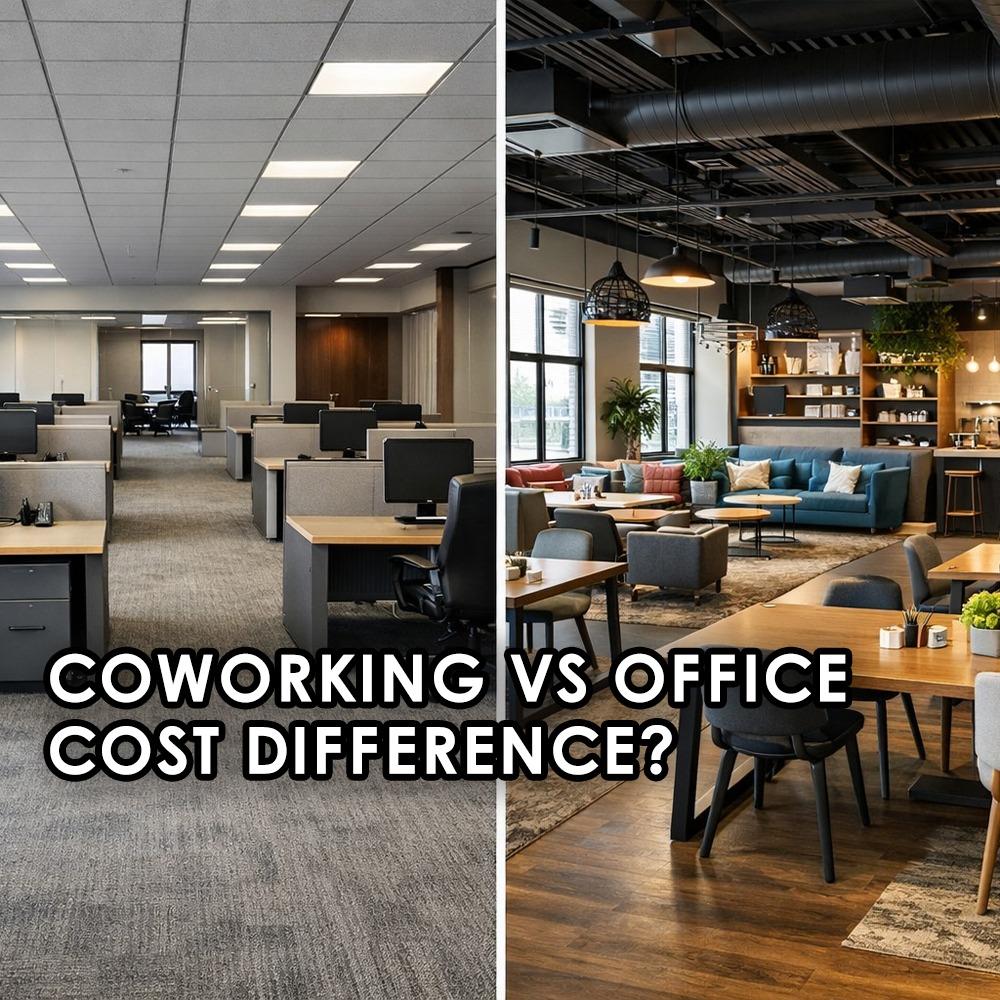
Every founder and office manager in India eventually faces this question. Do you sign a three-year lease, fit out a space, manage your own internet and housekeeping, and run a full office? Or do you walk into a coworking space India and pay one monthly number that covers everything? The answer is not the same for every business. But the cost gap between the two options is wide enough that making this decision without actual numbers is a genuine mistake. Here is what the comparison actually looks like.
What Setting Up a Conventional Office Truly Costs
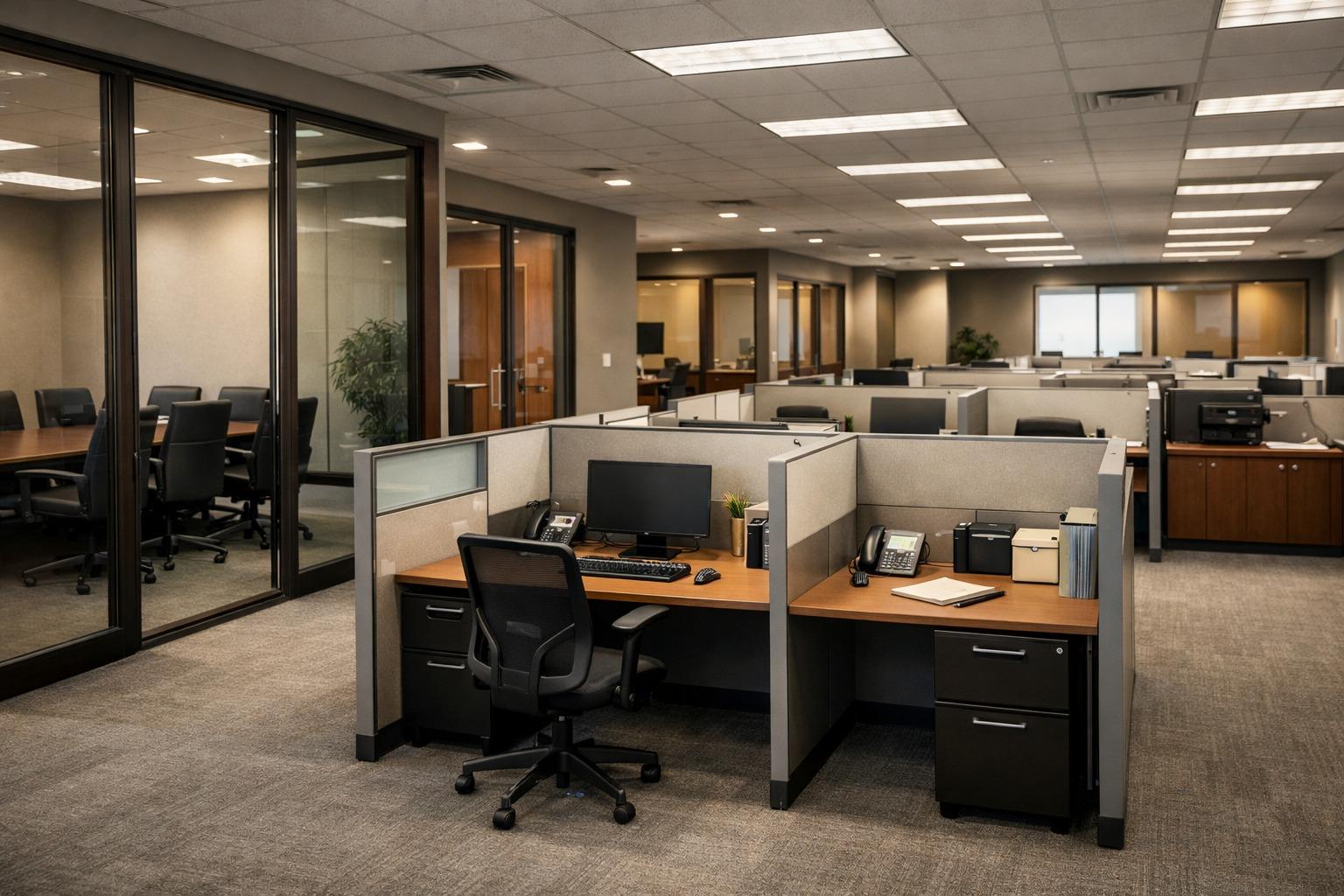
Most people think of traditional office space rent as the primary cost. It is not even close to the whole picture. Raw shell office rent in prime locations across Mumbai, Delhi and Bengaluru runs between Rs 80 and Rs 250 per sq ft per month. Add furnishing, fit-out, air conditioning, network infrastructure, security, housekeeping and administrative staff, and the total operational cost climbs to Rs 140 to Rs 310 per sq ft per month.
Assuming a per-person desk footprint of around 70 sq ft, that translates to Rs 9,800 to Rs 21,700 per seat per month before you account for a single rupee of salaries. Before you even open the doors, interior setup alone can cost Rs 10 to Rs 25 lakh. And most commercial leases demand a security deposit worth six to ten months of rent, locking up significant working capital on day one.
What Coworking Actually Charges
A coworking space cost per seat India is typically structured as an all-inclusive monthly fee. Hot desks, where you take any available open seat, start from Rs 3,000 and go up to Rs 10,000 per month depending on the city and operator. Dedicated desks, where a specific seat is reserved for you, cost between Rs 6,000 and Rs 15,000. Private cabins for teams run from Rs 10,000 to Rs 50,000 per month for the full room.
All of that includes high-speed internet, electricity, building maintenance, meeting room access, security, housekeeping and usually tea and coffee. No separate bills, no vendor coordination, no maintenance surprises.
The Actual Savings Number
The cost saving from switching to a coworking vs conventional office setup in India is typically between 35 and 60 percent. At the lower end, that is still a substantial reduction in monthly outflows. For a 20-person team paying Rs 12,000 per dedicated desk at a quality coworking space Mumbai Delhi Bengaluru, the monthly outflow is Rs 2.4 lakh. Setting up an equivalent conventional office in a comparable location would cost three to five times that figure once you include all operational costs and amortise the setup investment.
The savings are sharpest in the first two years, before a conventional office has had time to stabilise its costs.
The Flexibility Advantage That Has a Financial Value
Flexible office space vs lease is not just a lifestyle comparison. It carries real financial weight. A conventional lease typically runs three to nine years. Breaking it early attracts penalties. Scaling up requires renegotiating or finding additional space. Scaling down means paying for empty desks.
A managed office space India 2026 contract, by contrast, is often month-to-month or annually renewable. A team that goes from 15 to 30 people can add seats within days. A team that loses a contract and needs to cut costs can downsize without penalty. In a business environment where headcounts shift faster than ever, this flexibility is not a soft benefit. It prevents real financial loss.
Where Conventional Offices Still Win
This is not a one-sided argument. For large enterprises with stable headcounts above 100 to 150 people and a horizon of five years or more, traditional office space can make economic sense. At that scale, the per-seat cost of a leased and fitted office can undercut premium coworking rates.
Businesses handling sensitive client data, regulated financial information, or confidential legal work also often need the complete acoustic and physical privacy that only a self-managed office provides. And companies with strong brand identity goals may want the freedom to design their environment from scratch, something coworking spaces rarely allow.
The Market Is Already Giving Its Verdict
India's coworking space India market was valued at approximately USD 2.08 billion in 2025 and is projected to cross USD 2.91 billion by 2030, growing at around 7 percent annually. Coworking operators in India grew by 44 percent in 2024 compared to the prior year. Even 40 percent of Fortune 500 companies globally now use flexible workspaces for at least one function.
Tier 2 cities including Indore, Jaipur and Bhubaneswar are growing at over 30 percent annually as startups and smaller businesses in those markets discover the same cost logic that drove early adoption in metros.
The Right Way to Decide
The question is not which option is objectively better. It is which option matches your current stage. If your team is under 50, your headcount is uncertain, or your cash needs to be deployed into product or people rather than office infrastructure, coworking vs traditional office cost India numbers point firmly in one direction.
If you are a 200-person company with a decade-long city presence and stable operations, a negotiated direct lease may serve you better over the long term. The honest answer is that most Indian businesses sit firmly in the first category, at least until they are considerably more established than they think they are.
Summary
The coworking vs conventional office cost comparison India 2026 reveals a cost saving of 35 to 60 percent in favour of flexible workspace options for most startups and growing businesses. Traditional office space in Indian metros costs Rs 140 to Rs 310 per sq ft per month all-in, versus Rs 6,000 to Rs 15,000 per dedicated seat at a coworking space Mumbai Delhi Bengaluru. With India's managed office space India market growing steadily and coworking operators expanding into Tier 2 cities, the financial case for coworking vs office is clearer than ever for businesses prioritising agility, lower upfront costs, and predictable monthly expenses over long-term lease commitments.