Introduction
Ask any parent in a 2BHK or 3BHK apartment across Indian cities and they will tell you the same thing. Finding a dedicated spot where the child can sit, focus and study without the television on in the background or a sibling creating noise three feet away is genuinely difficult. The living room dining table serves too many purposes. The bedroom often doubles as a storage room. And the idea of a separate study feels like a luxury reserved for larger homes.
But a kids study corner does not need its own room. It needs its own clearly defined space, the right furniture, good lighting and a bit of planning. Done well, even a compact wall section can become a genuinely productive learning corner for a child at any age.
Why a Dedicated Space Changes Everything
There is something deeply practical about a child having a fixed place for study. It creates a mental association. When the child sits at that spot, the brain understands what is expected. Distractions reduce naturally because the space carries a specific purpose.
Beyond that, a well-organised children study table India gives the child a sense of ownership over their own work. They learn to organise their books, keep their stationery in order and take responsibility for their space. These are habits that develop quietly but stick for years.
Age-Wise Approach Makes All the Difference
A three-year-old and a fifteen-year-old need completely different setups. Treating them the same is one of the most common mistakes parents make when designing a child's room.
For toddlers and young children up to around age four, the focus should be on playful engagement rather than structured study. A low-height table and chair sized for the child, a wall-mounted magnetic board or blackboard at eye level, and open shelves with coloured bins for books, puzzles and art supplies are enough. Soft flooring with a rug or foam mat makes the area safe and comfortable for crawling and floor-based play. The goal at this stage is to build the habit of spending time in a learning space, not to enforce academic discipline.
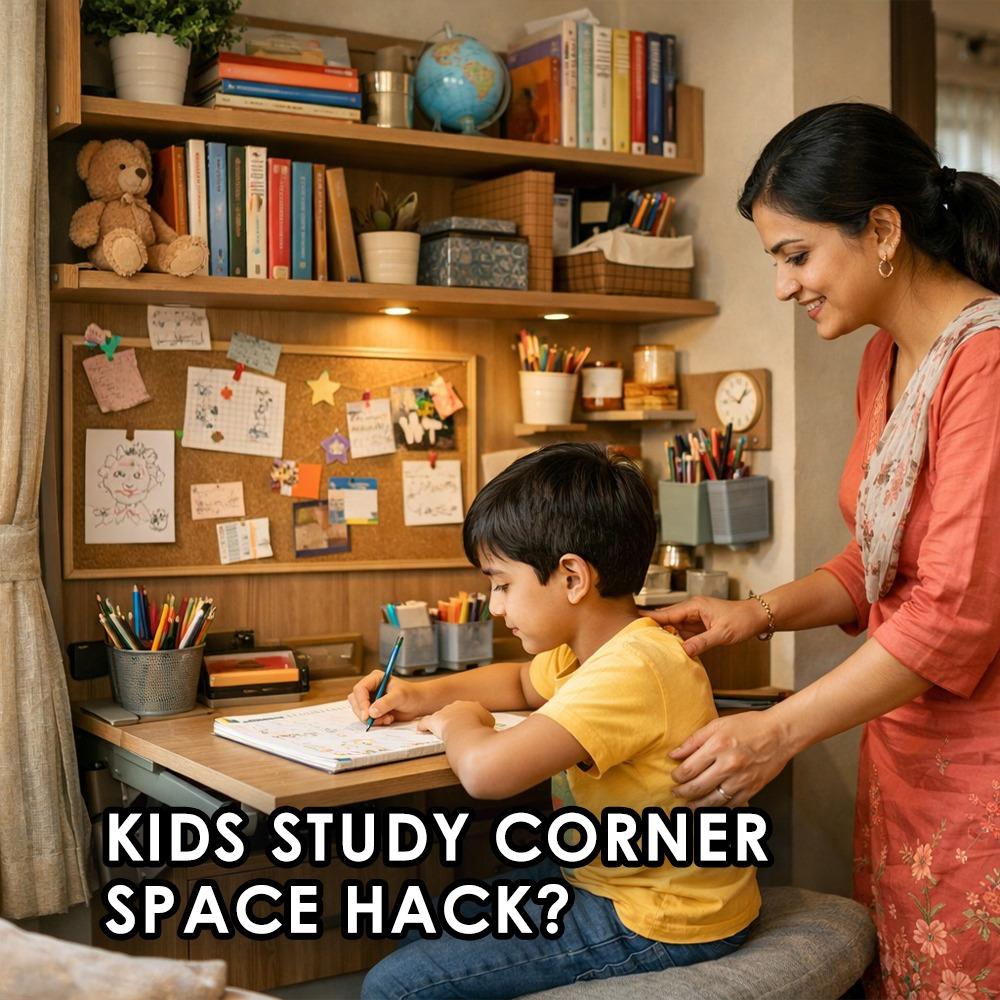
For school-going children between roughly four and ten years, the setup needs to become more functional. An ergonomic study table for kids at the right height prevents posture problems that develop early and persist long. Adequate lighting is critical here. Natural light from a nearby window during daytime combined with a warm adjustable desk lamp in the evenings protects the child's eyesight during homework hours. Drawers under the table keep stationery and books within reach without cluttering the surface. Wall-mounted shelves above the desk hold books and display items without consuming floor space.
Teenagers need a bigger surface that can accommodate a laptop or tablet alongside textbooks. At this age, the design can shift to something more mature. Neutral or muted tones replace the bright colours of younger years. A cork board or pinboard mounted near the desk helps teens track their schedules, exam dates and goals visually. The space should ideally also accommodate whatever hobby the teenager pursues, whether that is art, music or reading, without making the room feel chaotic.
Space-Saving Solutions for Compact Indian Homes
This is where kids study table ideas small room get genuinely useful for Indian parents dealing with limited square footage.
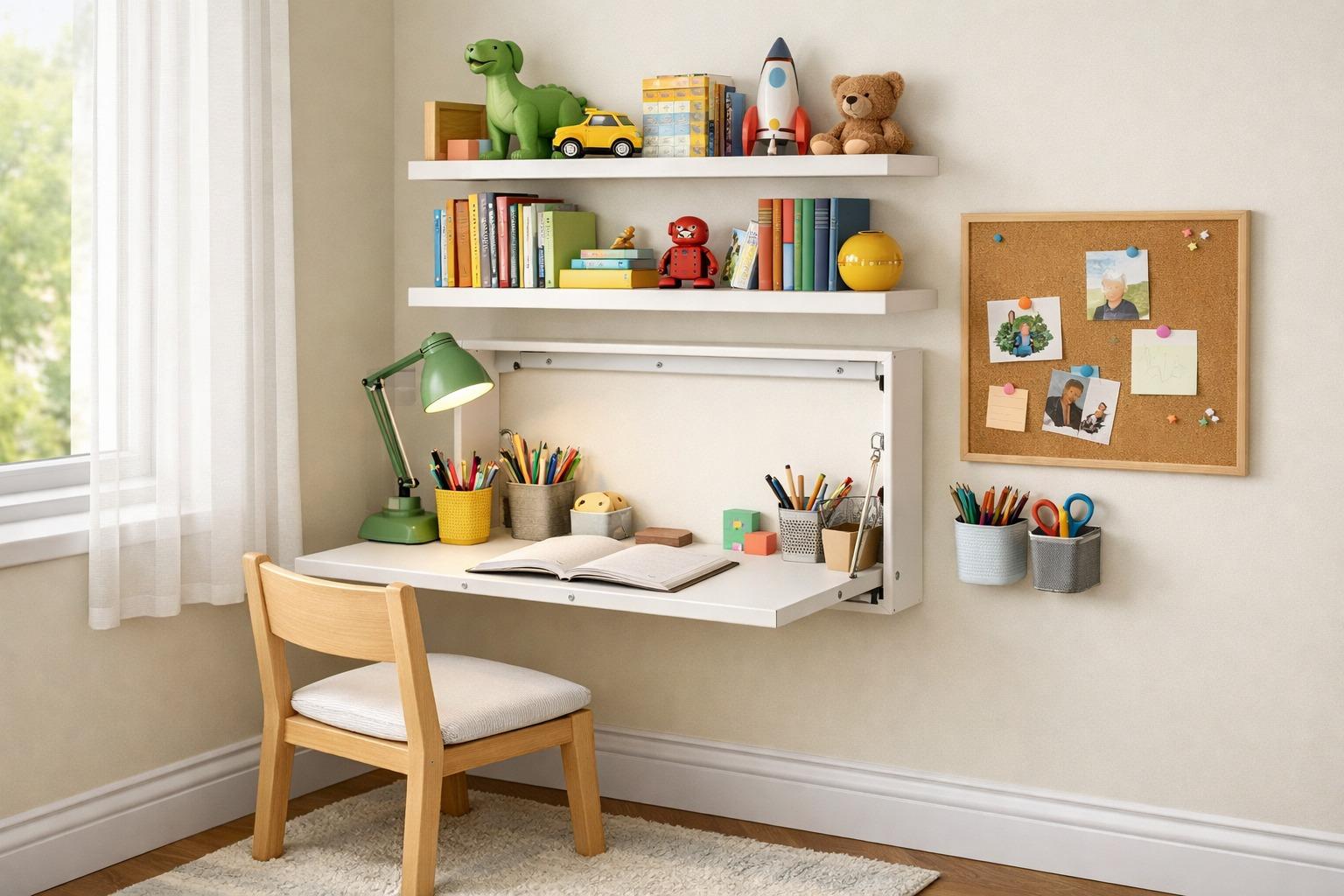
A wall-mounted fold-down desk is perhaps the most practical solution in a compact bedroom. When not in use it folds flat against the wall and disappears. When open it creates a full working surface. Paired with a stool that tucks under or slides away, the footprint is minimal.
Floating shelves above the desk capture vertical space that is otherwise completely wasted. A combination of two or three floating shelves can hold an entire school year's worth of books and supplies without touching the floor at all.
Pegboards mounted beside the desk are inexpensive and extraordinarily practical. Hooks, baskets and small shelves can be arranged and rearranged as the child's needs change. Pencils, scissors, rulers and small notebooks hang in view and stay accessible without creating desk clutter.
Under-bed storage with pull-out drawers or boxes handles seasonal items and extra books that are not needed daily, freeing up the study corner for active use only.
Colour and Light: Two Things Most Parents Overlook
Colour choices subtly influence how a child feels in a space. Blues and greens promote calm focus. Yellow brings energy and creativity. White keeps the space looking clean and open, which matters even more in a small room.
Lighting is non-negotiable. Harsh overhead fluorescent light causes eye fatigue. A layered approach with softer ceiling lighting supplemented by a proper adjustable desk lamp makes the study corner genuinely comfortable for long homework sessions.
Summary
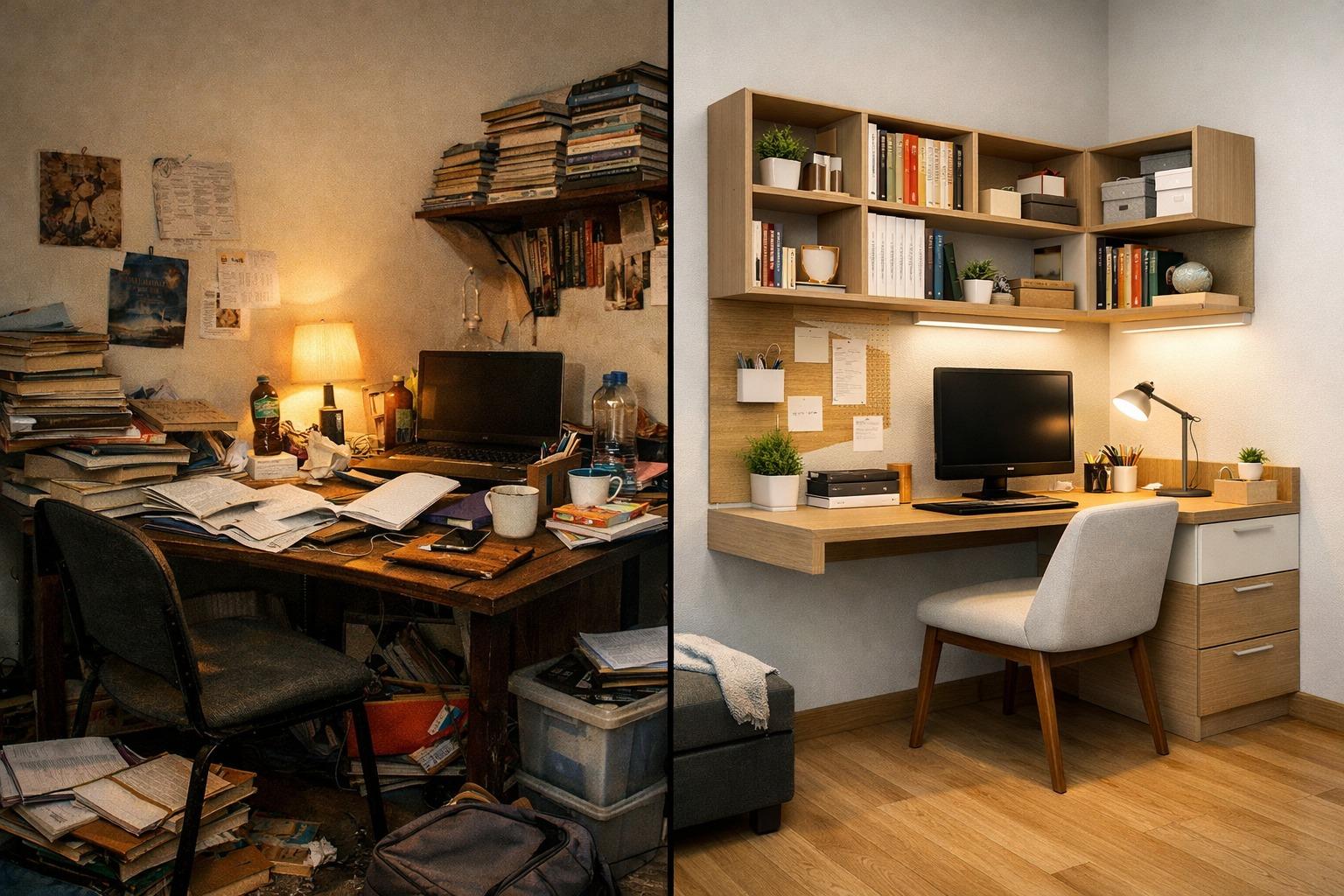
A well-designed space-saving kids study corner does not require a large room or an expensive renovation. It requires age-appropriate furniture, thoughtful storage using vertical space, good lighting and a defined spot that the child associates consistently with learning. For kids room design India, the most practical approach combines a wall-mounted or fold-down desk, floating shelves, a pegboard and a good lamp within whatever corner of the bedroom or living area can be dedicated to the purpose. The investment in a proper learning corner pays back in the child's focus, organisation and confidence every single day.