The Shift Happening Outside Your Front Door
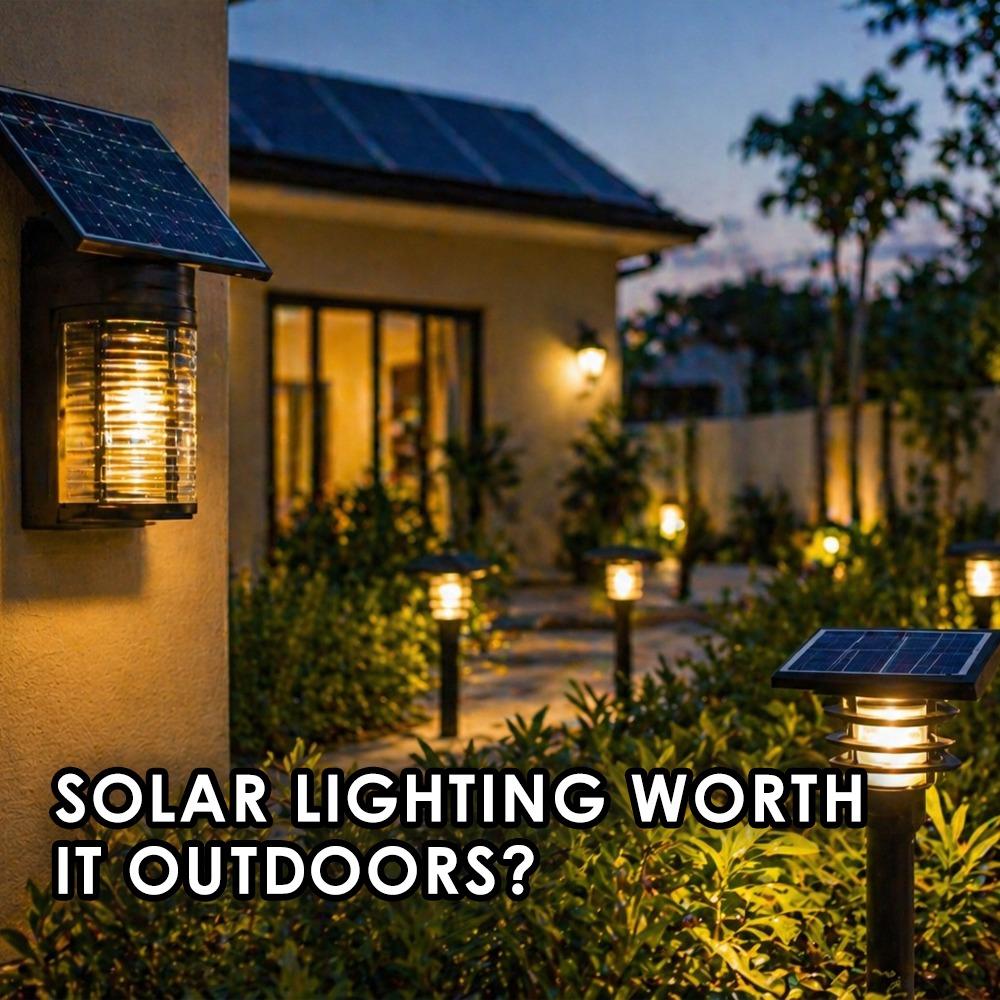
Walk through any newer residential colony in India today and you will notice something different about the way homes are lit after dark. Fewer tangled wires running along boundary walls. Fewer electricity bills quietly climbing because of outdoor fixtures left on all night. What you see instead are solar powered lights sitting neatly along pathways, driveways, and garden borders, doing their job without asking for much in return.
This shift is not just about saving money, though that matters. It is about homeowners realising that solar outdoor lighting can do two things at once: keep a property genuinely safer after dark and make it look considerably better in the process.
How Solar Lights Actually Work
The science is simple enough to understand without an engineering degree. A small photovoltaic panel on each fixture absorbs sunlight through the day, converting it into electrical energy that gets stored in a rechargeable battery. Once daylight fades, an automatic sensor triggers the LED, drawing down that stored charge to produce light through the night.
No wiring. No running costs. No calling an electrician every time something needs adjusting.
The quality of performance depends on two things: the efficiency of the solar panel and the capacity of the battery. Better panels charge faster and hold more through cloudy stretches. Larger batteries keep lights running longer into the night. When you are buying solar garden lights, these two specifications deserve more attention than the design or the price tag.
Why Safety Is the Real Argument
People often think of outdoor solar lights as a decorative choice. They are, but that framing undersells their practical value considerably.
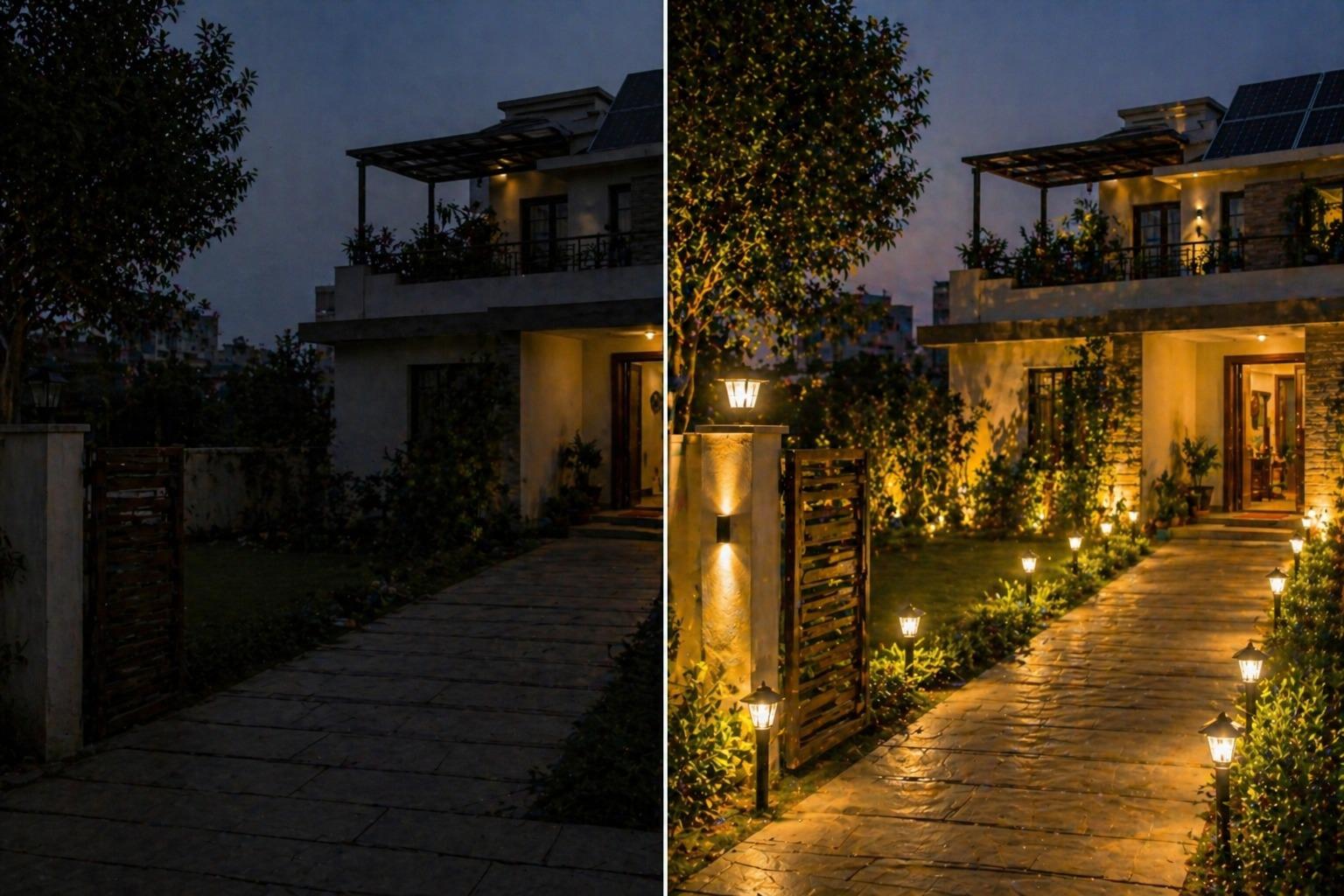
A dark driveway is an accident waiting to happen. Steps without adequate lighting have sent people to the emergency room. An unlit side entrance is an open invitation to anyone who does not belong on your property. These are not hypothetical risks.
Path lights placed along walkways remove trip hazards that become invisible at night. Spotlights angled at entry points eliminate the blind spots that give intruders confidence. And motion sensor solar lights take things a step further. When a light snaps on suddenly because someone walked into its detection range, it startles. It also signals to whoever is inside the house that movement has happened outside. That combination of deterrence and alert is genuinely useful in a way that a static light simply is not.
There is also the softer safety argument. Families who feel comfortable spending time in their garden after sunset use that space more. Children play longer. Evenings get extended. That quality of life dimension is real and worth factoring in.
The Aesthetics Case Is Equally Strong
Good solar garden lights do not fight with the landscape. They work with it.
A row of low-profile path lights along a garden border creates a warm, grounded glow that makes the whole front of a house feel considered and welcoming. Spotlights aimed at a mature tree or a feature wall add drama without effort. String lights woven through a pergola or along a boundary fence shift a plain outdoor area into something that looks designed.
The variety available now is genuinely impressive. Lantern-style fixtures suit traditional bungalow aesthetics. Sleek, minimalist stakes work in modern homes with clean landscaping. Flush-mounted ground lights embedded into driveways create a premium look that used to require complex wiring and professional installation.
And unlike wired lighting systems, solar LED outdoor lights can be repositioned without any hassle. If you decide the spotlight should face a different direction or the path lights need to shift for a new plant bed, you just move them.
Choosing the Right Fixture: What to Actually Look For
The market is flooded with options at every price point, and not all of them deliver. A few things separate a good purchase from a frustrating one.
Lumen output tells you how bright the light actually is. For path lights and decorative pieces, 50 to 200 lumens is usually sufficient. For security spotlights covering a driveway or entry gate, look for 400 lumens or above.
Battery capacity determines how long the light runs after a full day's charge. A decent solar powered light in Indian conditions should give you at least eight to ten hours of illumination after a sunny day's charge. Weather resistance matters too. Look for an IP65 rating at minimum, which means the fixture can handle direct rain without failing.
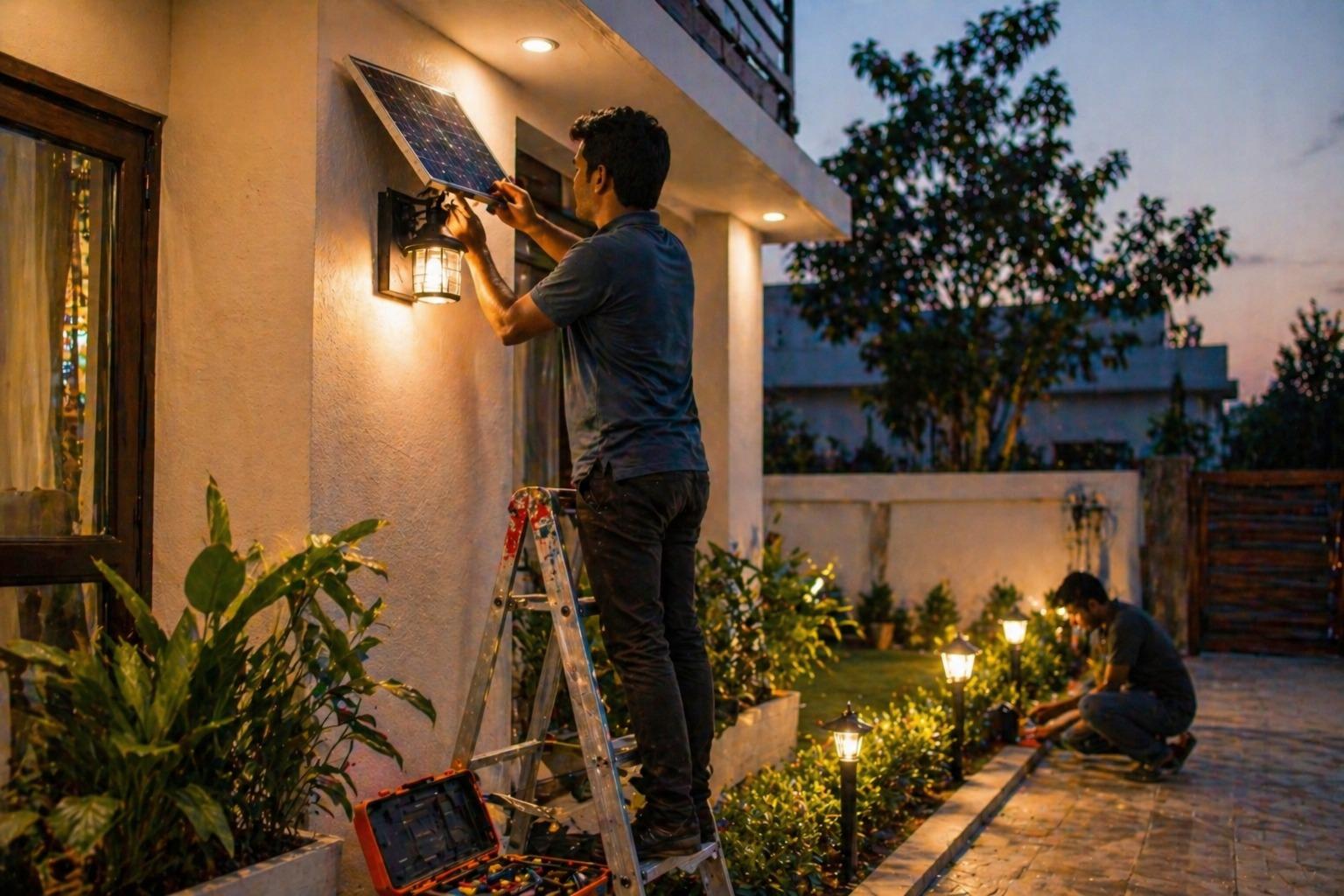
Install panels where they receive unobstructed sunlight for at least six hours daily. Even partial shade from a tree or an overhanging roof can meaningfully reduce charging performance.
Summary
Solar powered outdoor lighting sits at the intersection of safety, aesthetics, and sustainability in a way that no other home upgrade quite matches. From motion sensor solar lights that protect entry points to decorative solar garden lights that transform a plain boundary into a welcoming landscape, the category has matured well beyond novelty. For Indian homeowners looking to improve their property's security and curb appeal without adding to their electricity bill, solar LED outdoor lights represent one of the most practical investments available in 2026.