Introduction
A well-placed decorative mirror might be the most underrated tool in home design. It costs far less than a renovation, takes no structural work, and can completely change how a room feels within minutes. The right mirror placement can borrow light from one part of your home and push it into a dim corner, double the visual depth of a cramped bedroom, or turn a narrow passage into something that actually feels like a corridor worth walking through.
In Indian homes where space is often at a premium, knowing exactly where and how to use mirrors for home decor is genuinely useful knowledge. Here is a room-by-room guide to placing decorative mirrors for maximum effect.
Start Opposite a Window, Always
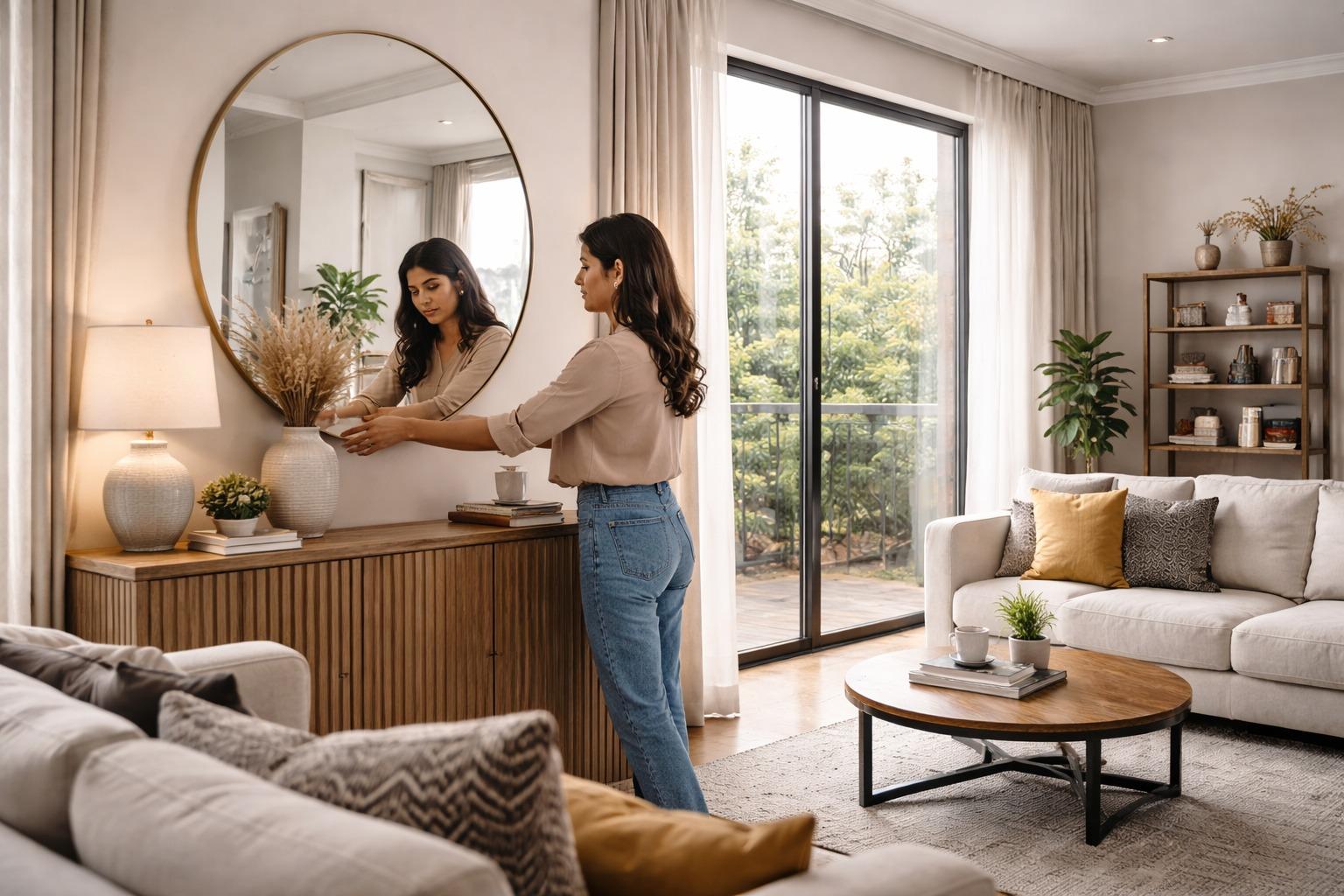
The most reliable mirror placement idea that works in virtually every home is positioning a large mirror directly across from a window. When natural light enters the room, the mirror catches it and bounces it back across the space, essentially doubling the daylight the room receives. The effect is most pronounced in rooms that get morning sun but feel dim by afternoon.
Choose a mirror that is proportionally generous for the wall. A small mirror in this position produces a small effect. A large framed wall mirror opposite a window can make a room feel genuinely luminous. This works particularly well in living rooms and dining areas where the window may be on one side of the room and the main seating area on the other.
The Living Room: Size and Positioning Both Matter
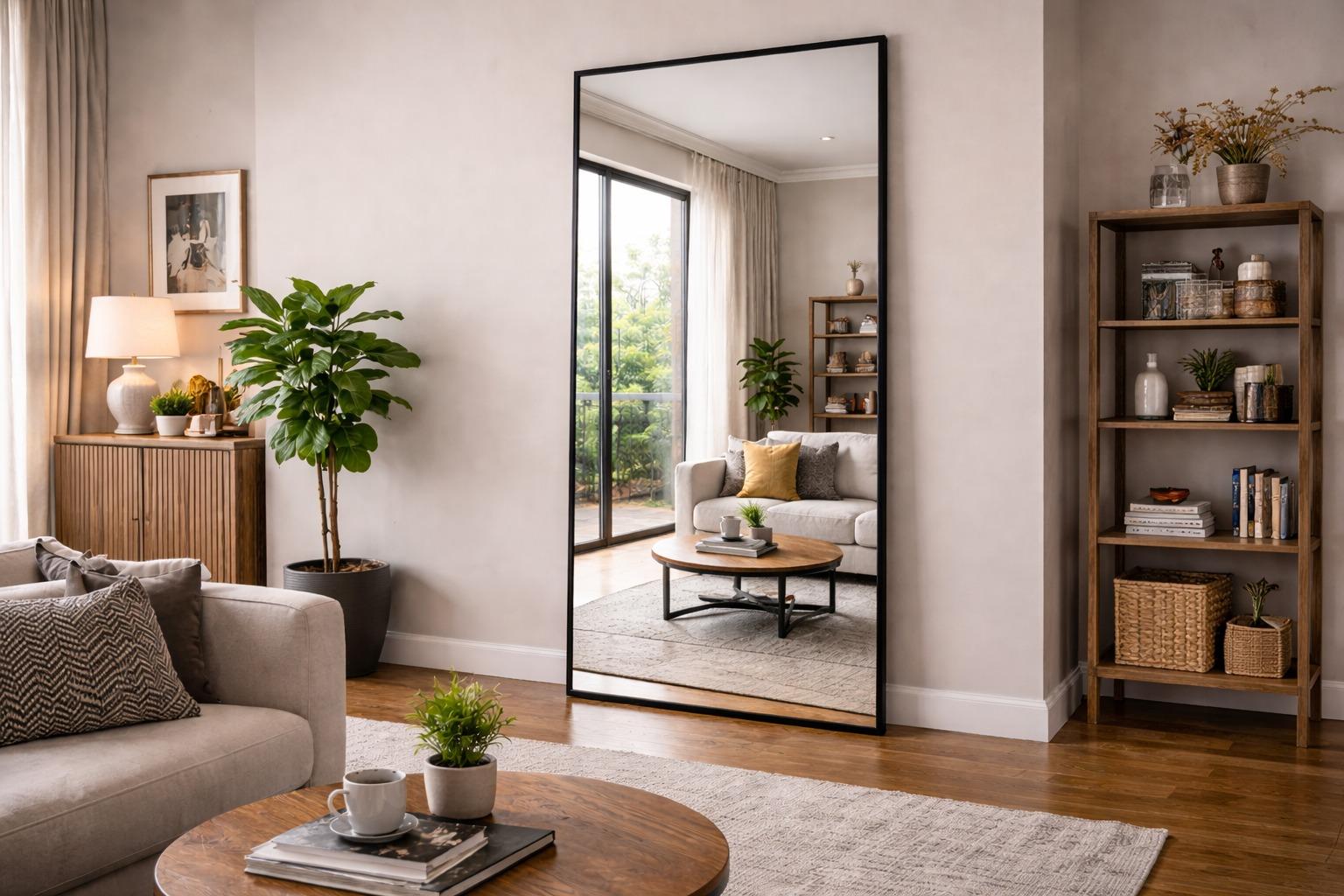
In the living room, a decorative mirror serves a dual purpose. It is a design statement and a light tool simultaneously. Lean a tall floor mirror against the longest wall if you want to stretch the visual length of the room without permanently fixing anything. For a more formal look, mount a large rectangular or arched mirror above the sofa or console table.
The key rule for living room mirror placement is to be mindful of what the mirror reflects. If it faces beautiful greenery, soft furnishings, or an attractive piece of artwork, the reflection adds to the room. If it faces a cluttered corner or a bare wall, it amplifies the problem. Always check what the mirror will show before you hang it.
Narrow Hallways: The Instant Fix
Long, narrow hallways are one of the most common design challenges in Indian apartments, and mirrors for small spaces solve this problem more elegantly than almost anything else. Mounting a tall, slim mirror along the length of a hallway creates the optical illusion of width. The reflection draws the eye sideways, breaking the tunnel effect that makes narrow passages feel oppressive.
If the hallway receives any natural light from an adjacent room or a window at one end, the mirror will amplify that light significantly. Even without a direct light source, a mirror creates visual depth that makes the passage feel more generous than its actual dimensions.
Bedroom: Be Strategic About Reflection
Mirror placement in the bedroom requires a little more thought than other rooms. The most practical option is mirrored wardrobe or sliding closet doors, which serve their functional purpose while visually expanding the room at no extra wall space cost. A full-length mirror angled slightly toward the room rather than mounted flat also picks up more light from the ceiling, brightening the space without directing any harsh reflections toward the bed.
Avoid placing a large mirror directly facing the bed. Beyond Vastu considerations, which many Indian homeowners take seriously, a large reflective surface catching movement during the night can be genuinely disruptive to sleep. Position the mirror on an adjacent wall or inside the wardrobe door instead.
Bathroom: Proportion and Light Together
The bathroom is where most homes already have a decorative mirror, but size and lighting placement make an enormous difference. A mirror that spans the full width of the sink cabinet rather than a narrow circle above it immediately opens up the space. In shared bathrooms with a double sink, two matching framed mirrors side by side create symmetry and a sense of order that makes even a modest bathroom feel considered and complete.
Position the overhead or side lighting to work with the mirror rather than creating shadows on the face. Light positioned above or on both sides of the mirror bounces evenly across the reflective surface and back into the room.
Gallery Walls with Mixed Shapes
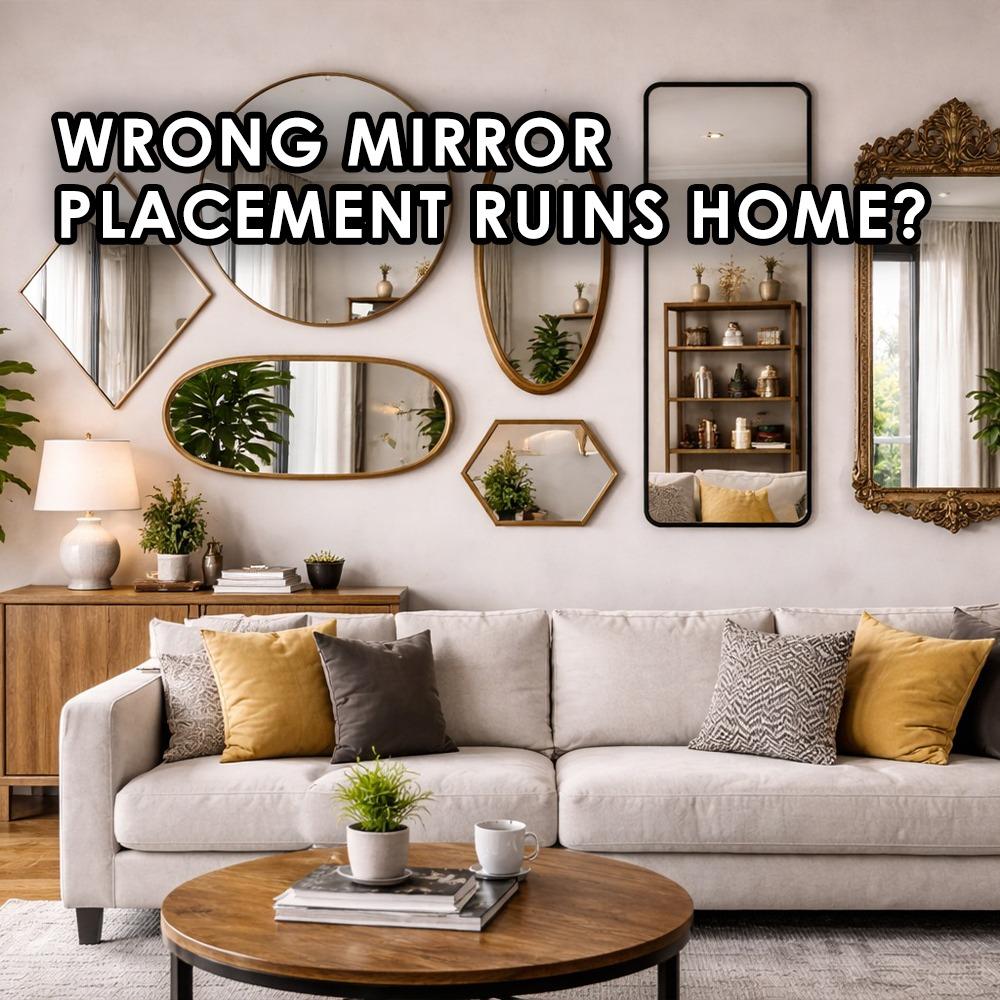
One of the most visually striking wall mirror ideas for contemporary Indian homes is the gallery arrangement. Rather than one large piece, cluster several mirrors of different sizes and frame styles on a single wall. Circular mirrors mixed with rectangular ones, ornate frames alongside simple ones, create texture and depth without overwhelming the space. This works especially well on feature walls in the living room or dining area, and the varied shapes keep the eye moving, making the wall feel curated rather than cluttered.
Summary
Decorative mirror placement ideas work best when the mirror is positioned to reflect something worth seeing, whether that is natural light from a window, greenery, artwork, or the depth of the room itself. The fundamentals are simple: face a large wall mirror opposite a window to maximize light, use tall slim mirrors in narrow hallways to create width, lean or mount mirrors in the living room to add depth, and choose bathroom mirrors that span generously across the vanity. These mirror placement rules are easy to apply, cost-effective, and consistently effective in making Indian homes feel brighter, larger, and more beautifully designed.