
Why Township Development Is Accelerating
Summary
Township development is rapidly accelerating in India, driven by urban land scarcity, evolving buyer expectations for integrated lifestyles, outward infrastructure growth, and the manufacturing sector's demand for complete ecosystems. This model is now a structural backbone for housing families and factories across the nation.

Introduction
Drive along the outer edges of almost any growing Indian city today and you will notice the same pattern repeating itself. Sprawling gated communities with their own schools, clinics, parks, and shopping streets are replacing what used to be standalone apartment blocks scattered across a neighbourhood. Township India growth has stopped being a niche real estate category. It has become the dominant model that both homebuyers and large developers are betting on, and the reasons behind that shift go far deeper than marketing brochures suggest.
Land Is Running Out Where It Used To Be Cheap
City centres across India have simply run out of room. Builders cannot keep stacking towers into already congested neighbourhoods without choking the roads, the water supply, and the drainage systems that were never designed for that density. Integrated township India projects solve this by moving to the city's edges, where larger parcels of land are still available, and building an entire self-contained neighbourhood from scratch rather than squeezing one more building into an already strained pocket.
This shift toward the periphery is not a compromise. It is deliberate. A developer with eighty or a hundred acres at their disposal can plan internal roads, drainage, green belts, and amenity zones the way a city planner would, rather than being boxed in by whatever the surrounding plots allow.
Buyers Have Changed What They Are Willing to Settle For
Ask any young couple shopping for their first home today what they actually want, and the answer rarely stops at four walls and a parking slot. They want a gym downstairs, a school their child can walk to, a clinic nearby for emergencies, and a sense that the building will still feel cared for fifteen years from now.
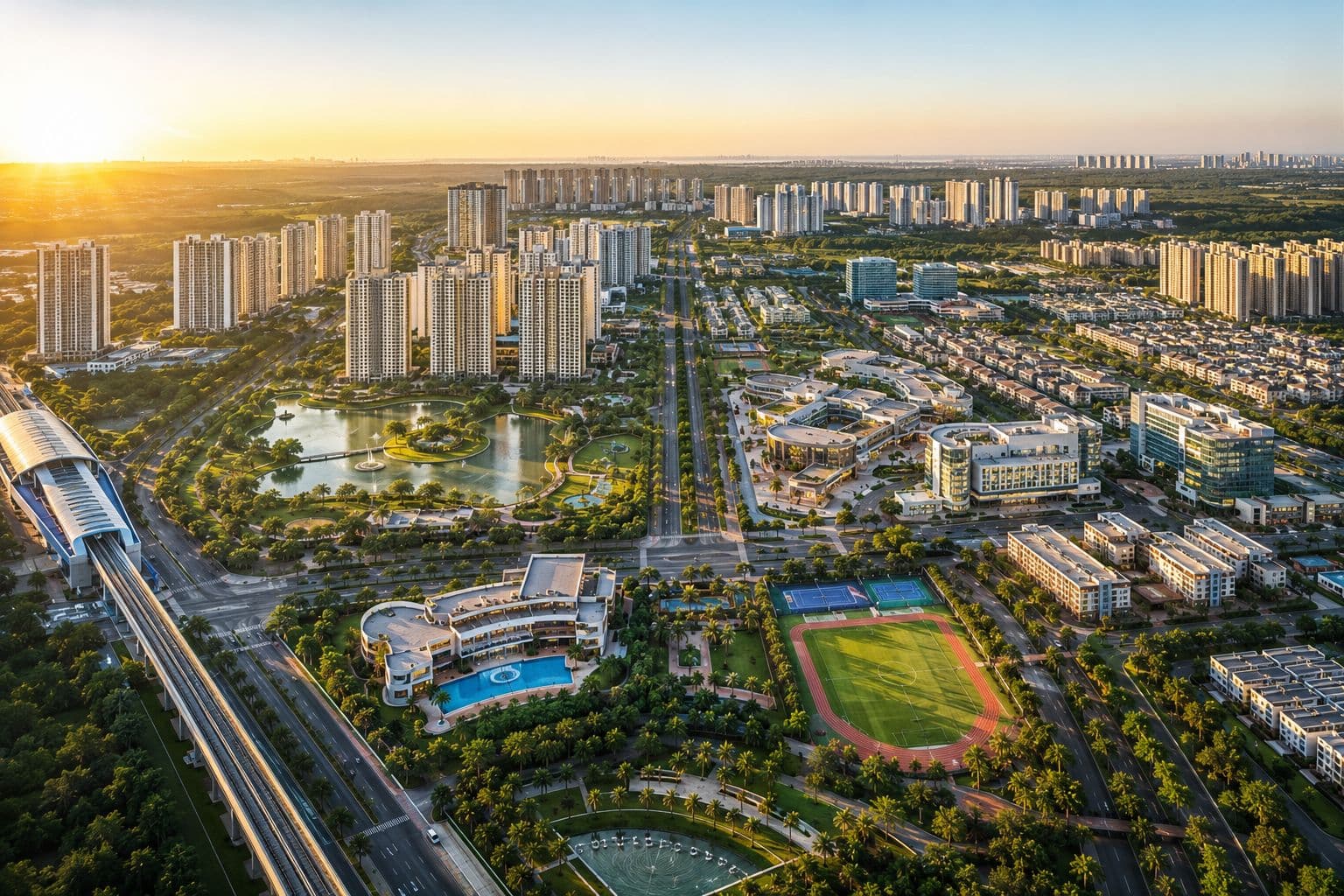
Why homebuyers are choosing integrated townships over standalone flats comes down to exactly this shift in expectation. A standalone society depends entirely on its own resident association to manage maintenance, security, and upkeep, and that quality fluctuates wildly from one building to the next. A professionally managed township, by contrast, ages more predictably because a dedicated facilities team rather than a rotating volunteer committee handles its upkeep year after year.
Infrastructure Spending Is Opening Up New Geography
How infrastructure growth is fueling township expansion in India is visible the moment you look at where new metro lines, ring roads, and expressways are being built. Every time a peripheral corridor gets a metro connection or a new highway link, land that was previously considered too far from the action suddenly becomes commercially viable for large-scale development.
This pattern has repeated itself in city after city. Areas once dismissed as distant suburbs have transformed into thriving micro-markets the moment connectivity arrived, and developers who acquired land early in these corridors are now sitting on assets worth several times their original purchase price.
Manufacturing Is Adding a Whole New Layer to the Story
There is a second, less talked about driver behind this boom, and it has nothing to do with residential housing at all. Industrial townships driving India manufacturing growth 2026 reflects the country's push to become a serious manufacturing alternative on the global stage. Large industrial groups are no longer just buying factory land. They are building complete ecosystems that combine manufacturing plots, worker housing, schools, and logistics infrastructure within a single boundary, because experience has shown that factories without supporting social infrastructure struggle to retain a stable workforce.
Reliance's massive economic township project in Haryana and similar large-format developments elsewhere are early proof that this integrated approach is becoming the preferred template rather than the exception.
What This Means Going Forward
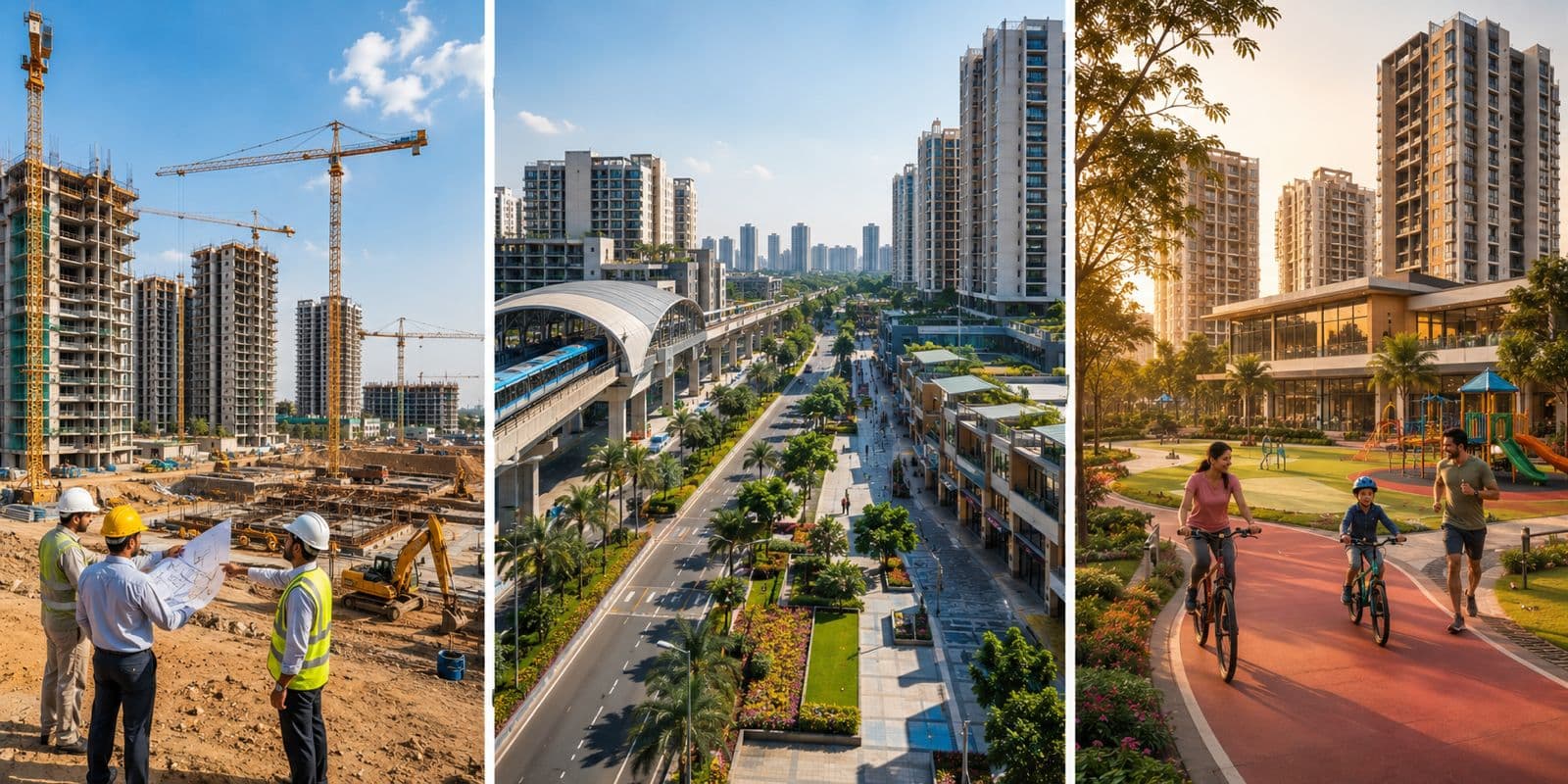
Future of township living in Indian real estate 2026 points toward continued expansion rather than a slowdown. Buyers increasingly treat these developments as long-term lifestyle decisions rather than short-term housing purchases, and that loyalty gives township projects a stability that scattered standalone developments rarely achieve. As long as cities keep running out of central land and infrastructure keeps pushing outward, this model will keep gaining ground.
Summary
Why township development is accelerating comes down to a convergence of forces: shrinking central land, rising buyer expectations around lifestyle and management quality, infrastructure investment opening new corridors, and a manufacturing sector that has discovered the value of building complete ecosystems rather than isolated plots. Township projects growth India is no longer experimental. It has become the structural backbone of how the country plans to house both its families and its factories in the years immediately ahead.