
Why Secondary Cities Are Attracting Attention
Summary
Secondary Indian cities are gaining traction from investors and buyers due to high metro prices, substantial government infrastructure spending, and superior rental yields. This shift, backed by new economic zones and job creation, positions them as compelling investment destinations for future growth.

Introduction
Ask a property broker in Mumbai or Bengaluru what a decent two bedroom flat costs today and watch their face. Then ask the same question about Indore or Coimbatore. That price gap alone explains most of what's happening right now, developers, investors and ordinary families are all quietly looking past the usual big four.
The Metro Squeeze Is Real
Land in India's largest cities has simply run out of room to expand cheaply. Prices in Tier 1 markets kept climbing even through years when incomes didn't move nearly as fast, and that mismatch has pushed both buyers and builders to start scouting elsewhere. It's less a trend than a slow, practical retreat from unaffordability.
The Budget Gave Secondary Cities a Real Push
The Union government's latest budget raised capital expenditure to around twelve lakh crore rupees, with a good chunk earmarked for connectivity projects that bypass the usual metro corridors entirely. Seven new high speed rail lines are on the table, along with a fresh push to develop what's being called City Economic Regions, essentially clusters built around mid sized cities rather than the same four or five urban giants.

States Are Backing This With Real Money
Uttar Pradesh alone has committed over two thousand nine hundal crore rupees toward planned development in its smaller towns, essentially trying to replicate what the Smart Cities Mission did earlier, but this time for places that never got that attention the first time around. That's not loose talk, that's a state government putting its own budget where the ambition is.
The Numbers Analysts Are Circling
McKinsey's research suggests roughly eighteen mid sized Indian cities could collectively generate close to two trillion dollars in revenue by 2030, a massive jump from under seven hundred billion just a few years earlier. Whether or not that exact figure plays out, the direction it points to is hard to argue with.
Yields Are Simply Better Away From the Big Names
Here's the part that actually moves investor decisions. Rental yields in pockets of Hyderabad's tech corridors and parts of Kolkata have been running well above the typical two and a half to three and a half percent seen in prime metro cores, in some cases touching six percent or more. Lower entry price, better return, it's not a complicated pitch once you see the numbers side by side.
Infrastructure Is Doing the Heavy Lifting
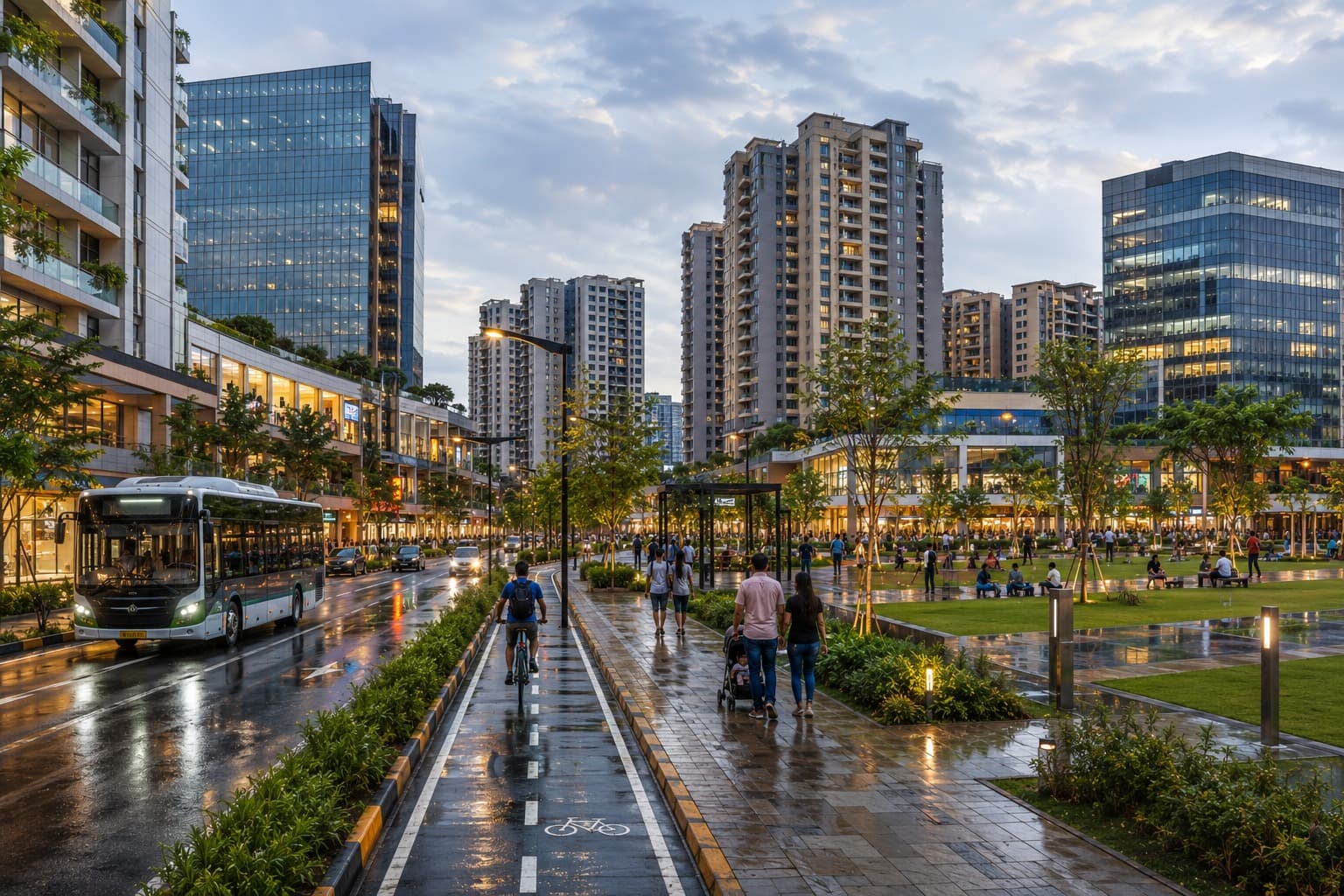
None of this works without roads, rail and airports actually reaching these places. Expressway projects connecting UP's smaller districts, metro rail expansions in Lucknow, and the steady build out around Indore's Super Corridor are the quiet machinery behind every headline about secondary cities. Buyers rarely mention infrastructure directly, but it's what makes their decision feel safe.
Jobs Are Following the Roads
Industrial clusters and IT parks are decentralising too, and that matters more than any single road project. Once employers start opening offices in a city that used to just be a stopover, the housing demand around it stops being speculative and starts being structural. That shift is already visible in places like Coimbatore and Nagpur.
What This Means Going Forward
None of this suggests Mumbai or Bengaluru are losing relevance, they're not. But the growth curve is clearly bending toward cities that were considered secondary a decade ago. Investors chasing the next decade of appreciation would be foolish to ignore where the government's own money is flowing.
Summary
Secondary cities across India are pulling attention away from traditional metros, driven by high prices in Tier 1 markets, fresh infrastructure spending, and noticeably stronger rental yields. Government backed corridors, expressways and city level economic zones are turning places like Indore, Lucknow and Coimbatore into genuine investment destinations. For buyers and investors willing to look beyond the usual four cities, this shift is quickly becoming one of the more compelling stories in Indian real estate.