
Why Retail Spaces Near Office Hubs Are Becoming India's Smartest Commercial Bet
Summary
Retail spaces near India's office hubs are emerging as the smartest commercial bet, driven by consistent weekday footfall from affluent professionals. This model, often integrated into mixed-use developments, offers strong rental yields and stable growth for investors and brands.

Introduction
Walk into any well-performing mall or high street in Bengaluru's Outer Ring Road, Gurugram's Cyber City belt, or Mumbai's Lower Parel, and you will notice something almost immediately. The place is alive on a Tuesday afternoon. Not just on weekends. Not just during a sale season. Every single working day.
That is not a coincidence. Retail spaces near office hubs draw from a captive audience that shows up five days a week, carries disposable income, and does not need a special occasion to step out for lunch, grab coffee, or pick up something on the way home. It is this daily, predictable footfall that separates proximity-driven retail real estate India from everything else in the commercial property segment.
The Old Mall Model Is Quietly Fading
There was a time when the standard playbook for a developer was to build a large format mall on the outskirts of a city, hope that weekend traffic would sustain occupancies, and sign long leases with anchor tenants to cover the risk.
That model struggled. Several such properties saw vacancy rates climb year after year as consumers found fewer reasons to travel far for a shopping trip. The malls that survived and thrived were not always the largest. They were the ones positioned where people already were.
What Office Proximity Actually Does for Retail
A commercial retail near business district location does something elegant. It converts the work commute into a consumption habit.
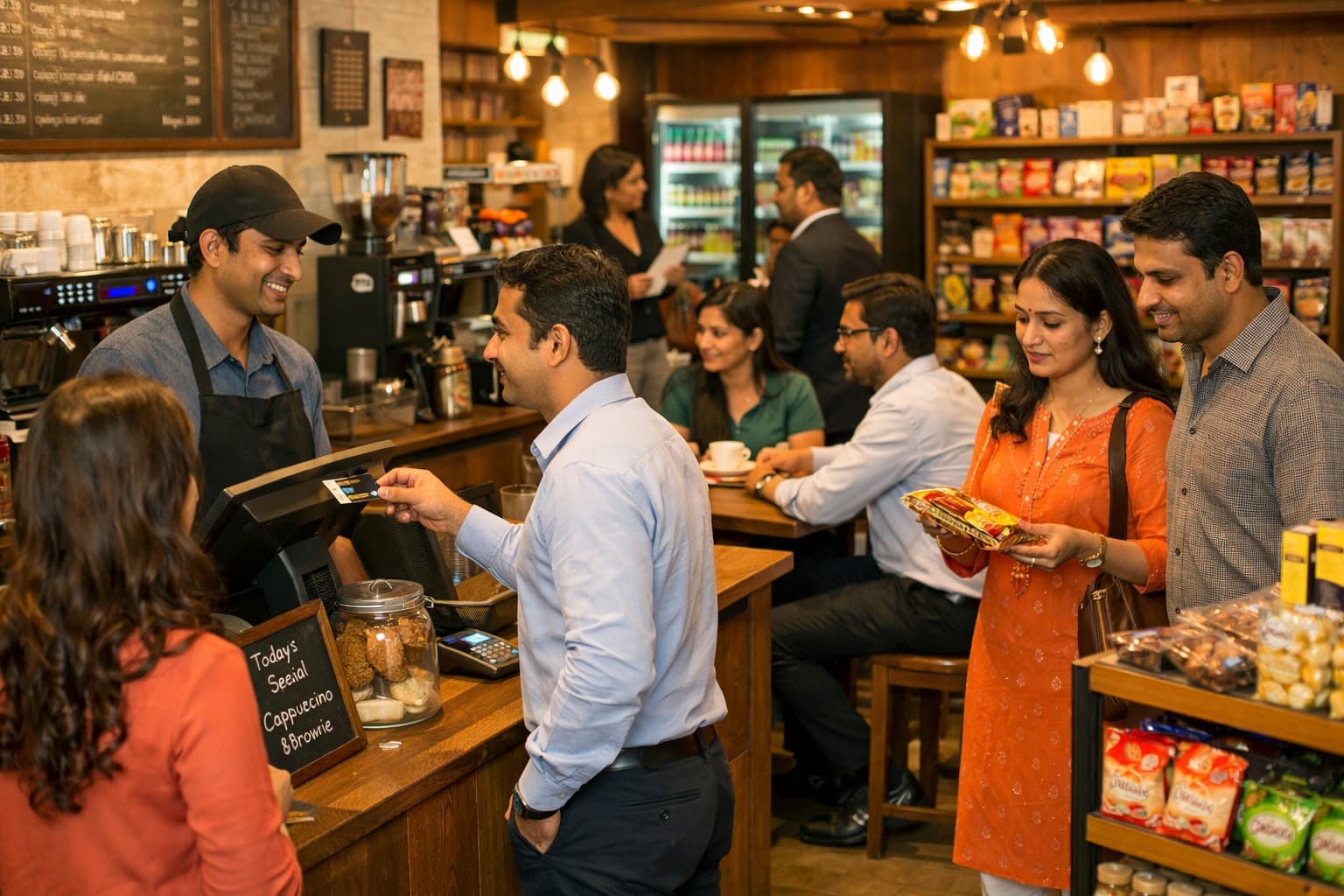
An office worker passing a coffee shop twice daily will become a paying customer multiple times a week without consciously making a shopping decision. A food court between two tech parks fills up at 1 PM as reliably as a clock. A pharmacy or apparel store inside a mixed use development adjacent to a corporate park captures the evening rush that would otherwise drive home and order online instead.
This is the mechanics of proximity. It is not glamorous, but it produces some of the most consistent footfall patterns in all of commercial real estate.
The Numbers Behind the Trend
India's retail sector is currently valued at around Rs 82 lakh crore and is expected to more than double to over Rs 190 lakh crore by 2034, according to a report by Boston Consulting Group and the Retailers Association of India. That trajectory is not just about more consumers. It is about better positioned retail catching a larger share of that spending.
In Delhi NCR, retail real estate India saw leasing activity jump 36 percent year on year in 2024. High street zones near corporate corridors like Galleria Market in Gurugram and Khan Market in Delhi recorded rent increases in the range of 7 to 20 percent in the same period. Malls in premium, high-footfall neighbourhoods reported vacancy rates as low as 3 percent while outlying properties struggled. The pattern is consistent and hard to argue with.
Why the Post-Pandemic Shift Matters
The return to office, even in hybrid form, has fundamentally reinforced the case for retail spaces near office hubs. When professionals are physically commuting to work three or four days a week, the retail catchment around that workplace becomes active and valuable again.
There is also a behavioural dimension. Workers who return to office after years of working from home seem more willing to spend on small pleasures during the workday. A slightly better lunch. A mid-afternoon coffee. An impulse buy at a boutique on the ground floor. These micro-transactions add up across hundreds of daily visitors and make a footfall driven retail space commercially compelling for both tenants and investors.
Mixed Use Is Not Just a Buzzword
The mixed use development format, where retail sits beneath or alongside residential towers, office blocks, and hospitality properties, is the clearest physical expression of proximity-driven retail logic.
Cities like Hyderabad, Pune, and Bengaluru have seen a strong rise in such integrated developments, particularly along IT corridors and commercial belts. These projects are not designed to draw visitors from across town. They are designed to serve the ten thousand people who already live and work within walking distance. That captive base is what gives a mixed use retail India asset its stability.
The Experience Layer Is Non-Negotiable
Proximity alone is not a guarantee of success. A retail investment near business hub still needs a compelling reason for people to walk in.
This is why the best performing retail spaces in India's corporate corridors are leaning heavily into food, wellness, fitness, and lifestyle offerings rather than just fashion and electronics. A gym, a bakery, a co-working lounge, and a sit-down restaurant create reasons to linger. They also generate repeat visits that pure transactional retail simply cannot. Events, pop-ups, weekend markets, and community programming build a sense of ownership among the regular crowd, which in turn builds loyalty that no online platform can easily replicate.
What Investors Should Be Looking For
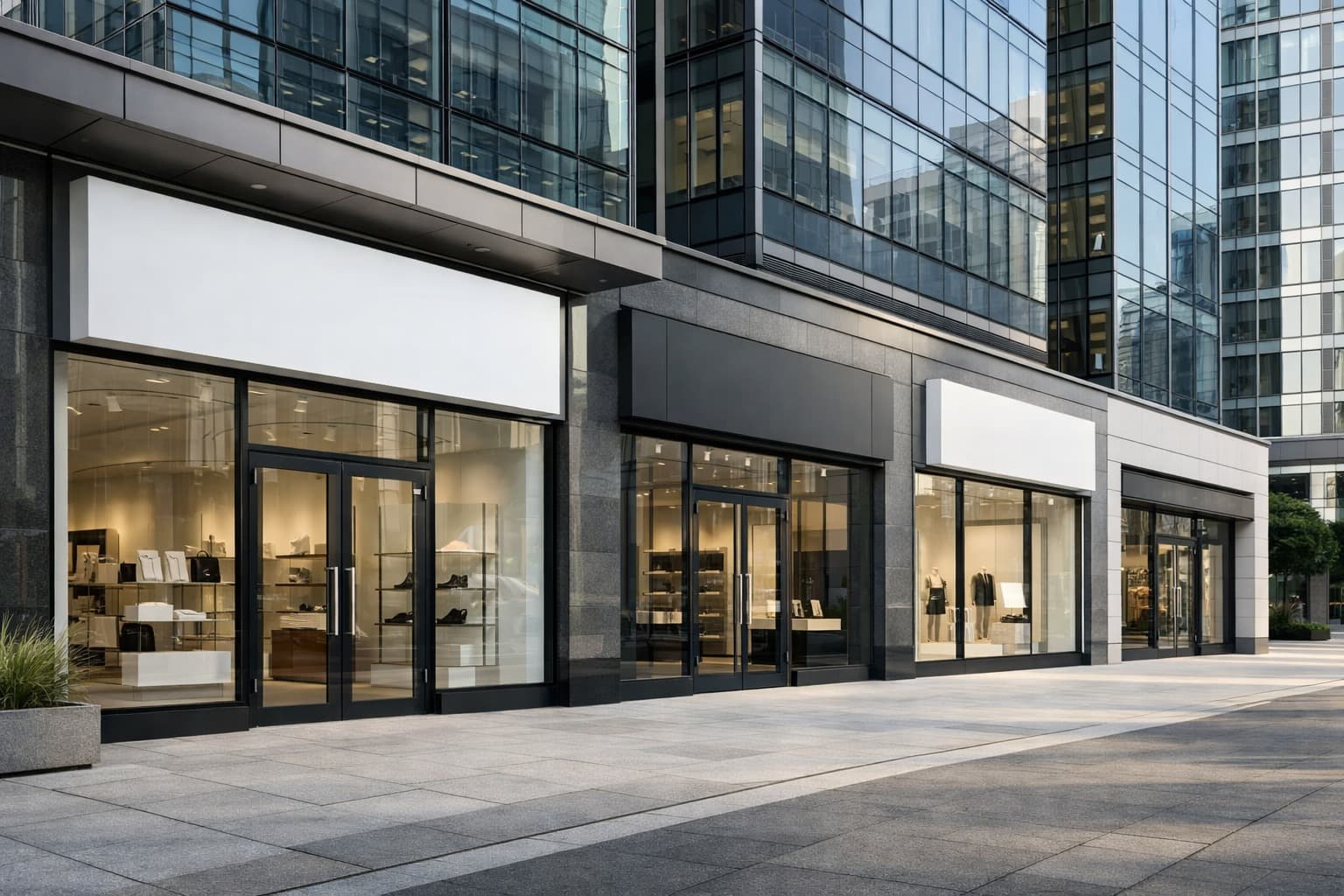
For anyone evaluating a retail investment in today's market, proximity to a thriving office hub should sit near the top of the checklist alongside title clarity and construction quality.
Retail spaces priced between Rs 15,000 and Rs 30,000 per sq ft in locations like Noida's Sector 140A, Gurugram's Southern Peripheral Road belt, or Bengaluru's Whitefield corridor are attracting rental yields in the range of 8 to 12 percent. Corridors near Dwarka Expressway and the Yamuna Expressway, which sit close to both residential clusters and growing commercial real estate office supply, are being watched closely by institutional investors for exactly this reason.
The Tier 2 Opportunity
One aspect of this story that does not get enough attention is the same trend playing out across tier 2 cities. Offices from Global Capability Centres and mid-size technology firms are landing in cities like Coimbatore, Jaipur, Nagpur, and Indore. Retail spaces that position themselves early along these emerging office hub corridors in tier 2 cities stand to capture appreciation that metro markets have already partially priced in.
The entry points are lower, the competition is thinner, and the fundamentals are identical.
Summary
Retail spaces near office hubs represent one of the most dependable asset classes in commercial real estate India today. Consistent weekday footfall, a captive professional consumer base, and the structural shift towards mixed use development are all reinforcing the same conclusion: location relative to where people work is as important as location relative to where they live. Whether you are a brand looking to lease or an investor seeking stable rental income, retail investment near business hubs India is a conversation worth having seriously right now, before the best inventory gets locked in.