
Why NRIs Are Falling for India's Smart Townships
Summary
NRIs are increasingly investing in India's integrated smart townships, shifting from traditional apartments. This trend is driven by professional management, stable rental yields, the rupee's advantage, and tech-enabled convenience, offering long-term growth and peace of mind.

Introduction
For decades, the typical NRI real estate India purchase followed a simple script. A two-bedroom apartment in a good locality, preferably near the family home, generating some rental income while the buyer remained abroad. Clean, predictable, low-maintenance on paper.
That script is being rewritten. NRI homebuyers in 2026 are increasingly skipping the standalone flat altogether and putting their money into something larger and more deliberate: the integrated smart township. It is a shift worth understanding, because it says a great deal about how the NRI relationship with India has changed.
What Exactly Is a Smart Township
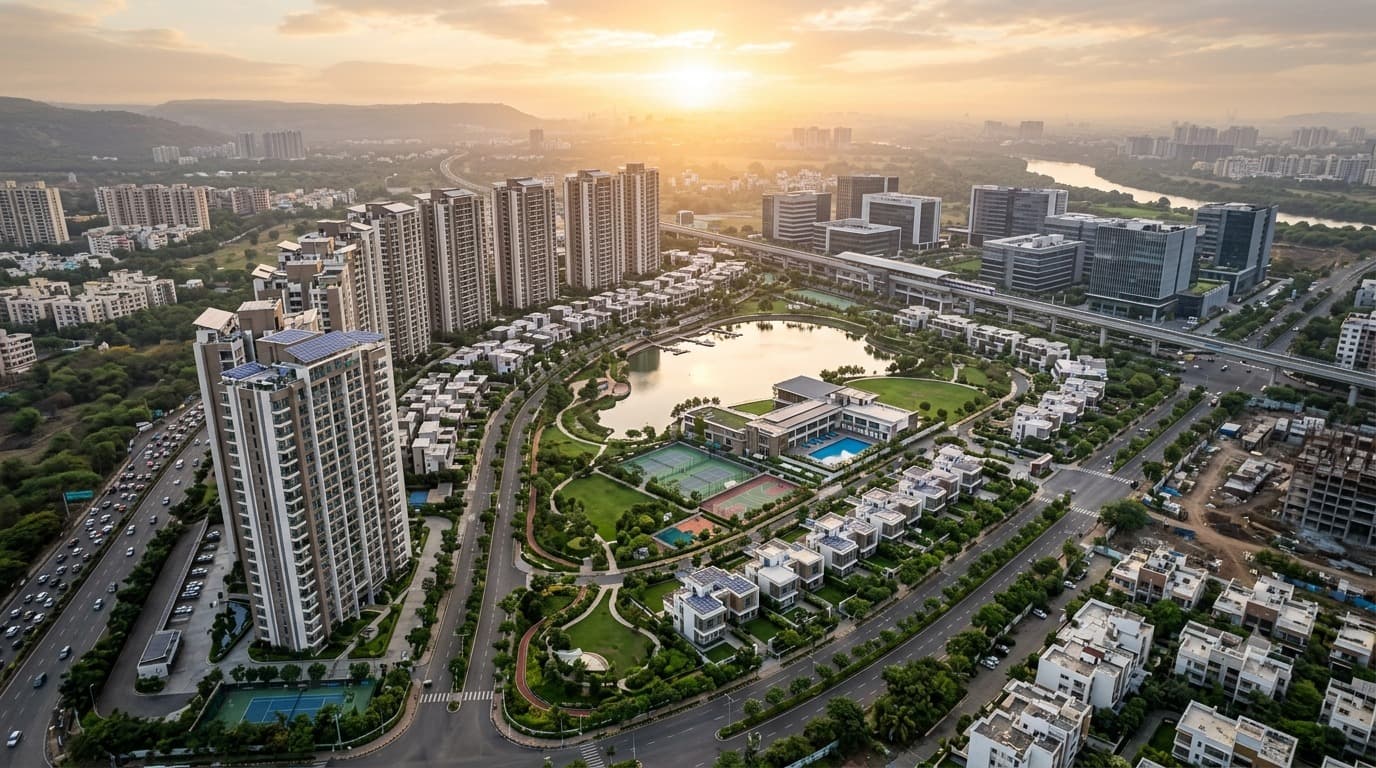
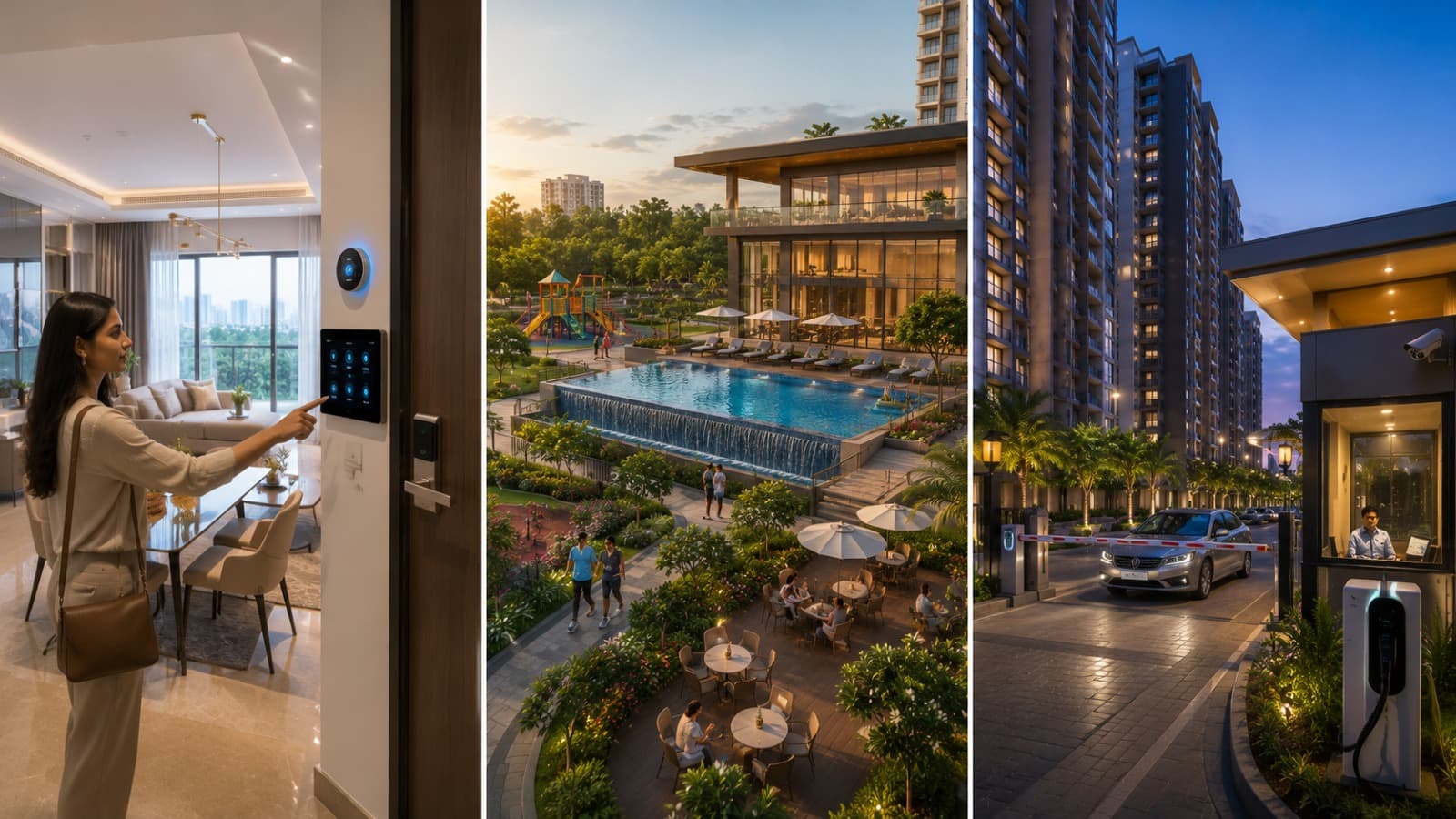
The term gets thrown around loosely, so it is worth being specific. A smart township India is not just a large gated community. It is a planned development that combines residential towers with schools, hospitals, retail, recreational zones, green corridors, and often commercial space, all within a single self-sufficient boundary. The smart layer means technology is embedded throughout. App-controlled entry, smart utility metering, EV charging infrastructure, fibre-backed connectivity, and sometimes solar energy grids are standard features in newer projects.
The key difference from a regular housing society is self-sufficiency. Residents do not need to step outside for most daily needs. And for an NRI property investment buyer who will not be living there full-time, that self-sufficiency also translates into lower maintenance headaches.
Why NRIs Are Choosing This Over Standalone Apartments
NRI investment in smart townships India 2026 has picked up meaningfully for several reasons that are quite practical. First, management. A well-run township has professional facilities management, which means the buyer does not need a local contact chasing plumbers every time something breaks. For someone living in Dubai or Toronto, that matters enormously.
Second, tenant quality. Integrated townships tend to attract long-term tenants, typically families, who stay for several years at a stretch. Rental vacancy rates in well-located townships are lower than in standalone apartment buildings in the same city. Mid-segment township properties in cities like Hyderabad and Pune are delivering rental yields between 2.8 and 4.2 percent currently, with stability being the key advantage over speculative short-term gains.
Third, and perhaps most importantly, the rupee advantage. With the rupee trading at levels that make Indian property attractively priced for NRIs holding foreign currency, the effective cost of buying into a large township project is lower than it has been in years. NRIs are acutely aware of this window.
Where NRIs Are Actually Buying
Best cities for NRI smart township investment in India 2026 is a question with a fairly clear answer. Hyderabad leads the pack. The western corridor running through Gachibowli and Kokapet into Kokapet Extension has seen consistent price appreciation with entry points that remain below comparable markets in Bengaluru or Mumbai. RERA implementation in Telangana has been stronger than in several other states, which reduces title risk.
Bengaluru comes next, particularly North Bengaluru near Devanahalli and the airport corridor. Townships in this zone benefit from proximity to the international airport, which NRIs who travel back frequently find genuinely useful. Whitefield and Sarjapur continue to attract buyers seeking rental yield backed by the city's enormous IT-sector workforce.
Pune is the most personal choice. Many NRIs describe it as the city they plan to retire to eventually. Areas like Hinjewadi, Kharadi, and Wakad have seen some of the most active township launches in recent years, with entry prices in the Rs 85 lakh to Rs 1.6 crore range for a quality 3 BHK, which is accessible for a mid-level professional abroad.
What Smart Technology Actually Adds
Why NRIs prefer integrated townships also comes down to something less tangible: peace of mind. When a parent lives in a township equipped with CCTV on every floor, app-monitored entry gates, and an in-house medical facility, the buyer in London or Sydney sleeps a little better.
Smart home features within individual units, including remote access to air conditioning, security cameras, and power monitoring, allow NRI owners to manage their Indian homes from abroad in ways that were simply not possible ten years ago. This is not a marketing feature anymore. It is a genuine functional advantage.
The Checklist Every NRI Buyer Should Run
Before signing anything, what NRIs look for when buying property in integrated townships can be summarised in three essentials: the developer's delivery track record, RERA registration and compliance status, and the quality of the township's professional management structure.
A beautiful master plan means nothing if the builder has a history of delayed possession. And the smartest township in India will disappoint an NRI investor if the management committee has no professional operational backbone after the developer hands over.
Summary
The rise of smart townships among NRI buyers in India 2026 reflects a maturing investment community that wants more than a flat to rent out. NRI investment in smart townships India combines rental stability, professional management, technology-enabled convenience, and long-term capital appreciation in a single package. Cities like Hyderabad, Bengaluru, and Pune are leading this shift, offering NRI real estate India buyers the right combination of entry price, infrastructure quality, and livability. For NRI homebuyers who have done it the old way before, the integrated township is where the next chapter begins.