
Why Mid-Income Housing Remains India's Largest Market
Summary
India's mid-income housing market, priced between ₹80 lakh and ₹1.5 crore, consistently outperforms luxury and affordable segments, anchoring the country's residential real estate. It's the affordability sweet spot for dual-income households, driving genuine end-user demand and attracting developer focus for steady growth through 2026.

Introduction
Walk into any real estate conversation in India right now and someone will eventually bring up luxury towers or gated villas selling for crores. It makes for a flashy headline. But strip away the noise and the actual engine driving mid-income housing India transactions is a lot less glamorous, and a lot more consistent. Homes priced somewhere between eighty lakh and one and a half crore rupees continue to move faster, sell more reliably, and hold buyer interest longer than almost any other bracket.
The Affordability Sweet Spot
There is a reason this price band keeps winning. It sits right where a dual-income urban household can actually qualify for a loan without stretching every rupee of monthly savings. Builders know it. Banks know it. And frankly, buyers have known it for years, they just needed the market to catch up to their budgets.
What The Numbers Are Actually Saying
Recent industry tracking shows something telling. Property market activity in the mid and premium brackets grew in double digits year on year, while cheaper entry-level housing actually contracted sharply over the same period. That is not a small wobble. It suggests buyers with modest but stable incomes are the ones still showing up at site visits, while the very bottom of the market has quietly gone soft.

Why Affordable Housing Is Struggling
Construction costs, land prices near city peripheries, and financing costs have all crept up together. That combination has squeezed out genuinely low-cost supply in a way that pushed many first-time buyers a notch higher, straight into the mid-segment homes category almost by default. It is not that people wanted to spend more. Many simply had no cheaper, well-located option left.
Why Luxury Can't Carry The Market Alone
Luxury housing has had a strong run since the pandemic, no question there. But there is only so much of that demand to go around. A city cannot sustain itself on penthouse buyers alone. Eventually the market needs volume, and volume comes from the working professional, the small business owner, the young family upgrading from a rental. That is where the real ballast sits.
The Cities Where Mid-Income Is Thriving
Bengaluru and Hyderabad have shown particularly steady end-user activity in this bracket, driven largely by IT and services employment. Meanwhile the National Capital Region has leaned more heavily on affordable and mid-range purchases compared to its western counterparts. Even in the Mumbai Metropolitan Region, where property price trends skew expensive, peripheral corridors are seeing mid-income launches absorb quickly.
Developers Are Reading The Room
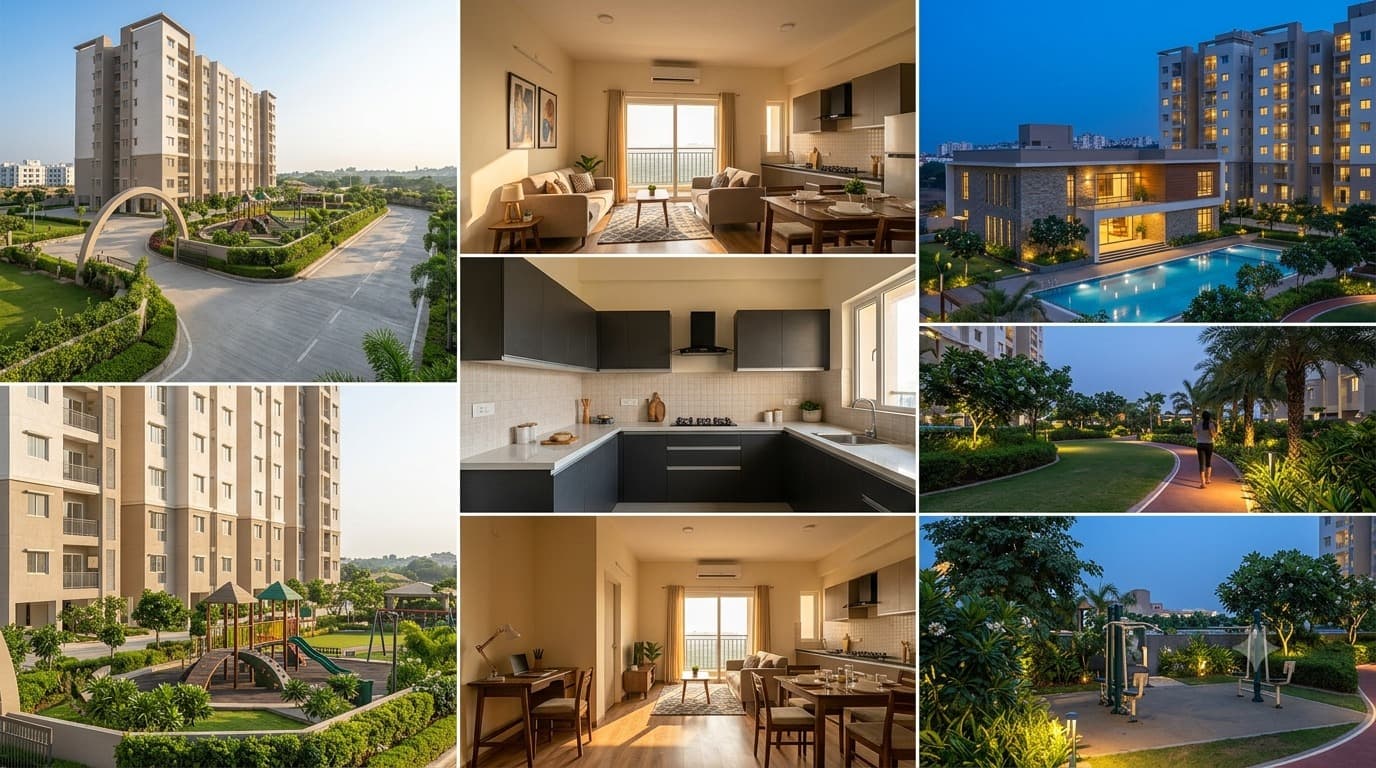
Several major developers have started shifting fresh launches back toward this bracket after a couple of years chasing premium margins. That is not charity. It is simple math. Faster absorption, quicker capital recycling, and a buyer base that is not going anywhere. Expect more project announcements in this range through the rest of 2026.
What This Means For The Next Two Years
If you are house hunting in this bracket, competition is not going away. If anything, infrastructure-led growth corridors on city edges will keep feeding fresh housing demand into this segment. Prices here may not spike the way luxury did, but they will climb steadily, and that steadiness is exactly what makes this segment worth watching closely.
Summary
Mid-income housing India continues to anchor the country's residential market even as luxury grabs headlines. With homes priced between eighty lakh and one and a half crore rupees drawing the bulk of genuine end-user demand, this bracket remains the backbone of residential real estate growth. Affordable housing has slowed, luxury cannot scale indefinitely, and that leaves the middle segment carrying the weight, city after city, quarter after quarter, with no real sign of losing momentum through 2026.