
Why BKC Refuses to Lose Its Crown as Mumbai's Co-Working Capital
Summary
BKC remains Mumbai's co-working capital due to enhanced Metro connectivity, its vital financial ecosystem attracting GCCs, and constrained supply. These drivers ensure high demand and premium rents, solidifying its irreplaceable market position.

Introduction
Every few years, someone predicts that Bandra-Kurla Complex has peaked. Rents are too high. New supply is too tight. Companies will migrate to Navi Mumbai or Goregaon or Lower Parel. And every time, BKC proves the prediction wrong. The demand for co-working space in this district keeps rising, flex operators keep expanding here, and rental rates keep climbing. Understanding why requires looking past the obvious answer of prestige and examining the specific structural forces that make BKC irreplaceable in Mumbai's commercial map.
The Rent Numbers Tell the Story
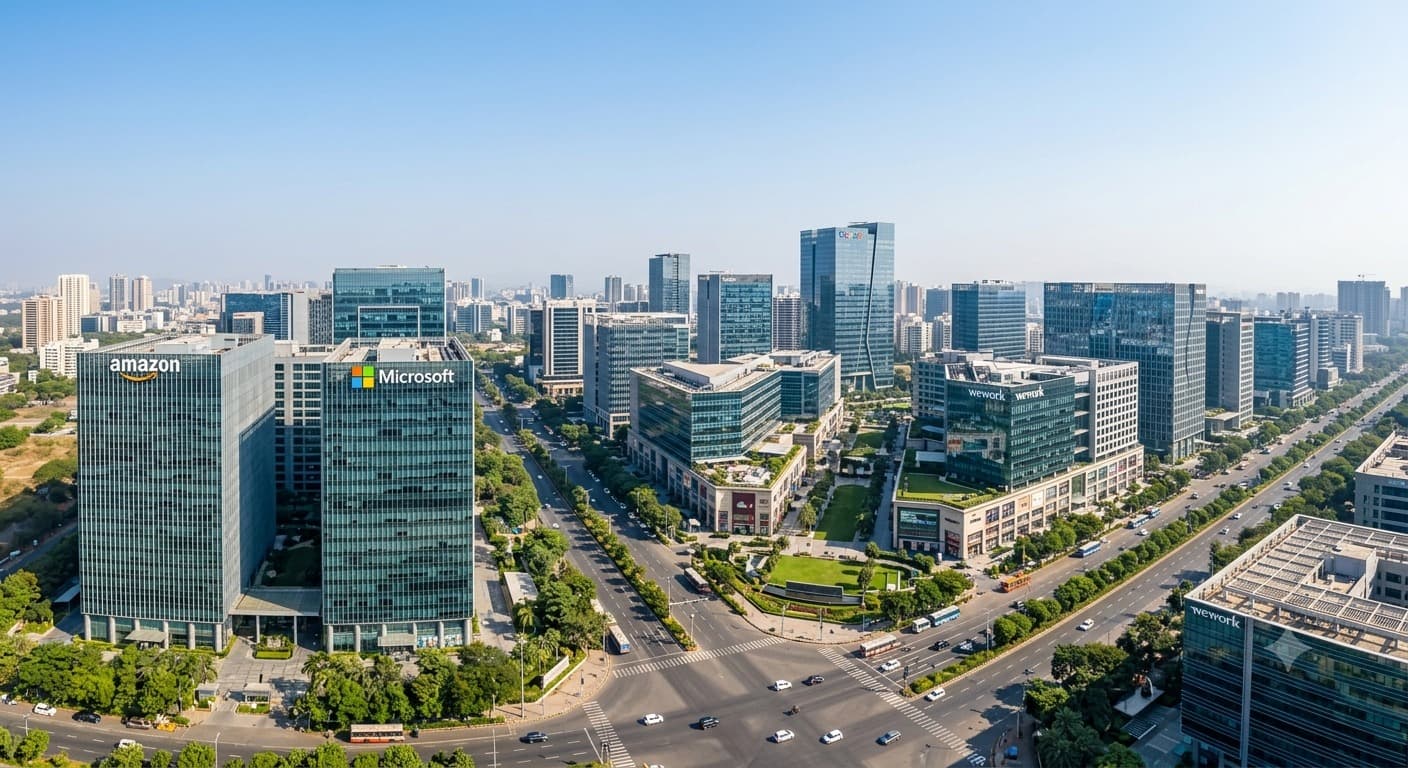
Mumbai became India's most expensive office market in 2025, with rents across the Mumbai Metropolitan Region averaging Rs 168 per square foot, a 28 percent jump over three years. Within that broader city story, BKC sits at the most expensive end. Rents in BKC have surged to Rs 320 to Rs 350 per square foot per month following the partial completion of Metro Line 3. Co-working seat prices in BKC range from Rs 9,000 to Rs 44,000 per seat per month depending on format and operator.
That is not a price a struggling market produces. That is a price a constrained, high-demand market with limited new supply produces.
Metro Line 3 Changed the Equation
Metro Line 3's Aqua Line, connecting BKC directly to the airport, Nariman Point, and the western suburbs, fundamentally reduced one of BKC's traditional drawbacks: accessibility. Before the metro, reaching BKC from the western suburbs during peak hours was a 45 to 75 minute ordeal. Post-metro, the journey is under 20 minutes from multiple catchment areas.
For co-working operators, metro access expands the talent pool that can realistically work from BKC on a daily basis. Companies that previously avoided BKC for employee convenience reasons are now reconsidering. That reconversion of hesitant occupiers into active tenants is one reason flex demand has held at elevated levels despite high per-seat costs.
The Financial and GCC Ecosystem Effect
BKC hosts SEBI, the Bombay Stock Exchange, the National Stock Exchange's administrative offices, multiple foreign consulates, and the India headquarters of several global banks and consulting firms. This is not a technology park or a suburban campus cluster. It is a genuine multi-sector business district where proximity to regulators, financial institutions, and professional service firms creates daily working reasons to be present.
Global Capability Centres entering Mumbai overwhelmingly shortlist BKC before anywhere else, precisely because client proximity and institutional access matter to their senior stakeholders. Co-working operators in BKC benefit directly from this: a GCC wanting a 50-seat managed office for its Mumbai leadership team will pay BKC rates without negotiation because the alternative, a cheaper address in a peripheral suburb, creates institutional credibility problems.
What the Operators Are Actually Doing
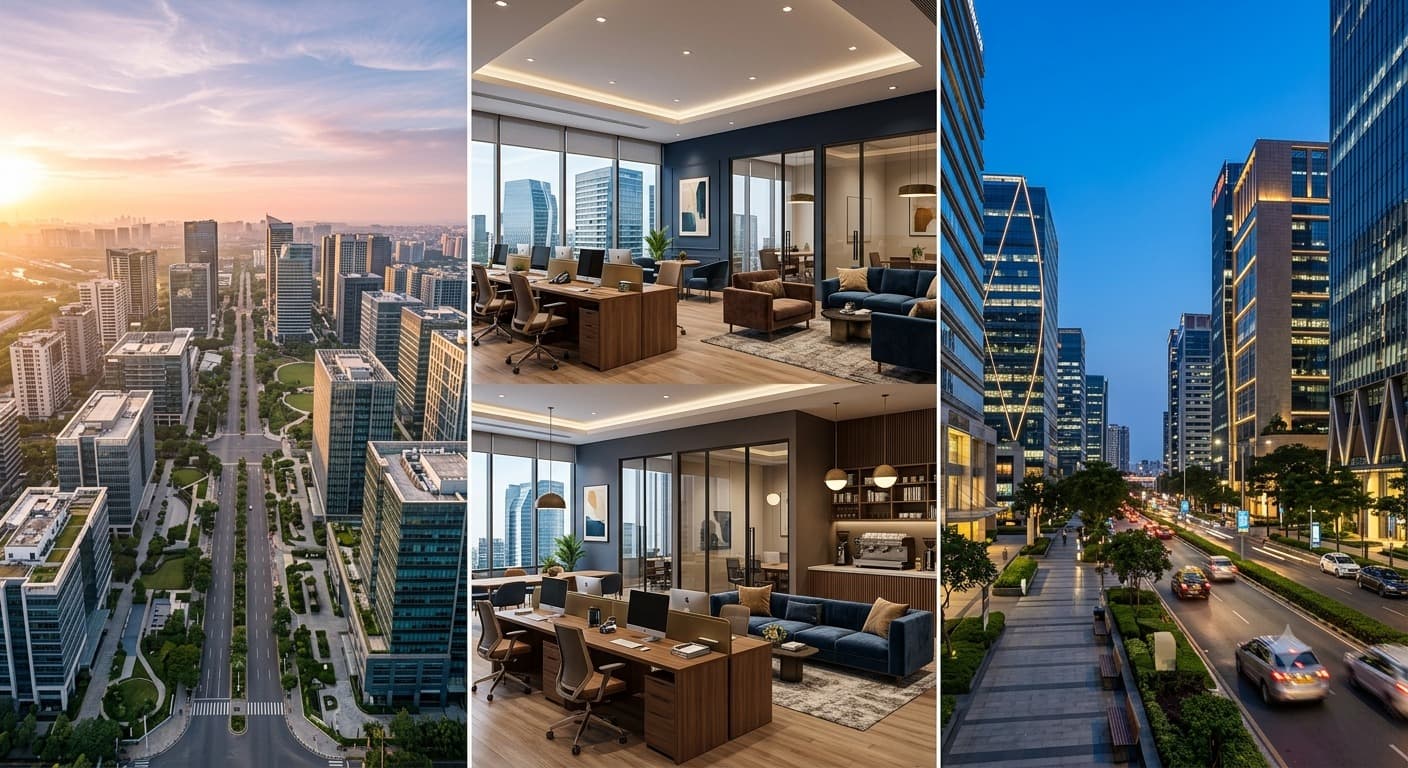
Awfis, WeWork India, Innov8, Bhive Platinum Plus, The Executive Centre, Dextrus, and Vatika Business Centre all maintain BKC presences. Landlords in BKC are now deliberately incorporating 10 to 20 percent flexible space into their buildings alongside traditional leases, earning premium rents from the flex portion while maintaining anchor tenant stability from direct lease floors.
New supply in BKC remains critically constrained. JLL reported that Mumbai added only 0.1 million square feet of new office space in the first half of 2025. In that supply environment, vacancy stays low and operators with existing BKC space have enormous pricing power.
Summary
Why BKC remains a hotspot for coworking demand in Mumbai 2026 rests on four non-negotiable advantages: Metro Line 3 connectivity that removed its historic accessibility barrier, a financial and regulatory ecosystem that no other Mumbai submarket replicates, chronically constrained new supply that keeps vacancy rates low, and GCC demand that treats BKC as a first-choice rather than a fallback address. BKC coworking demand driven by GCC and financial sector Mumbai will not weaken as long as those institutions remain anchored here. Flex office growth in BKC Mumbai metro connectivity prestige has created a self-reinforcing loop where the best operators, the best tenants, and the best buildings all concentrate in one district, making every alternative just a little less convincing than the original.