
When Safety Becomes the Smartest Property Decision You Make
Summary
Investing in safe Indian cities like Kolkata, Pune, and Hyderabad isn't just a lifestyle choice, but a smart financial move. Low crime rates attract stable demand, ensuring consistent rental income and durable property appreciation overlooked by purely speculative markets. These cities offer long-term stability and growth.

The Question Most Buyers Forget to Ask
Most Indian homebuyers walk into a property decision armed with price comparisons, floor plans, and possession timelines. Very few stop to ask whether the city itself is secure enough to sustain genuine long-term demand.
That gap is costly. Safety quietly shapes rental demand, resale velocity, and the quality of tenants a landlord can attract. Cities that consistently maintain low crime environments draw families, senior professionals, and institutional tenants who stay longer and pay better. Over a decade, that depth of demand compounds into appreciation that no location ranking or marketing pitch can manufacture on its own.
Why Safe Cities Hold Value Differently
A neighbourhood that earns a safety premium tends to keep it even when broader market conditions soften. Demand from families and working professionals anchors prices through downturns in ways that speculative investor-driven markets simply cannot replicate.
This distinction matters enormously for anyone thinking beyond a three-year horizon. The best Indian cities for long-term property investment are not always the most glamorous ones. They are often the ones that show up quietly, year after year, on crime indices and livability rankings with numbers that deserve serious attention.
Kolkata: Four Consecutive Years at the Top
Among the 19 major Indian cities tracked by the National Crime Records Bureau, Kolkata has recorded the lowest crime rate for four years running. The current figure stands at 83.9 cognisable offences per lakh population, sitting at an extraordinary distance from the national city average of 828 per lakh.
What makes this more compelling than a single data point is the direction of travel. In 2021 the city logged 103.5 incidents per lakh. That came down to 86.5 in 2022 and further to 83.9 in 2023. Consistent reduction while most cities trend upward signals genuine administrative discipline, backed by one of the highest charge-sheeting rates in the country at 94.7 percent.
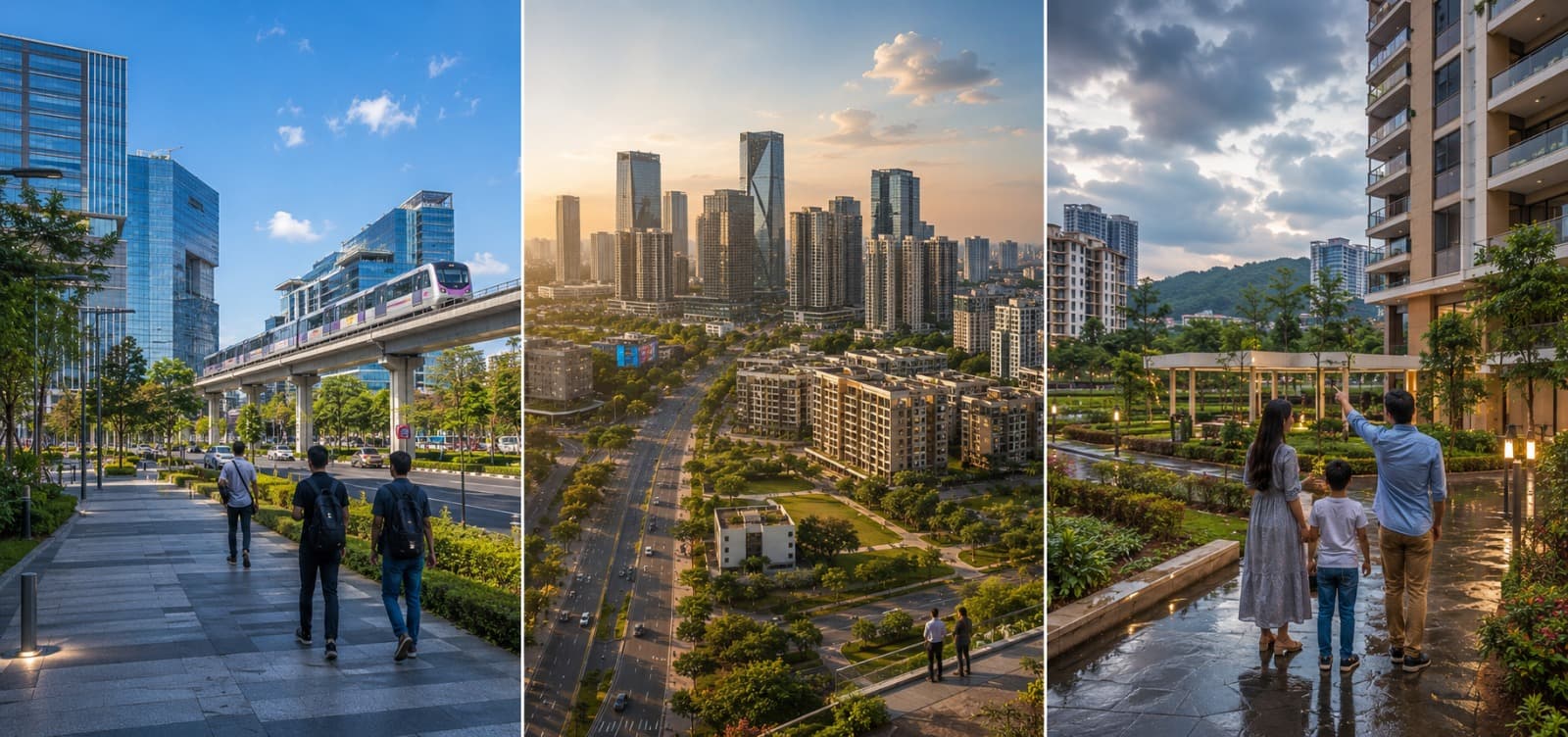
For property investment in Kolkata, the New Town corridor offers entry prices between ₹5,000 and ₹10,000 per square foot with healthy IT sector rental backing. That safety-to-price ratio has no equivalent in any other major Indian market right now.
Mangaluru: The City That Tops the Perception Index
The Numbeo Safety Index 2026 tracks how secure residents genuinely feel rather than just what gets officially reported. On that measure, Mangaluru ranks as India's safest city and sits at 49th globally across 304 surveyed cities. For a mid-sized coastal Karnataka city, that standing is remarkable.
Property values here remain accessible, and residential demand is supported by a stable mix of students, healthcare professionals, and coastal retirees who tend to stay put. That stickiness of population is exactly what produces reliable rental income for long-term investors.
Pune: Livable, Secure, and Still Appreciating
Pune holds the top ranking on India's Ease of Living Index, and its crime rate of roughly 330 to 355 incidents per lakh population gives that ranking genuine data support. Few Indian cities manage to grow as fast as Pune has over the past decade while keeping safety performance this consistent.
The IT corridors at Hinjewadi and Baner draw working professionals who actively factor security into their housing choices. Pune property prices have been rising at 7 to 10 percent annually through 2025. End-user demand is doing the heavy lifting here, not speculative momentum, which makes that appreciation more durable.
Hyderabad: Where Smart Infrastructure Meets Safety
Hyderabad has invested heavily in systematic urban policing. Real-time crime monitoring and data-led response mechanisms have brought down incident rates across residential zones like Kondapur, Banjara Hills, and Kukatpally, which are now among the most consistently demanded addresses in the city.
GCC-driven employment has made Hyderabad real estate a compelling long-term residential bet. End users consistently outnumber investors in transaction data, giving this market a stability that rewards patient capital.
Chennai: Underrated, Underpriced, and Very Safe
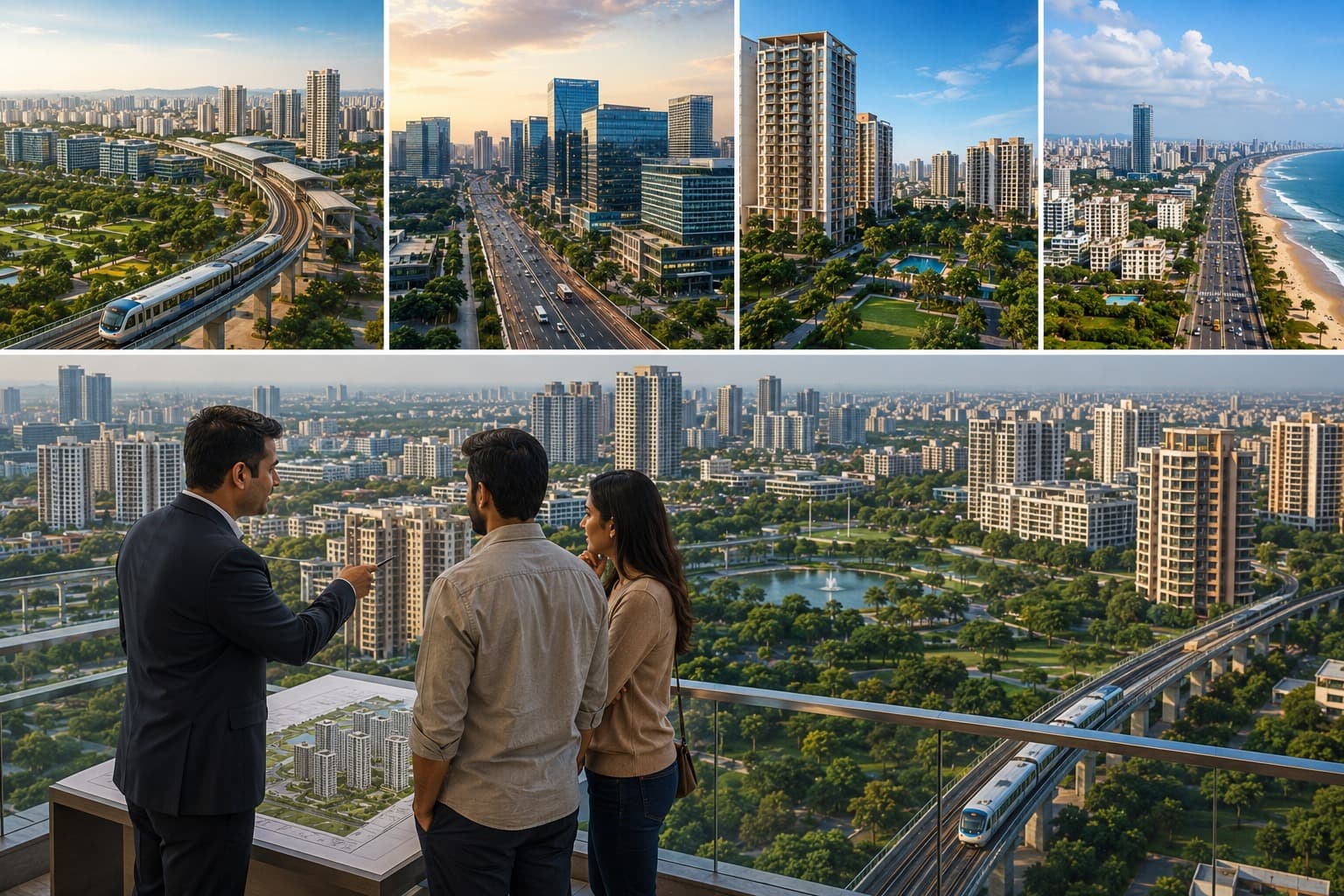
Chennai delivers on both safety and long-term price growth without the speculative noise that disrupts other metro markets. Community policing and strong civic infrastructure make it one of the more reliable urban environments in the country for residential investment.
The OMR and Guindy corridors generate consistent IT rental demand, and established pockets like Anna Nagar now command above ₹17,000 per square foot. Chennai's property market skews heavily toward genuine end users, which keeps demand grounded through every kind of market weather.
Navi Mumbai: Planned Well, Priced Right
Navi Mumbai tops the Ease of Living Index on institutional quality. Its deliberate grid layout, maintained public infrastructure, and proactive governance have kept crime rates well below those of Mumbai's older neighbourhoods. Families with school-going children and working professionals prioritising commute ease consistently shortlist this market ahead of alternatives within the Mumbai Metropolitan Region.
Summary
Choosing a safe Indian city for property investment is a financial decision, not just a lifestyle preference. Cities like Kolkata, Mangaluru, Pune, Hyderabad, Chennai, and Navi Mumbai deliver consistently low crime environments alongside property appreciation that long-term investors can depend on. With national average prices rising 50 percent between 2023 and 2025, the safest cities in India are quietly becoming the strongest ones too, offering something the loudest markets rarely can: stability that holds its ground across decades.