Introduction
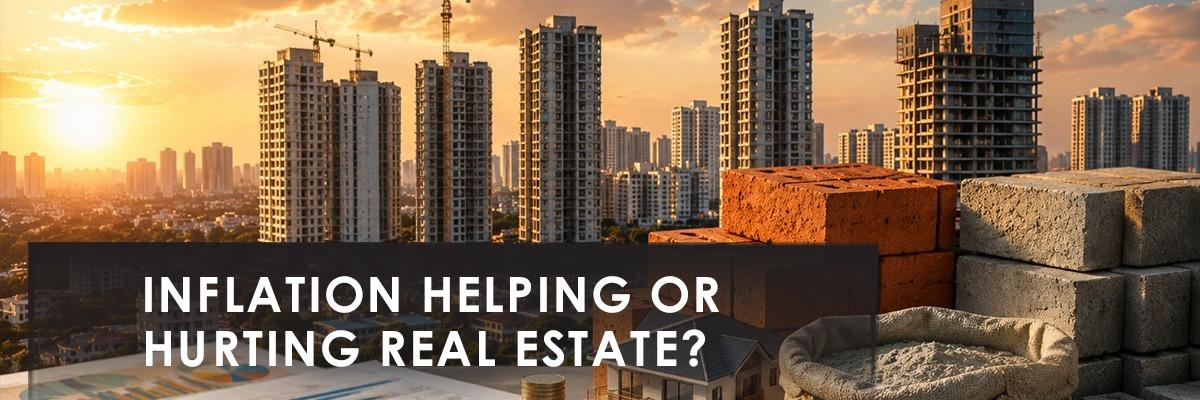
Inflation does not knock on your door and announce itself. It works through your grocery bill, your fuel expenses, and your children's school fees. But nowhere does its fingerprint show up more consequentially than in real estate. For Indian homebuyers and investors, understanding the impact of inflation on real estate India is no longer optional. It is the difference between making a well-timed decision and spending years wondering why you waited.
India's consumer price inflation fell to 2.8 percent in 2025, down from 4.6 percent the year before. That sounds reassuring. But what is happening to property prices India tells a very different story.
Inflation Has Two Faces in Real Estate
There is the inflation that the RBI measures and the inflation that a developer actually lives with. These are not the same number. General CPI covers food, fuel, and consumer goods. But real estate inflation runs on a separate track driven by cement costs, steel prices, labour wages, and land values.
Right now, India has low headline inflation and rising construction costs at the same time. That gap is where most homebuyers get caught off guard.
What Is Happening to Construction Costs
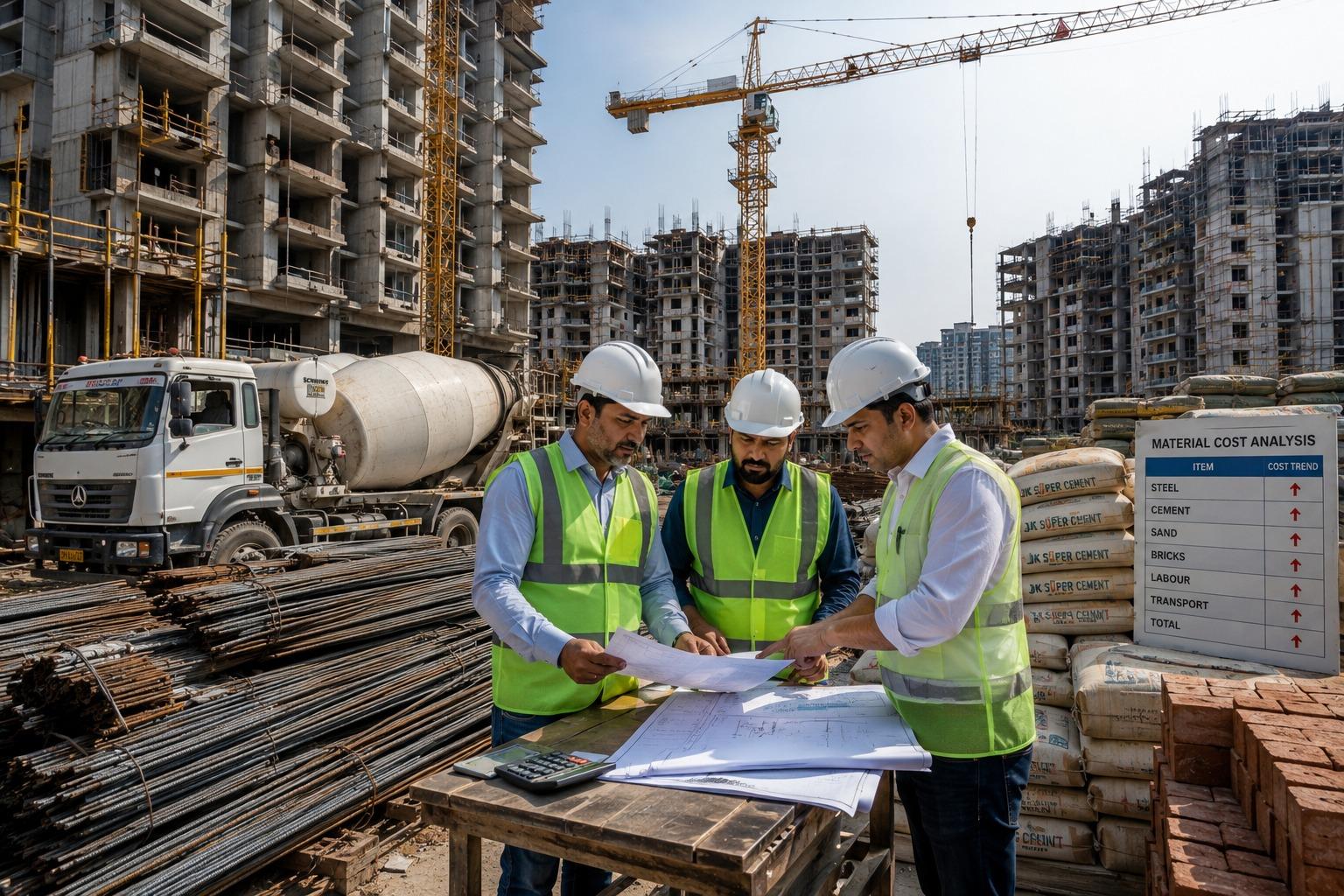
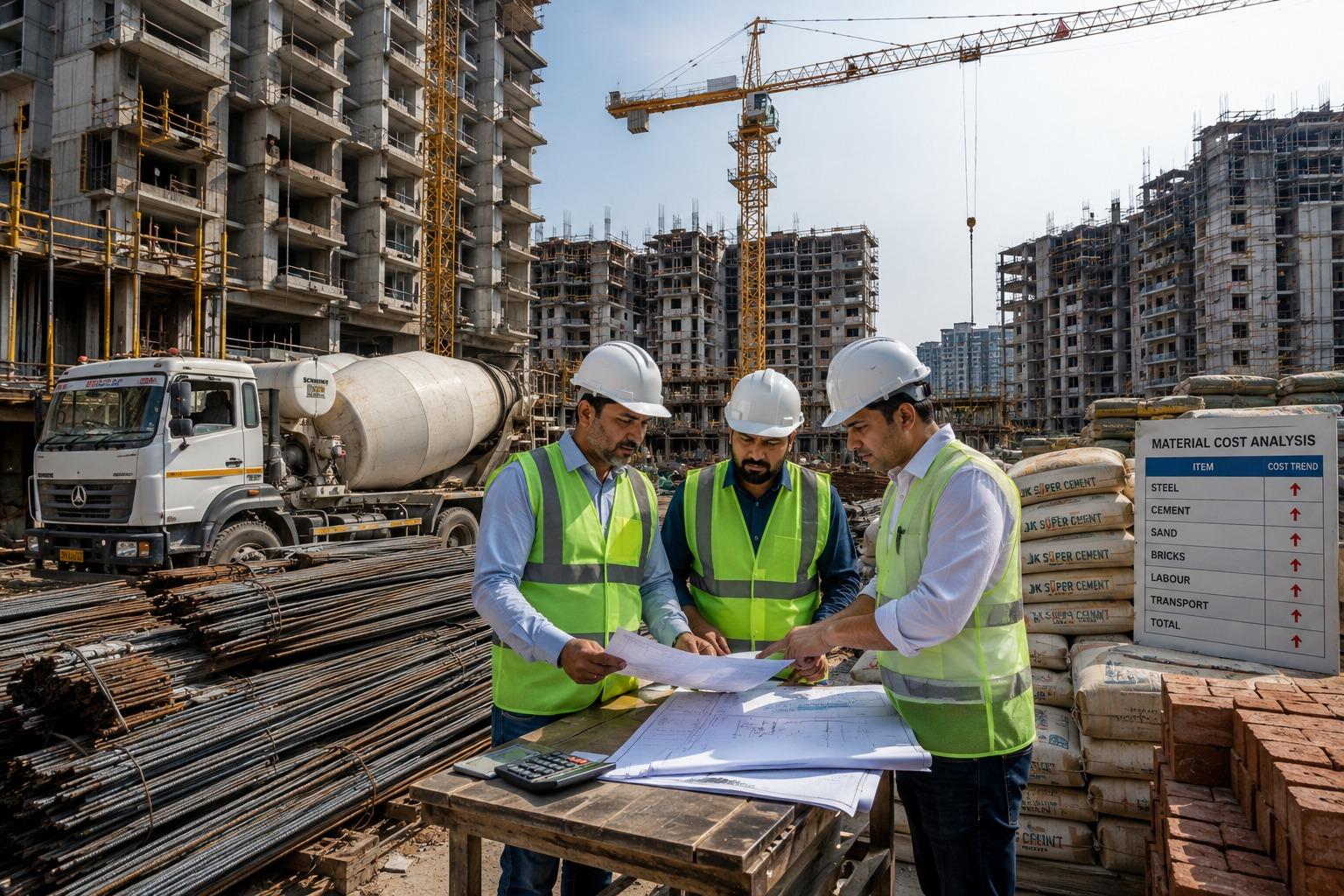
According to JLL's 2026 India Construction Cost Guide, overall construction expenses are expected to rise 3 to 5 percent this year. Labour costs have increased 5 to 12 percent following new codes that came into effect in November 2025, mandating enhanced social security and healthcare benefits for workers. Metals like aluminium and copper climbed 8 to 9 percent due to global supply pressures.
Cement prices eased slightly after a GST reform cut the tax rate from 28 to 18 percent, saving developers 2 to 3 percent on that input. But the labour and metals surge absorbed most of that relief. Construction materials account for close to two-thirds of a home's total build cost. When that base rises, developers pass it on. That is how construction costs affect new home prices India, consistently and predictably.
The Buyer Who Waits Usually Pays More
History bears this out. Between 2022 and 2023, when general inflation was running above 5 percent, Indian residential property prices India grew at roughly 13 percent annually. The market did not slow. It accelerated. Home prices nationally are projected to rise about 7.5 percent in 2026, building on a 6.5 percent rise in 2025. A buyer who postponed a purchase hoping for softer prices is today looking at a meaningfully higher entry cost on the same property.
Should you buy property during high inflation in India depends on your market and your timing. But waiting, as a strategy, has a consistently poor track record in Indian real estate.
The RBI Rate Story and Your Home Loan
The impact of RBI repo rate on real estate market is direct and personal. Through 2025, the RBI cut the repo rate four times, bringing the cumulative reduction to 125 basis points and settling the rate at 5.25 percent. As of June 2026, home loan rates in India start at approximately 7.10 percent annually for borrowers with strong credit profiles. On a Rs 50 lakh loan over twenty years, the cumulative EMI savings from 2025's rate cuts amount to roughly Rs 7.34 lakh in total interest over the loan's life.
The RBI has held rates steady since then, citing geopolitical inflation risks. A prolonged pause means this borrowing window may be as good as it gets for a while.
Real Estate as an Inflation Shield
Why real estate is a good hedge against inflation India comes down to a straightforward argument. Tangible assets rise as the cost of building them rises. Rents move upward with living costs, generating income that tracks inflation. National average rental yields across Indian cities currently sit around 5.09 percent. In cities like Delhi and Kolkata, yields push close to 5.8 percent. Fixed deposits offering 6.5 to 7 percent cannot simultaneously appreciate in capital value. Property does both.
During periods of moderate to high inflation, studies consistently show that real estate outperforms bonds and frequently matches equity markets, but with far lower volatility.
Summary
Inflation and real estate share a deeply connected relationship in India. Rising construction costs are pushing property prices India upward even as general CPI remains benign. With home loan rates currently at multi-year lows and the RBI holding the repo rate at 5.25 percent, the borrowing environment remains favourable. Real estate investment continues to serve as a dependable hedge against inflation because property values and rents both tend to grow faster than the general price level, preserving buyer wealth across market cycles.