
Ulhasnagar Real Estate: Is This the Right Time to Buy or Wait?
Summary
Ulhasnagar real estate offers affordable entry points in MMR, with varied micro-markets. While older areas stagnate, pockets like Shahad show growth, rewarding patient investors looking for steady returns and future infrastructure-driven upside. It's a market for informed, long-term buyers.

A City That Defies Easy Labels
Ulhasnagar sits about 55 kilometres from Mumbai, tucked into the Thane district in a position that should make it far more talked about than it is. Central Railway connectivity, proximity to Kalyan, a famously active commercial market, and property prices that undercut most comparable MMR locations by a comfortable margin. And yet, the conversation around Ulhasnagar real estate remains muted.
That silence is worth examining carefully. Because within it lies both the honest case for investing here and the genuine reasons some buyers hold back.
What the Numbers Actually Say
According to Housing.com data, the average property rate in Ulhasnagar currently sits at around ₹6,364 per square foot, with a year-on-year movement of approximately 13 percent. But that figure needs context. The range across localities is wide. Starting prices dip to under ₹2,000 per square foot in pockets like Mukund Nagar and Samrat Ashok Nagar, while Shahad commands upwards of ₹8,300 per square foot for apartments, and pockets like Sidhi Vinayak Nagar touch ₹9,500.
This spread tells you that Ulhasnagar is not one market. It is several micro-markets stacked inside a single municipal boundary, each behaving differently depending on proximity to railway stations, road access, and the quality of available stock.
Separately, 99acres data shows apartments in the area broadly flat on a year-on-year basis, with some localities even recording mild depreciation. Shahad itself posted a small price dip recently. These two datasets are not necessarily contradictory. They reflect different time periods, different property samples, and different methodologies. But together they paint a picture of a market that is neither in clear momentum nor in freefall. It is hovering.
The Sindhi Legacy and the Commercial Identity
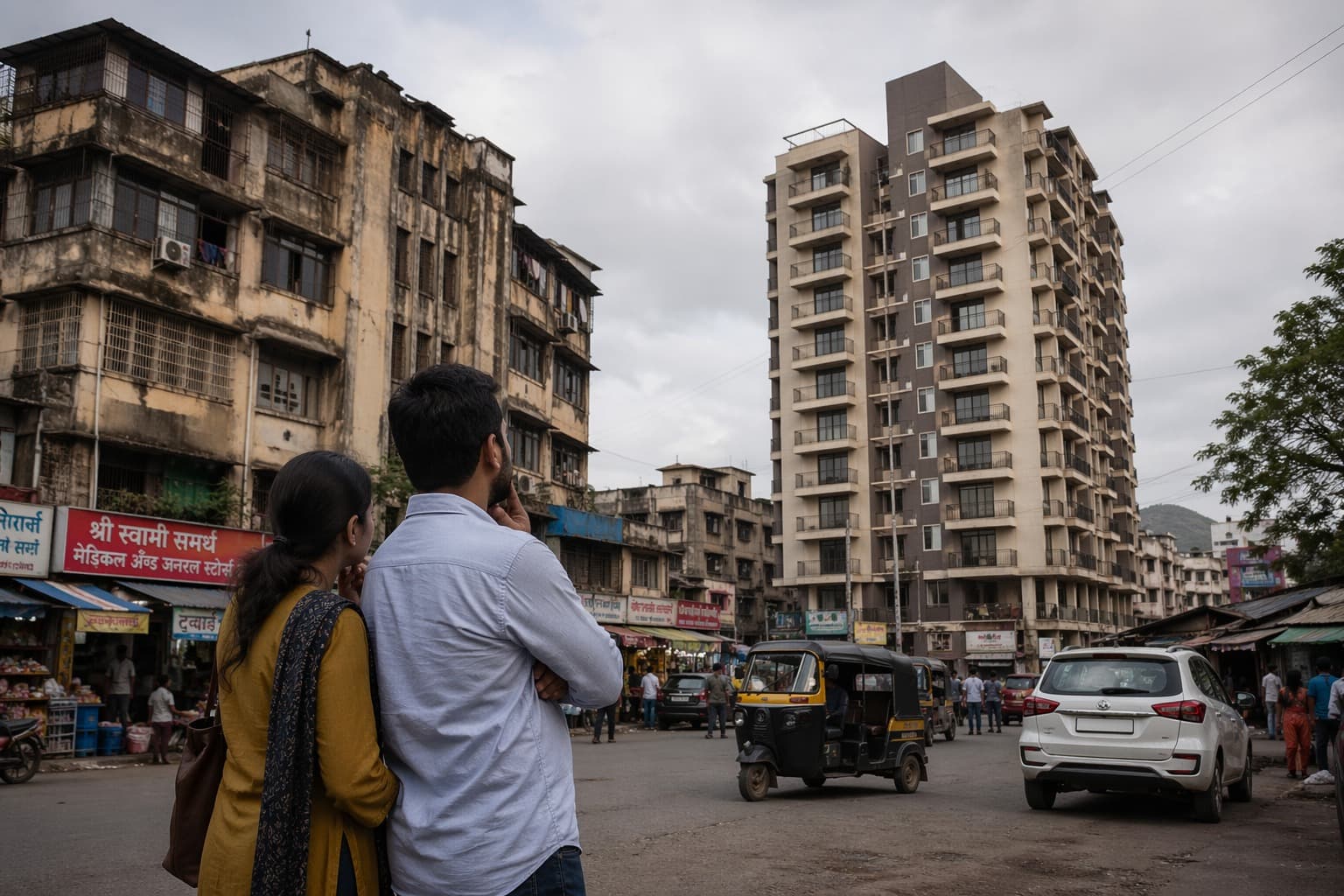
Understanding Ulhasnagar's property market requires understanding what kind of city this is. The Sindhi community that settled here after Partition shaped its commercial character in lasting ways. The city became known as one of the largest denim and garment production centres in Asia. Its markets, particularly the famous numbered markets, draw buyers from across the region for textiles, furniture, electronics, and consumer goods at wholesale prices.
This commercial vitality is both an asset and a complexity. It keeps the local economy ticking and ensures that rental demand from small business owners, traders, and their employees remains consistent. But it also means that parts of the city feel dense and unplanned in ways that put off the aspirational homebuyer who has been conditioned by newer township developments in Dombivli or Kalyan.
Connectivity: The Honest Picture
Ulhasnagar's Central Railway connectivity is its most reliable strength. Ulhasnagar station, Shahad station, and Vithalwadi station collectively cover the city's geography. Kalyan, a major junction with connections across the entire central line, sits barely four kilometres away. That means access to Thane, CST, and the broader suburban rail network is practical for daily commuters.
What the city currently lacks is a metro station of its own. Metro Line 5, which is being developed in phases across the MMR, is expected to eventually improve connectivity in this belt significantly. When that happens, localities within walking distance of new metro stations will respond in the way they always do: with a step change in property interest and pricing.
Where Stagnation Lives and Where Growth Is Waiting
The areas showing price pressure are typically the older, denser parts of the city. Properties in narrow lanes, older building stock, limited parking, and markets with unresolved redevelopment questions tend to either stagnate or drift slightly downward. Buyers have options and they are choosing newer stock where they can.
Shahad, despite its recent flat performance, is the pocket most serious buyers and investors tend to study first. It has better building quality on average, railway station access, a cleaner physical environment compared to the inner commercial zones, and is seeing new project launches from developers like Kohinoor Group. A one-bedroom flat here starts around ₹37 lakh from reputed developers, and two-bedrooms range from ₹54 lakh upwards.
Vithalwadi, Krishna Nagar, and Ramayan Nagar are also worth watching for buyers who want to enter at lower price points with acceptable commute access.
The Investment Case in Plain Terms
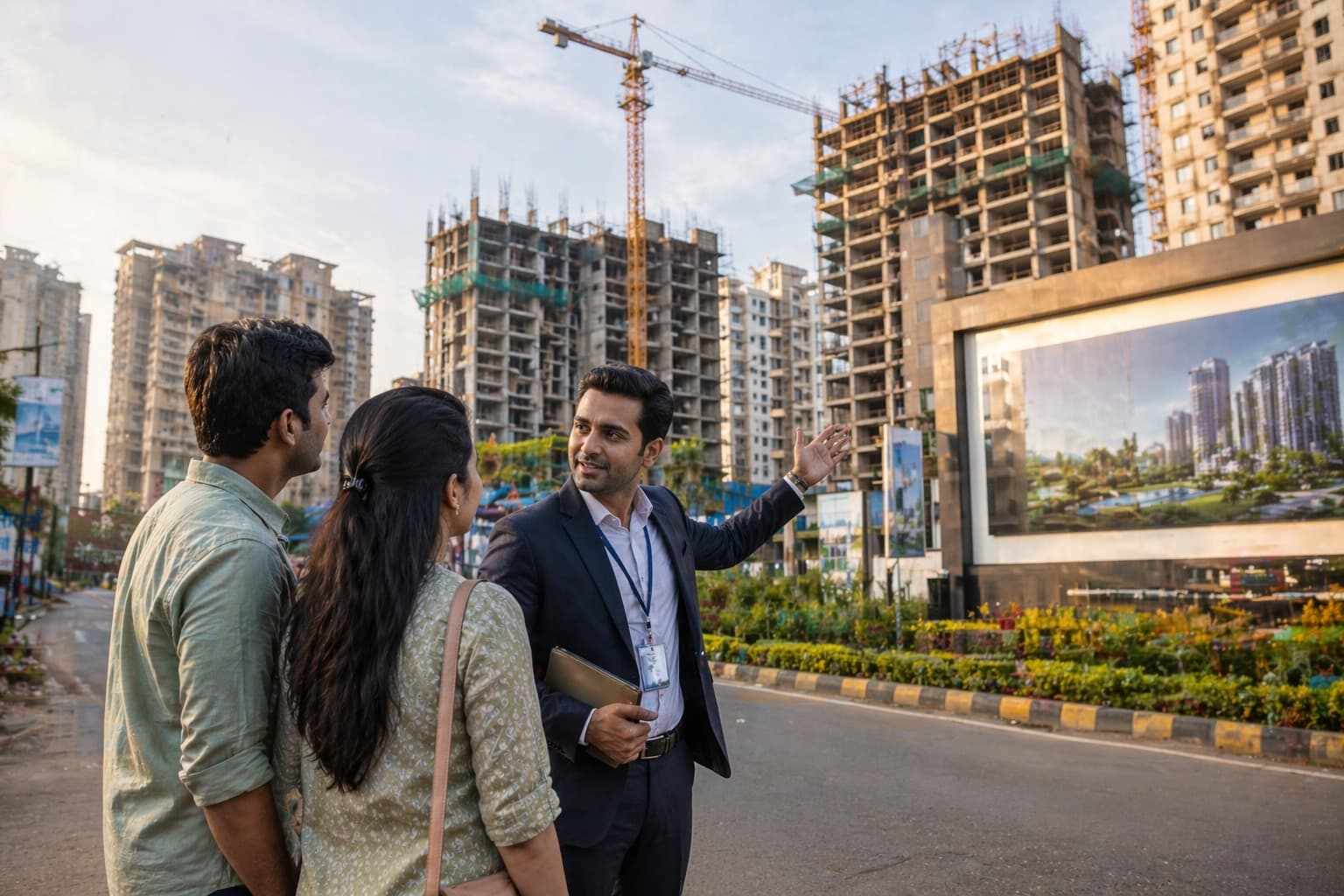
Ulhasnagar rewards the patient buyer. This is not a market where you enter today and post extraordinary returns in 18 months. It is a market where affordability is real, rentals are steady because working-class and trading community demand never fully dries up, and infrastructure triggers in the medium term offer genuine upside.
The risk is equally honest. If metro connectivity gets delayed further or redevelopment of older stock stalls, certain pockets could remain stuck. Buyers should prioritise RERA-registered projects from known developers and avoid older resale stock without clear documentation.
Summary
Ulhasnagar real estate in 2026 presents a tale of two realities. Pockets like Shahad and Vitthalwadi are showing measured growth driven by railway access and new supply, while older inner zones face price stagnation tied to ageing stock and infrastructure gaps. At an average of ₹6,364 per square foot, Ulhasnagar property remains one of MMR's most affordable entry points. For buyers with patience, a clear locality preference, and a horizon beyond three years, this is a market that quietly rewards those who do their homework before writing the cheque.