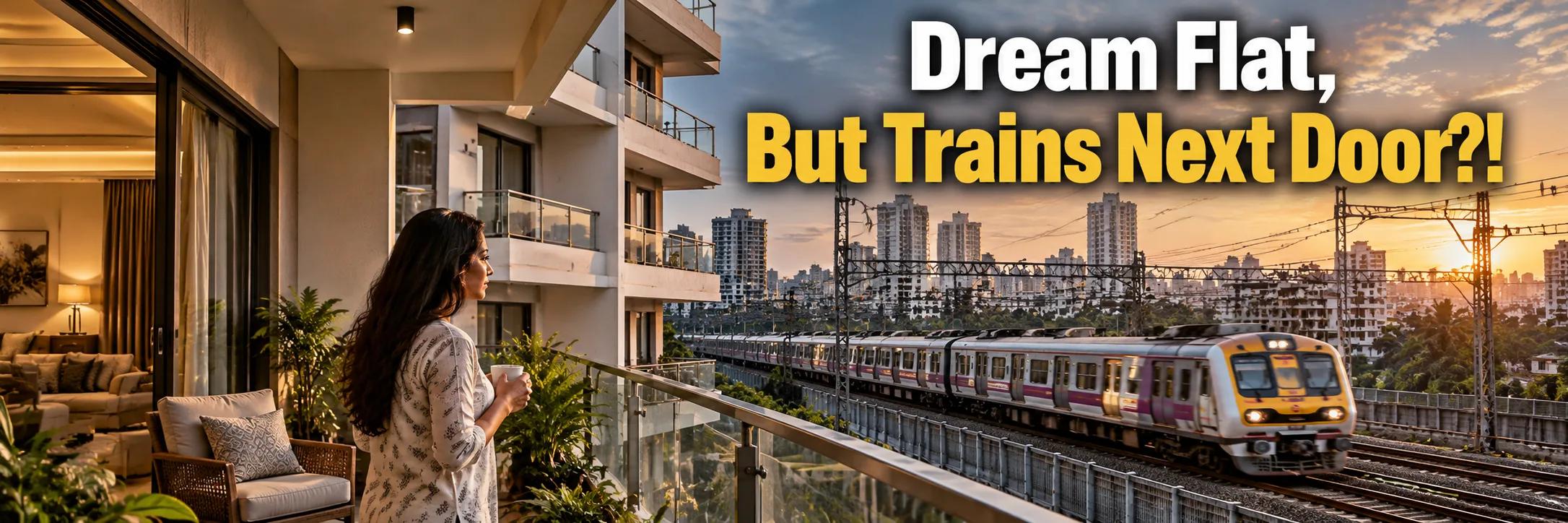
Introduction
Anyone who has spent ninety minutes crawling across Bengaluru,
Mumbai or Delhi has quietly asked the same thing. Why must home and work be so far apart? One answer gaining ground among planners is transit oriented development, or TOD. The idea is simple to say. Put homes, shops and offices close to metro and rail stations so people can live well without owning a car. A new TOD policy for Delhi has pushed the debate into the open.
What TOD Really Means
Strip away the jargon and TOD is a land use rule. Near a station, builders are allowed more floor area than usual, and in return they are expected to provide mixed use buildings, walkable lanes and often some affordable homes. Floor Space Index, or FSI, is the ratio of total built area to plot size. A higher FSI simply means taller buildings on the same land.
Delhi’s 2026 Move
Delhi now has its TOD Policy and Regulations 2026. The big shift is from planning around single stations to planning along entire corridors. Land within roughly 500 metres of metro and rapid transit lines is covered, about 207 square kilometres in all. Affordable housing sits at the heart of the TOD policy, and one report puts the affordable share of new homes at 65 percent.
Maharashtra Got There First
Maharashtra notified its own TOD rules back in 2017. Buyers in Nagpur can purchase extra FSI, up to 4, by paying a premium near the metro, and local reports claim property values along the corridor rose by as much as 20 percent. That is a double edged number. It shows demand, but it also shows who may soon be priced out.
Why Livability Could Improve
A home near a station can cut a daily commute by an hour or more. Fewer private vehicles mean less congestion and cleaner air, which is exactly what officials expect from the Delhi plan. Walkable streets also help children, older people and anyone without a car. These benefits are expected, not guaranteed.
The Housing Angle
Metro corridor housing could ease a real shortage. The Delhi Development Authority has identified 14 land parcels, covering over 3.6 lakh square metres of carpet area, along the Blue, Red, Green, Pink and Yellow lines. Carpet area is the usable floor space inside a home. If these projects arrive on time, working families may not have to move to far suburbs to find a roof.
What Can Go Wrong
More floor area on the same plot means more people, and roads, water lines, sewers and schools must keep pace. Legal experts also point out that the real difficulty is enforcing the conditions attached to the extra FSI, not announcing the incentives. Without strict checks, a TOD policy can turn into a simple density giveaway to developers. And rising land prices can push out the very people the plan wants to house.
What Homebuyers Should Check
Measure the walk from the station, not the distance on a brochure map. A plot that is 500 metres away in a straight line can feel like a fifteen minute trek around barricades and flyovers. Confirm whether the metro line is running or only planned, since a planned line can slip by years. Check RERA registration and approvals as usual. A TOD tag is not a substitute for clean paperwork.
So, Can It Work?
My honest view is yes, but only as a package. Stations need footpaths, cycle lanes and feeder buses, or the benefit stays on the map. Cities that treat TOD as a transport and housing reform together will see livable Indian cities emerge faster than those treating it as an FSI giveaway.
Summary
Transit oriented development can make livable Indian cities real by placing homes, jobs and daily needs near stations. Delhi’s new TOD policy and Maharashtra’s older rules show the direction of travel. Yet extra density needs matching roads, water and honest enforcement. For buyers, metro corridor housing offers shorter commutes, but only when the line works and the paperwork is clean. Judge each project on walking distance, delivery record and local infrastructure, not on the label alone, because a good station cannot fix a poor building.