Introduction
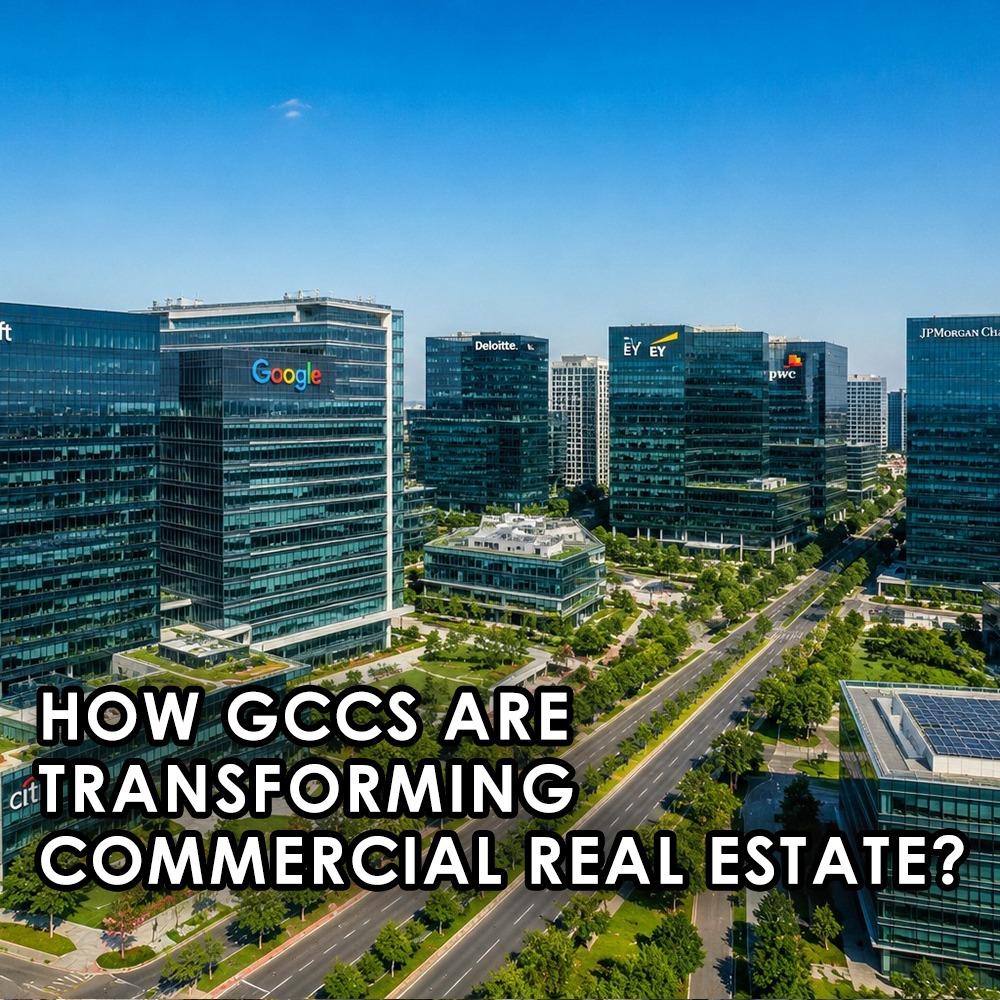
A few years ago, the phrase "Global Capability Centre" was largely confined to the vocabulary of corporate HR teams and real estate consultants who serviced multinational clients. Today, it has become arguably the single most important driver of commercial property demand across the country. If you follow Indian office market data at all, the pattern is difficult to miss. Leasing records are being broken consistently. Grade A vacancy rates are tightening in city after city. And a very large portion of that activity traces back directly to GCCs in India expanding their physical footprints at a pace few analysts predicted even three years ago.
What a GCC Actually Is
For those less familiar with the term, a Global Capability Centre is essentially an offshore division that a multinational corporation establishes in another country to handle functions ranging from technology development and data analytics to finance operations and research. India attracted these centres originally because of cost advantages. What has kept them expanding is the quality of the talent they found here.
There are now over 1,700 active GCCs in India, collectively employing close to two million professionals. That number was expected to cross 2,000 by 2026. This is not a niche industry story. It is a structural economic shift that has fundamentally reshaped the demand profile for Grade A office space in Indian cities.
The Numbers Behind the Story
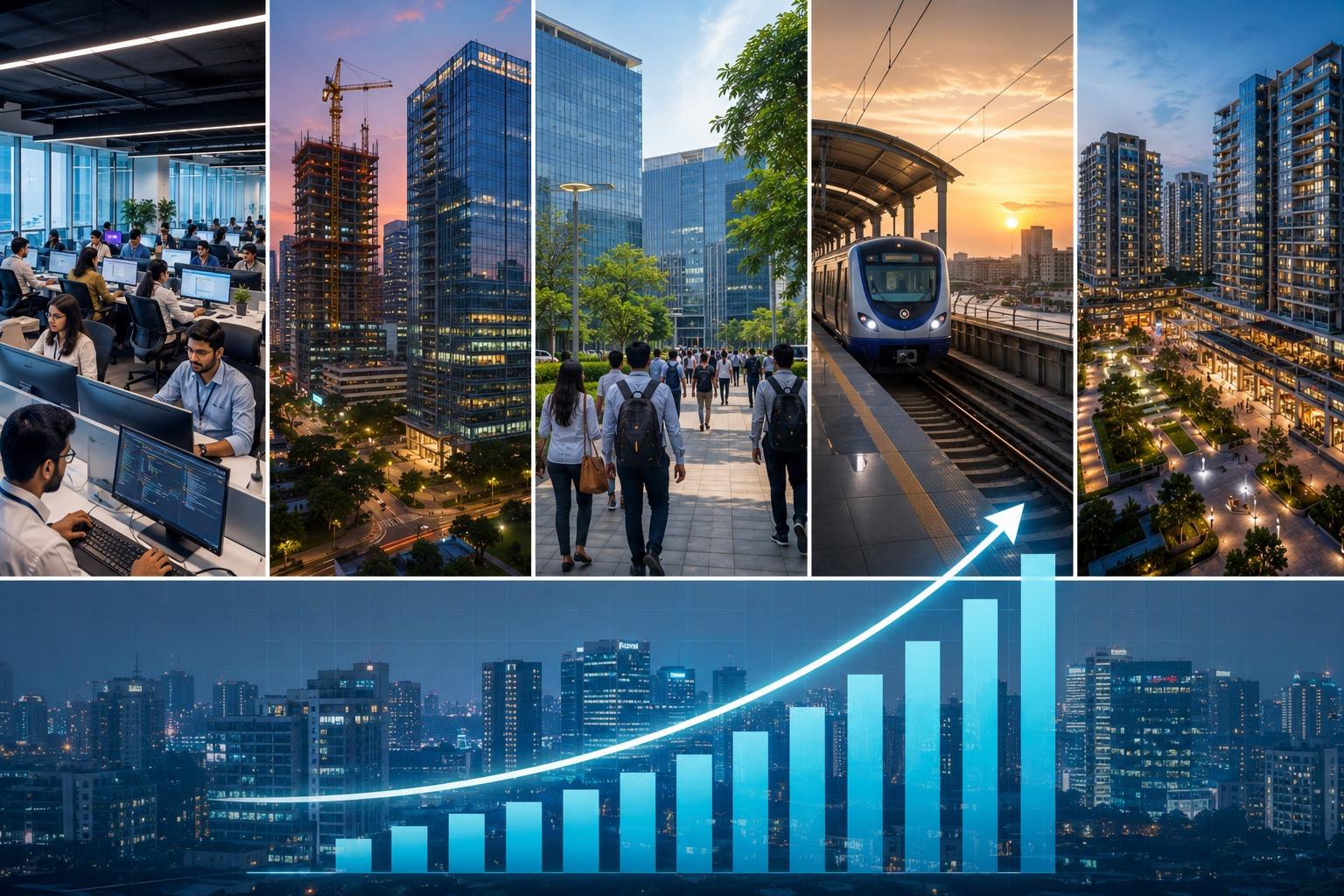
The GCC office leasing 2025 data makes the scale of this shift unmistakable. India's total office leasing crossed 83 million square feet in 2025, according to JLL research, the highest annual figure on record. Within that, Global Capability Centres alone absorbed 31 million square feet during the year, representing close to 38 percent of all leasing activity. In the final quarter of 2025, their share of active demand touched nearly 50 percent of all live requirements in the market.
To put that in context: one category of occupier is now driving roughly half of all serious office space enquiries across the country's major markets. This is not a temporary spike. Colliers has projected that GCC India leasing will reach 60 to 65 million square feet in total between 2025 and 2027 alone.
Cities at the Centre of the Boom
Bengaluru GCC hub status was established early and has only deepened. The Outer Ring Road corridor and the Whitefield micro-market together have handled a disproportionate share of India commercial real estate GCC demand since 2021. In Q4 2025, Bengaluru accounted for nearly 35 percent of all quarterly leasing activity nationally, with GCCs from the technology, BFSI, and engineering sectors driving much of that volume. Office rents in key Bengaluru corridors rose close to 20 percent in early 2025, a signal of how tight quality supply has become.
Hyderabad has moved with striking speed. Seventy new capability centres chose the city during the 2025 fiscal year alone, pushing it to near parity with Bengaluru in terms of new establishment activity. The Secondary Business District remains the most sought-after corridor, though peripheral zones are absorbing overflow demand as core rents climb. Bengaluru Hyderabad GCC leasing data 2025 collectively shows both cities drove over 60 percent of total GCC absorption between 2021 and 2025.
Pune, meanwhile, has carved out a distinct identity as the preferred base for financial institutions and BFSI-oriented capability centres. The Kharadi corridor in particular has seen a surge of financial services firms setting up large-format offices. Chennai registered the sharpest growth rate of any city during the period, with leasing volumes expanding more than five times over 2021 levels, driven by cost-sensitive occupiers attracted by its comparatively lower rentals.
Why India Keeps Winning This Race
The GCC India growth story rests on a few genuinely durable foundations. Cost efficiency is the headline figure: operating a capability centre in India still costs forty to fifty percent less than an equivalent setup in the United States or Europe. But cost is no longer the only argument. India produces more than 2.5 million STEM graduates annually, giving multinationals access to a talent pipeline of specialists in artificial intelligence, machine learning, cloud infrastructure, and data science that very few other countries can match at scale.
Government policy has reinforced the momentum. Special Economic Zone benefits, simplified registration frameworks, and state-level incentive programmes in Telangana, Karnataka, Tamil Nadu, and Maharashtra have made the regulatory environment more accommodating over time. The why GCCs are driving office demand in India answer, then, is really a convergence of talent, cost, policy, and ecosystem maturity rather than any single factor.
The Tier 2 Shift Gathering Pace
One development worth watching closely is the movement of GCC expansion tier 2 cities India that has gathered pace through 2024 and 2025. Cities including Coimbatore, Ahmedabad, Indore, Jaipur, and Bhubaneswar are now receiving serious location consideration from global firms looking to diversify away from expensive Tier-1 markets. Lease rates in these cities run 30 to 50 percent lower than Bengaluru or Hyderabad, and the talent base, while smaller, is developing quickly. This shift is beginning to create office space India demand in markets that barely registered on the commercial property radar five years ago.
What This Means for Property Markets
The GCC impact on Grade A office space India flows directly into valuations, rental trajectories, and development pipelines. Grade A stock across India's top seven cities reached approximately 847 million square feet in 2025, with a projected addition of nearly 90 million more in 2026. Developers are racing to deliver quality space that meets the specific requirements of capability centres, which tend to demand larger floor plates, better power backup, sustainability certifications, and superior amenity fit-outs than conventional corporate tenants.
For investors in commercial property India, this structural demand creates a compelling case for Grade A office assets in established corridors, particularly in Bengaluru and Hyderabad, where vacancy has tightened and rental growth has become consistent.
Summary
GCCs driving office demand India is the defining commercial real estate theme of this decade. With over 1,700 centres already operating and nearly 31 million square feet absorbed in 2025 alone, GCC office leasing 2025 has redrawn the demand map for Grade A office space nationwide. Bengaluru and Hyderabad lead the charge, Pune and Chennai follow with their own strong momentum, and Tier-2 cities are quietly entering the picture. For anyone tracking India commercial real estate GCC trends, the outlook into 2026 and beyond remains the most constructive it has been in a generation.