Post-WFH: Where Indian Cities Are Heading Next
The Pivot No One Talks About Clearly
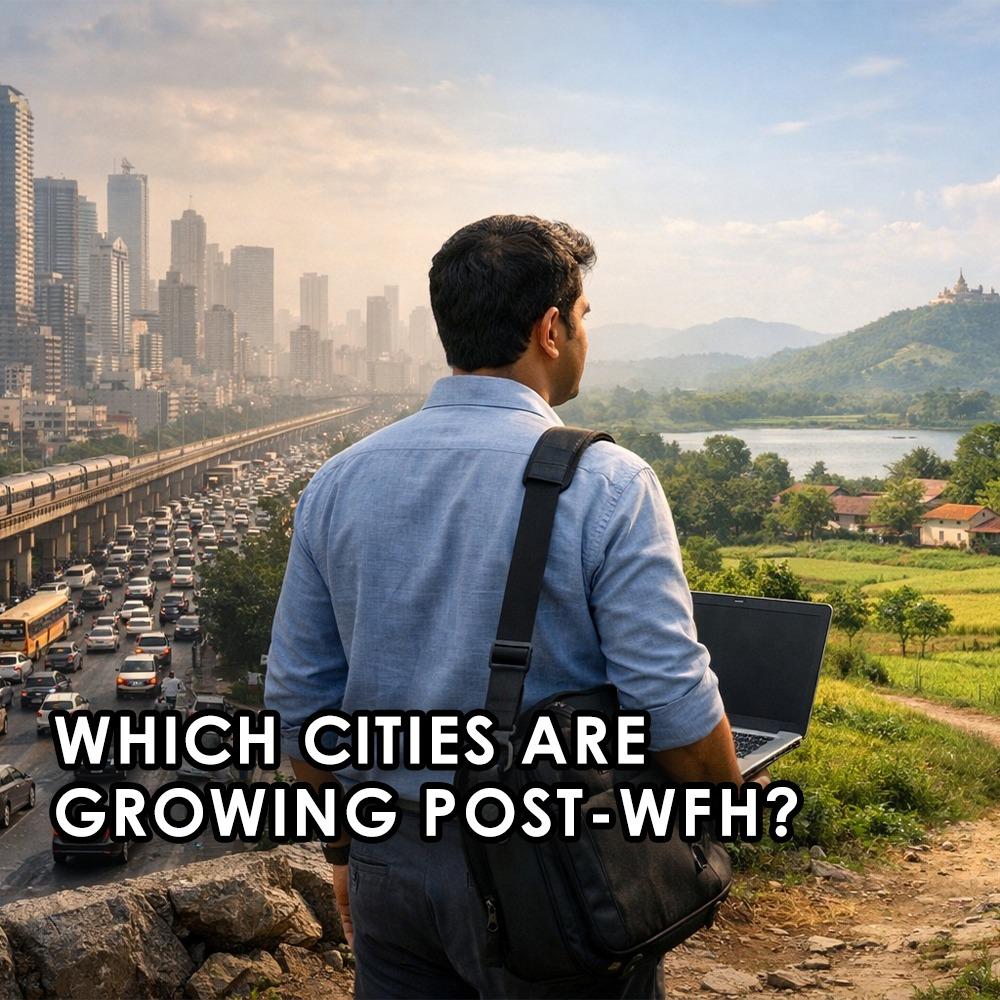
Something shifted quietly in the way Indian cities work and live over the past two years. The work-from-home era, which once seemed like it might permanently reshape where people chose to live and how offices were designed, has largely been superseded by something more complicated. Companies have pulled people back. Offices are filling up again. And the Indian real estate market is rearranging itself in response to that return, not neatly and not uniformly, but in ways that are becoming clearer with each passing quarter.
The assumption was that WFH would kill office demand. It did not. India's office market recorded a historic net absorption of 61.4 million square feet across its top eight cities in 2025, a 25 percent jump over the previous year according to Cushman and Wakefield data. That is not a recovery. That is a new high. The era of people working indefinitely from a bedroom in Mysuru or a rented flat in Vizag, while dodging Bengaluru rents, has not quite played out the way anyone predicted.
Offices Are Back, But Changed
The return to office does not mean a return to the old way of doing things. What is happening is more nuanced. Companies are leasing more space, yes, but they are being far more selective about what kind of space they take. Roughly 70 percent of India's existing office inventory is considered outdated by current occupier standards. Modern, Grade A buildings are absorbing almost all the demand while older stock is quietly struggling to find takers. This flight to quality, as analysts call it, has pushed rents upward in premium buildings across Bengaluru, Hyderabad, Mumbai, and Pune.
Global Capability Centres, the offshore operations hubs run by multinational companies, have become the single most important driver of Indian office space demand. They accounted for nearly 40 percent of all office leasing in 2025. These are not temporary setups. GCCs commit to large floor plates, multi-year leases, and premium buildings. Their presence signals long-horizon confidence in specific cities, which then ripples into housing demand in surrounding neighbourhoods.
The Cities Pulling Ahead
Bengaluru and Delhi NCR together contributed roughly 40 percent of national net office absorption in 2025. But the more interesting story was playing out in cities that are traditionally overlooked. Chennai recorded a 187 percent year-on-year jump in net absorption, suggesting that what was once a steady, unhurried market is now attracting serious corporate attention. Hyderabad, despite a generally sluggish national mood in residential sales, saw home sales actually increase by 4 percent in the second half of 2025. The city's secret sauce is a combination of relatively stable pricing, consistent job creation through GCCs, and a balanced mix of end users and investors that keeps sentiment grounded rather than frothy.
Pune continues to hold its own through sheer diversity. The Hinjewadi and Kharadi corridors carry over 200,000 IT professionals between them, and an upcoming metro connection will cut commutes in half, which historically tends to unlock significant residential appreciation along the route.
The Tier 2 Question
Post-WFH, there was enormous excitement about tier 2 cities becoming the new residential frontiers. Some of that has materialised, but not quite in the dramatic way the optimists predicted. Tier 2 cities like Indore, Jaipur, Lucknow, Coimbatore, and Ahmedabad did add roughly 187,000 new IT jobs in 2024, a 23 percent increase, and housing activity in those corridors responded accordingly. But the draw of these cities remains anchored to employment creation. Without a GCC or a major tech park, the migration story does not hold. Lifestyle pull alone is not enough to keep a real estate market moving.
What is genuinely shifting is where India's next wave of affordable housing demand will come from. With average prices in the top seven cities rising 8 percent in 2025 and Delhi NCR clocking a staggering 23 percent annual price increase, the mid-segment buyer is being quietly pushed toward peripheral zones and smaller cities. Homes priced above one crore already account for more than half of all sales by value. That compression of affordability at the lower end creates a natural spillover toward tier 2 markets.
What Homebuyers Are Actually Doing
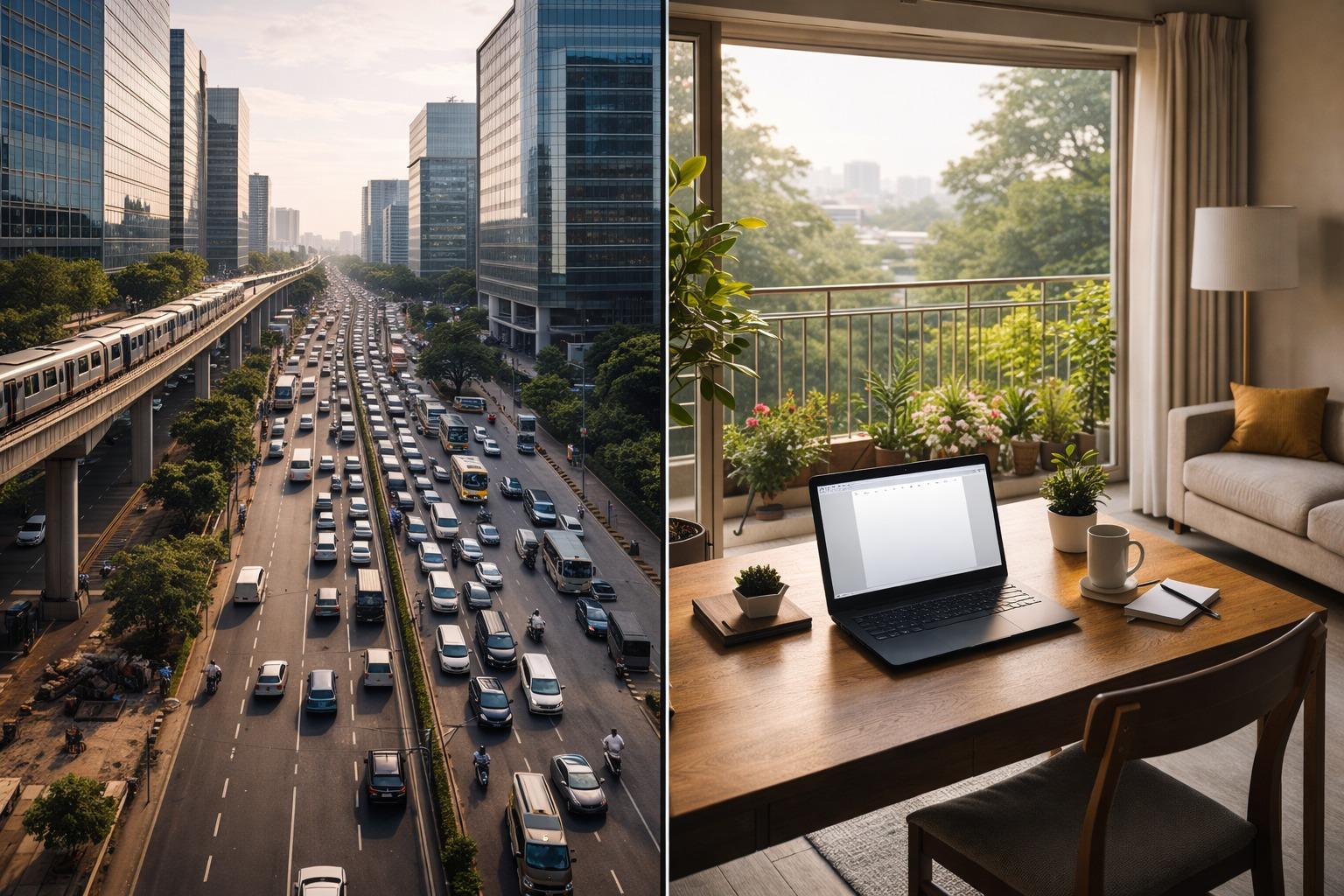
People are making pragmatic choices rather than ideological ones. The professional who dreamed of working from home in a hill town has largely returned to office, but they are not willing to accept a two-hour daily commute either. This is driving demand in areas that sit within 30 to 40 minutes of major employment hubs. Outer Ring Road zones in Bengaluru, the Dwarka Expressway belt in Gurugram, and Navi Mumbai's expanding corridors are benefiting precisely because they offer that balance.
Flex workspaces, which now account for close to 20 percent of all office leasing, are also playing a supporting role. They allow companies to maintain a presence in multiple city zones without committing to full campuses, which means employees can work closer to where they actually live.
Summary
Post-WFH India is not trending toward one clear outcome. Office demand has returned stronger than ever, driven by GCCs and the relentless pull of Grade A buildings. Residential markets in cities like Hyderabad and Chennai are outperforming while metros grapple with affordability ceilings. Tier 2 cities are genuinely growing but only where jobs lead. The new geography of Indian real estate in 2026 belongs to cities and corridors that solve for one thing above all else: the commute that professionals are finally unwilling to endure again.