
Office spaces near metro stations
Summary
Metro proximity has become the top driver for Indian companies choosing office spaces, leading to 15-30% rental premiums. This shift, fueled by expanding metro networks, enhances talent accessibility and improves employee quality of life, making it a critical factor for businesses and investors.

A New Address Hierarchy Is Taking Shape
Something has quietly changed in how Indian companies choose their offices. The old checklist used to prioritise parking, floor plate size, and proximity to the expressway. Today, a new question sits at the top of that list: how close is the nearest metro station? And if the answer is more than a ten-minute walk, the conversation often ends there.
This shift is not arbitrary. It reflects a fundamental change in how Indian cities work, how talent moves, and what a company's office address signals to the workforce it is trying to attract and retain. Office spaces near metro stations have moved from being a nice-to-have to a near non-negotiable for a growing class of corporate tenants.
Why Metro Proximity Has Become the Primary Lease Driver
India added over 400 kilometres of operational metro network across its cities between 2020 and 2025. Delhi, Mumbai, Bengaluru, Hyderabad, Chennai, Pune, Kolkata, Ahmedabad, and Kochi all either completed major extensions or opened entirely new corridors during this period. The commuter volumes on these networks are genuinely staggering. Delhi Metro alone carries upward of 60 lakh passengers on peak weekdays.
When that many people are depending on a metro to get to work, the office buildings closest to those stations start to look like a fundamentally different product compared to equally well-appointed buildings that require a cab, an auto, or a personal vehicle to access. For an employee spending two to three hours commuting in a car through Indian city traffic, a metro-connected workplace does not just save time. It genuinely changes the quality of daily life.
HR teams at large companies have started factoring this in explicitly. Talent that might otherwise avoid a job offer because of commute anxiety becomes accessible when the office sits on a metro line. And in a market where skilled professionals have meaningful options, that is not a trivial consideration.
What It Does to Rental Rates
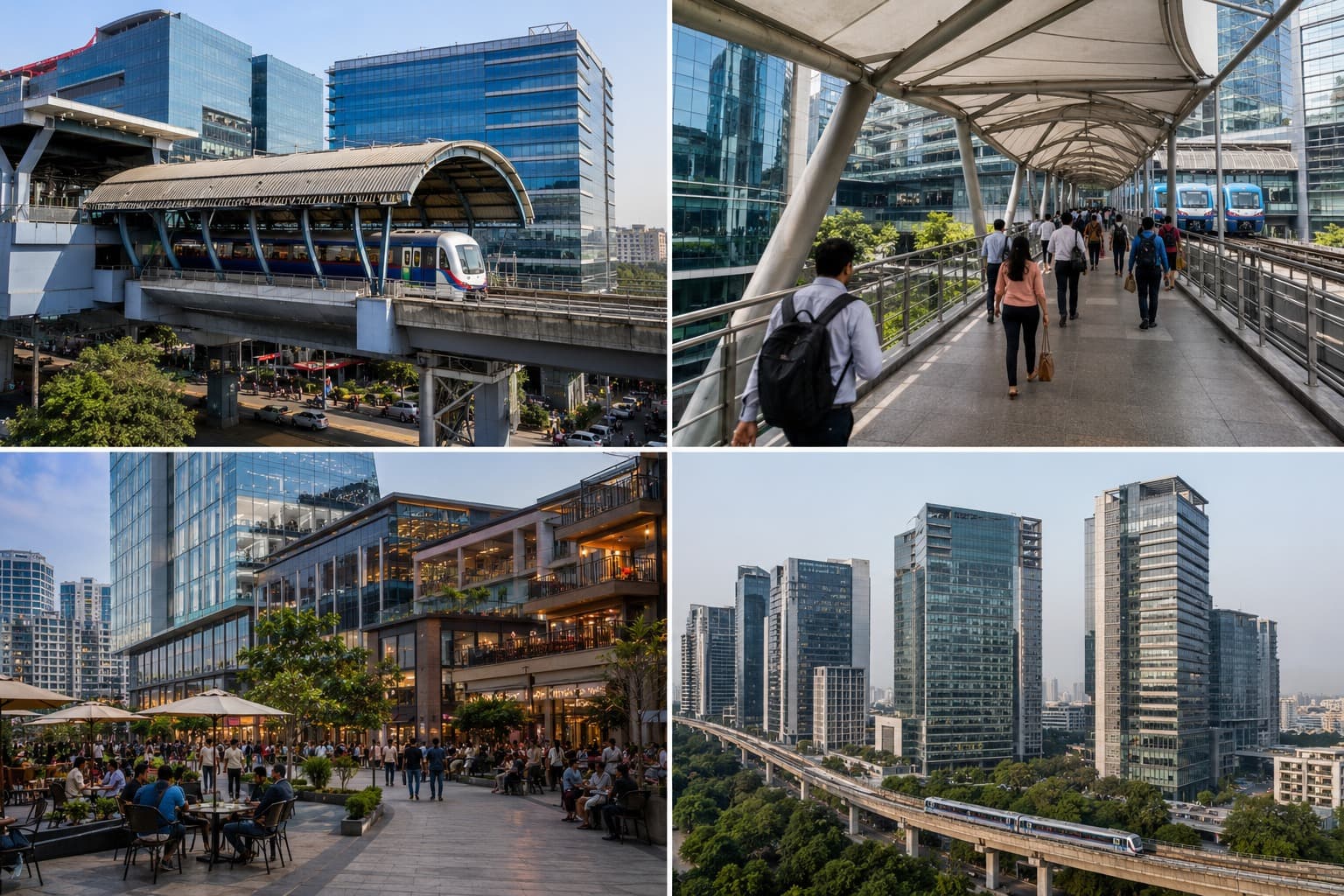
The metro station proximity effect on office lease rates is measurable and growing. Properties within 500 metres to one kilometre of a metro station consistently command rental premiums of 15 to 30 percent over comparable Grade A buildings in the same micro-market that lack metro access.
In Bengaluru's Outer Ring Road corridor, offices near operational Namma Metro stations on the Green Line have maintained near-full occupancy even as vacancy in surrounding areas has climbed. In Mumbai, the Aqua Line connecting Andheri to Dahisar has already triggered fresh developer interest in building new commercial stock in areas that were previously considered too fragmented for large-format office development. In Delhi NCR, Gurugram's Cyber City remains the reference point for metro connectivity commercial real estate done right, with the Yellow Line extension sustaining Gurugram's position as a premier office destination.
The Cities Leading the Trend
Best cities for office investment near metro corridors India 2026 is a conversation dominated by three names: Bengaluru, Hyderabad, and Mumbai. Bengaluru's upcoming Phase 3 metro expansion will bring the Whitefield and Hebbal corridors under metro coverage, two zones already carrying significant IT office demand. Property watchers expect the announcement of firm commissioning dates for these corridors to trigger a fresh round of pre-leasing activity in adjacent business parks.
Hyderabad's Metro Rail Phase 2, which will extend into areas like HITEC City's outer edges and the Outer Ring Road corridor, is already generating speculative developer interest. Land prices along the proposed Phase 2 alignment have appreciated between 20 and 35 percent in the past eighteen months on the basis of expected connectivity alone.
Mumbai presents a more complex picture. The Aqua Line is operational but still building its commuter base. The upcoming Metro Line 3 extension toward Thane and Navi Mumbai, and the planned Navi Mumbai Metro, could reshape the commercial map of the Mumbai Metropolitan Region in ways that current office rental geographies do not yet fully reflect.
What This Means for Businesses Choosing Office Space
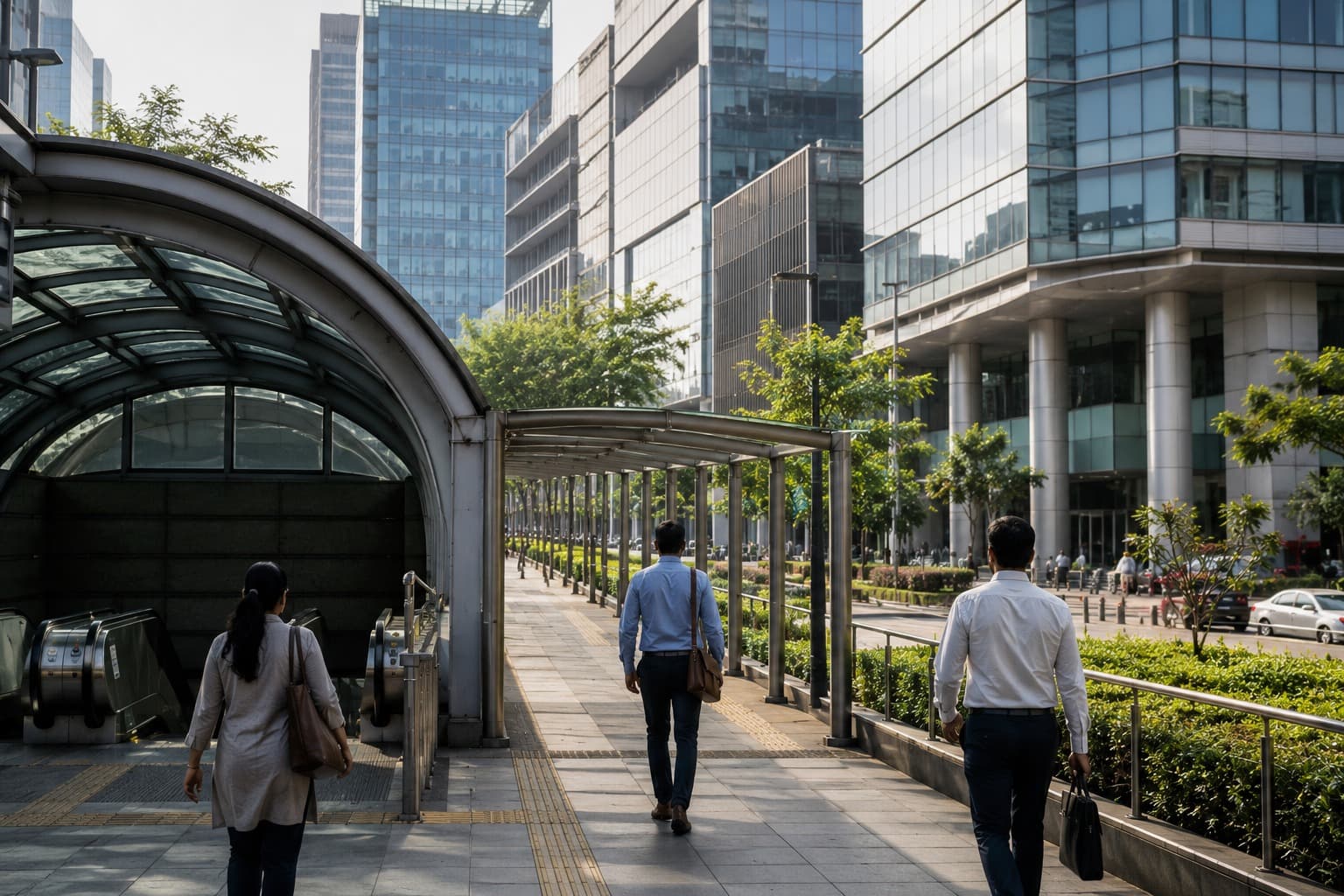
For any business currently searching for office lease near metro Mumbai Delhi or any other city, the decision is not purely about cost. A metro-linked address reduces transport reimbursement bills, cuts down on late arrivals linked to traffic volatility, and significantly expands the talent pool a company can realistically hire from. Employees willing to commute ninety minutes by metro will not necessarily accept a ninety-minute drive through congested city roads.
The practical advice for lease negotiations is to treat metro proximity as a capital investment in workforce productivity. A 20 percent premium on rent that yields 10 percent lower attrition and a meaningfully wider hiring radius has already paid for itself.
The Risk of Waiting Too Long
Here is a pattern that repeats itself every time a new metro corridor opens in India. Developers and early-mover tenants who commit to the corridor two to three years before commissioning date get the best pricing. By the time the first train runs, lease rates have typically already adjusted upward to reflect the new access reality.
For investors, the window to acquire commercial property near metro 2026 at pre-commissioning prices in corridors like Bengaluru Phase 3 and Mumbai Metro Lines 9 and 10 is narrowing. The market rarely waits for the ribbon-cutting ceremony to reprice these assets.
Summary
Office spaces near metro stations have become the single most sought-after address category in Indian commercial real estate. Metro connectivity commercial real estate drives 15 to 30 percent rental premiums across Bengaluru, Mumbai, Hyderabad, and Delhi NCR, with the trend accelerating as new corridors come online. Why office spaces near metro stations command higher rent in India comes down to talent access, employee productivity, and the irreversible shift in how India's urban workforce chooses to move. For businesses and investors alike, metro station proximity is no longer a location bonus. It is the baseline.