
Navi Mumbai vs Thane: Which Is Better for NRIs?
Summary
NRIs weighing Navi Mumbai vs Thane property should consider priorities. Navi Mumbai offers planned growth, better prices, and future infrastructure for appreciation, while Thane provides larger homes and established amenities for immediate liveability. The optimal choice depends on investment goals.

Introduction
Ask any NRI who has started house hunting back home and the same two names come up within minutes. Navi Mumbai and Thane property sit on opposite sides of the harbour, both promising better value than South Mumbai, both selling a version of the same dream. But they are not interchangeable, and treating them as such is where overseas buyers often make the wrong call.
Two Very Different Origin Stories
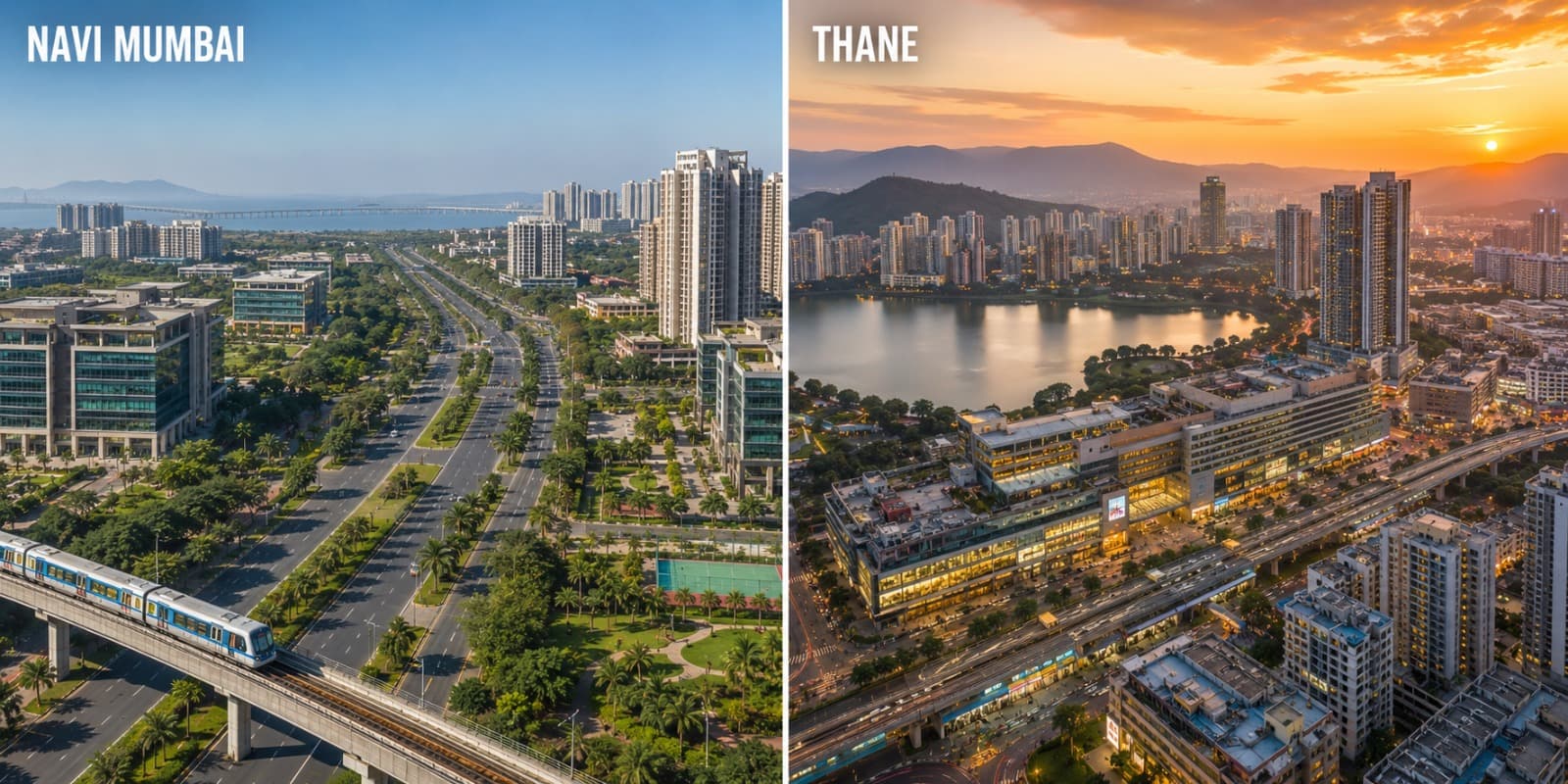
Thane grew the way most Indian cities grow, filling in gaps as demand arrived. Navi Mumbai was planned from scratch by CIDCO, with wide roads, designated sectors and business districts laid out before the buildings went up. That single difference shapes almost everything else here, from how congested the roads feel today to how much room each city has left to expand.
The Price Gap Still Favours Navi Mumbai
Thane's proximity to central Mumbai via the Eastern Express Highway has pushed its rates up steadily, and in several pockets it now trades close to premium suburban levels. Navi Mumbai, despite its own rapid growth, still offers a lower entry point in most localities. For an NRI property investment converting dollars, pounds or dirhams, that gap can mean a larger home for the same budget.
Infrastructure Momentum Leans Toward Navi Mumbai
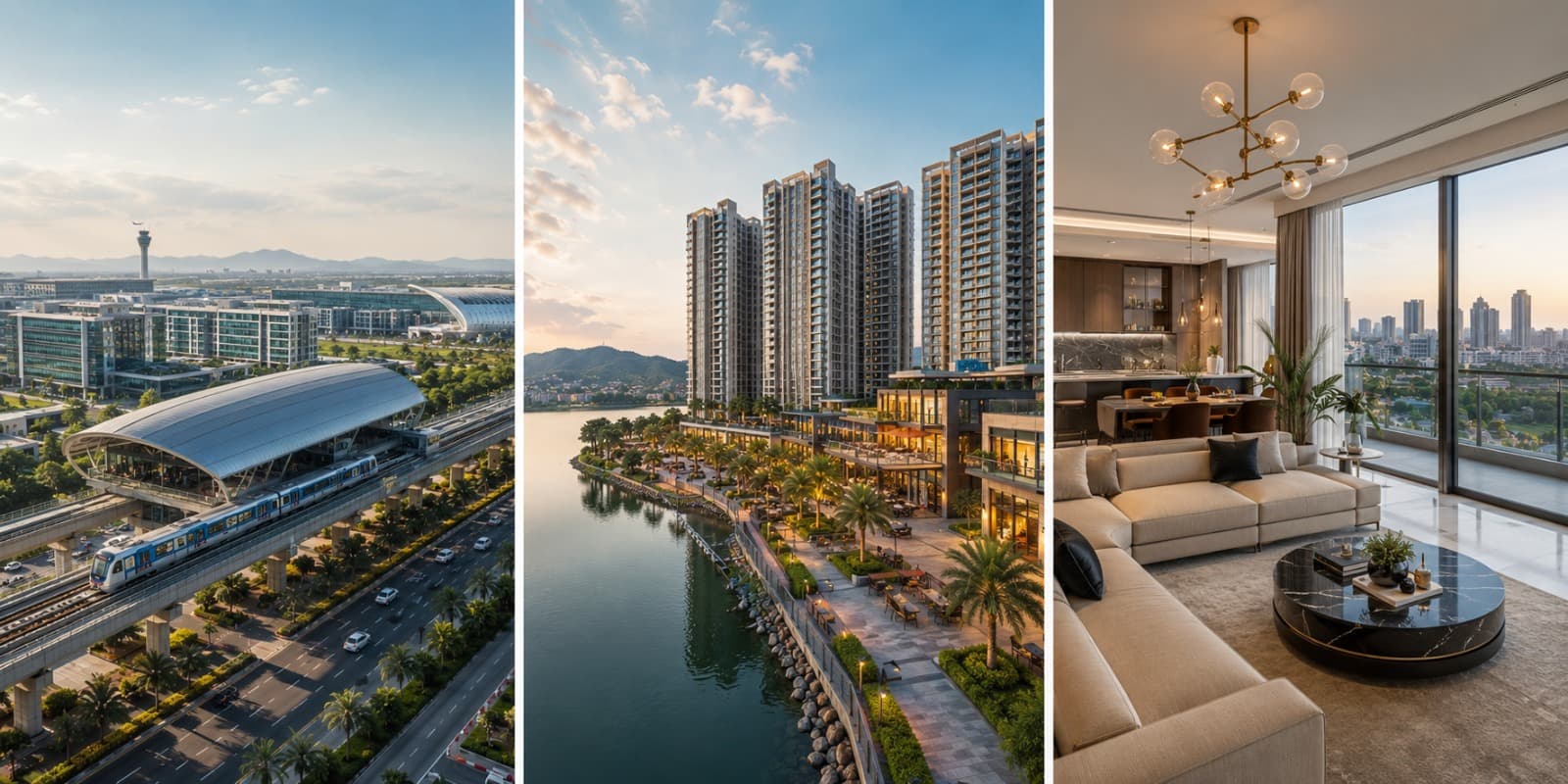
Navi Mumbai infrastructure currently sits at the centre of the region's biggest projects. The Navi Mumbai International Airport, the Mumbai Trans Harbour Link connecting it directly to South Mumbai, and an expanding metro network are all converging on this city at once. Thane is not standing still either, with its own metro corridor and Ghodbunder Road upgrades, but the scale of what is landing in Navi Mumbai right now is hard to match.
Thane's Case Rests on Space and Familiarity
Where Thane real estate wins is space. Homes here tend to be larger for the price than options closer to town, and the city already has a mature ecosystem of schools, hospitals and malls built over decades. For an NRI planning to retire here or house parents soon, that existing infrastructure matters more than a promise of what is coming.
Congestion Is Thane's Real Weak Spot
Thane's popularity has come at a cost. Traffic on Ghodbunder Road during peak hours is rough, and land for fresh development is thinning out in the established pockets. Navi Mumbai, planned with wider arterial roads and dedicated sectors, has more breathing room, though its own traffic will build as the airport and MTHL bring in more daily movement.
Where the Rental Demand Actually Sits
Navi Mumbai's business districts, Airoli, Vashi, CBD Belapur and the newer clusters near Kharghar and Ulwe, pull in a steady stream of working professionals needing rental housing close to office. Thane has its own tenant base too, drawn from Powai and central suburb commuters wanting a cheaper base with a shorter reverse commute. Both markets work for rental income, but Navi Mumbai's yields have generally edged ahead recently.
What This Means for an NRI Buyer Specifically
NRIs can buy residential or commercial property in either city without RBI approval, routing payments through an NRE or NRO account under FEMA rules. The bigger question is not regulatory, it is about intent. If the goal is long term appreciation tied to infrastructure still being built, Navi Mumbai edges ahead. If the goal is a larger home with established surroundings and livability from day one, Thane holds its own.
Making the Actual Decision
There is no universally correct answer, and anyone who tells you otherwise is oversimplifying. A lot comes down to whether you are buying to invest, to eventually live in, or to house family meanwhile. Visit both markets if you can, walk the actual streets rather than relying on brochures, and check RERA registration before signing anything.
Summary
For NRIs weighing Navi Mumbai vs Thane, the choice depends on priorities. Navi Mumbai offers a planned layout, lower entry prices and stronger Navi Mumbai infrastructure momentum through the new airport, MTHL and expanding metro lines. Thane counters with larger homes, established social infrastructure and proximity to central Mumbai, though congestion is a real concern. Both remain sound NRI property investment options in 2026, and the smarter city depends on whether the priority is appreciation or immediate liveability.