
Indian Homebuyers Are Quietly Rewriting Their Checklists, and the Weather Is the Reason
Summary
Indian homebuyers are now prioritizing climate resilience due to extreme weather, rewriting their checklists to include flood history, heat exposure, and robust drainage. This shift is impacting property values, design, and developer strategies as builders and resale markets adapt to new critical buying criteria.

A decade ago, a home buyer's checklist looked fairly predictable. Location, budget, builder reputation, proximity to schools and offices. That list has not disappeared, but a new item has forced its way near the top in several Indian cities, and it has nothing to do with amenities. Extreme weather homebuyers are now factoring in flood history, heat exposure, and drainage quality before they factor in floor plans.
The Flooding Problem That Will Not Go Away
Cities like Bengaluru, Chennai, Mumbai, and parts of the Delhi-NCR belt have all seen severe waterlogging events in recent years that left entire residential layouts underwater for days. Buyers in these cities have started doing something that real estate agents say was rare even five years ago. They are checking historical flooding records of a locality before signing on a project, sometimes asking neighbours and local shopkeepers directly rather than relying on builder brochures.
Why Elevation and Drainage Have Become Selling Points
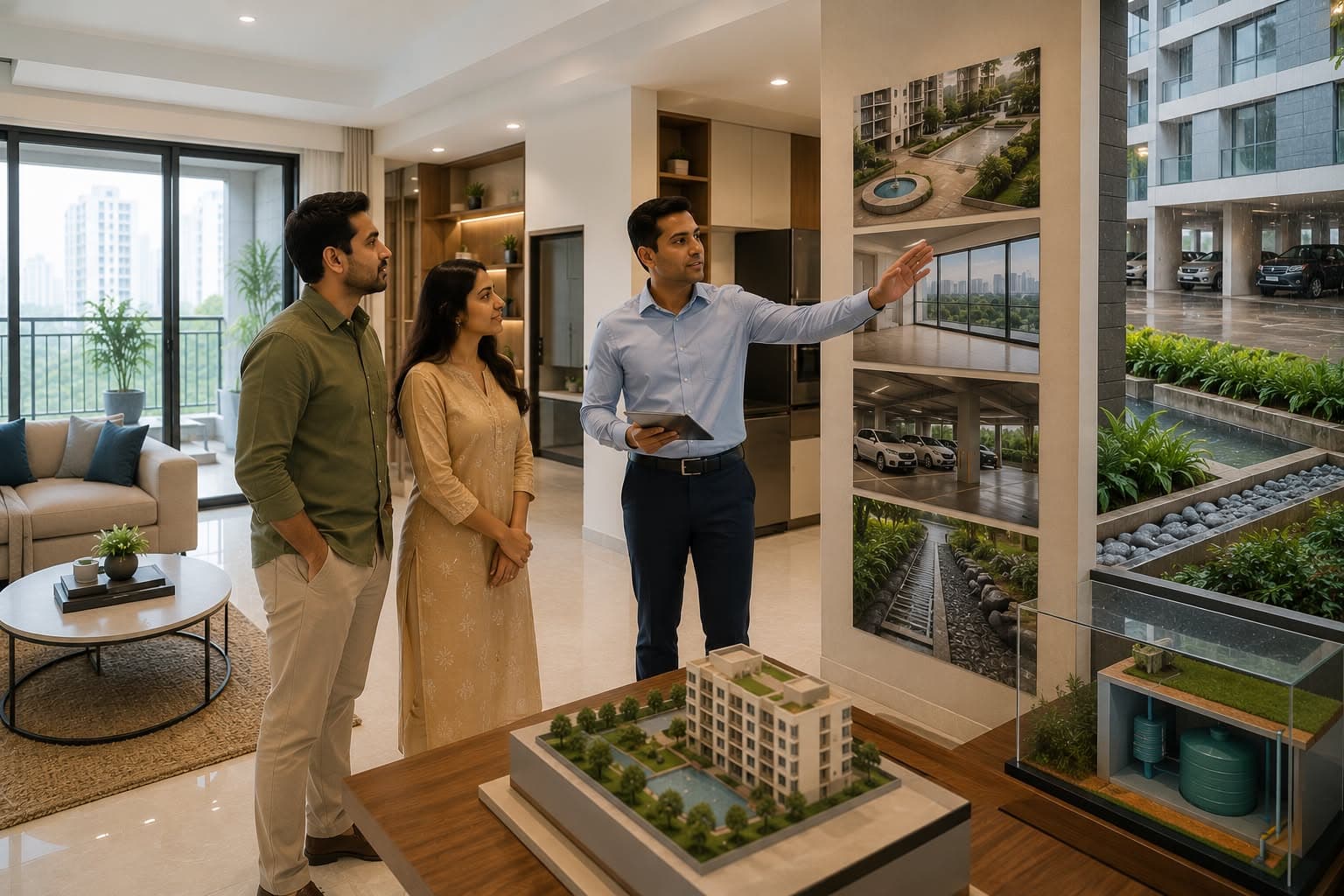
Builders who once advertised swimming pools and clubhouses are increasingly leading with stormwater drainage systems, elevated ground floors, and rainwater harvesting infrastructure. This shift is not cosmetic marketing. It reflects genuine buyer demand. A project sitting on naturally elevated land in a city prone to monsoon flooding can now command a meaningfully higher price than a comparable project in a low-lying pocket nearby, even if the low-lying project is closer to the city centre.
The Heatwave Factor in Apartment Design
Heat is the other half of this story. Summers across North and Central India have been getting longer and more intense, and that has pushed buyers toward homes with better cross-ventilation, higher ceilings, and orientation away from direct west-facing sun exposure. Apartments that once sold purely on square footage are now being evaluated on how livable they remain without air conditioning running through the entire day.
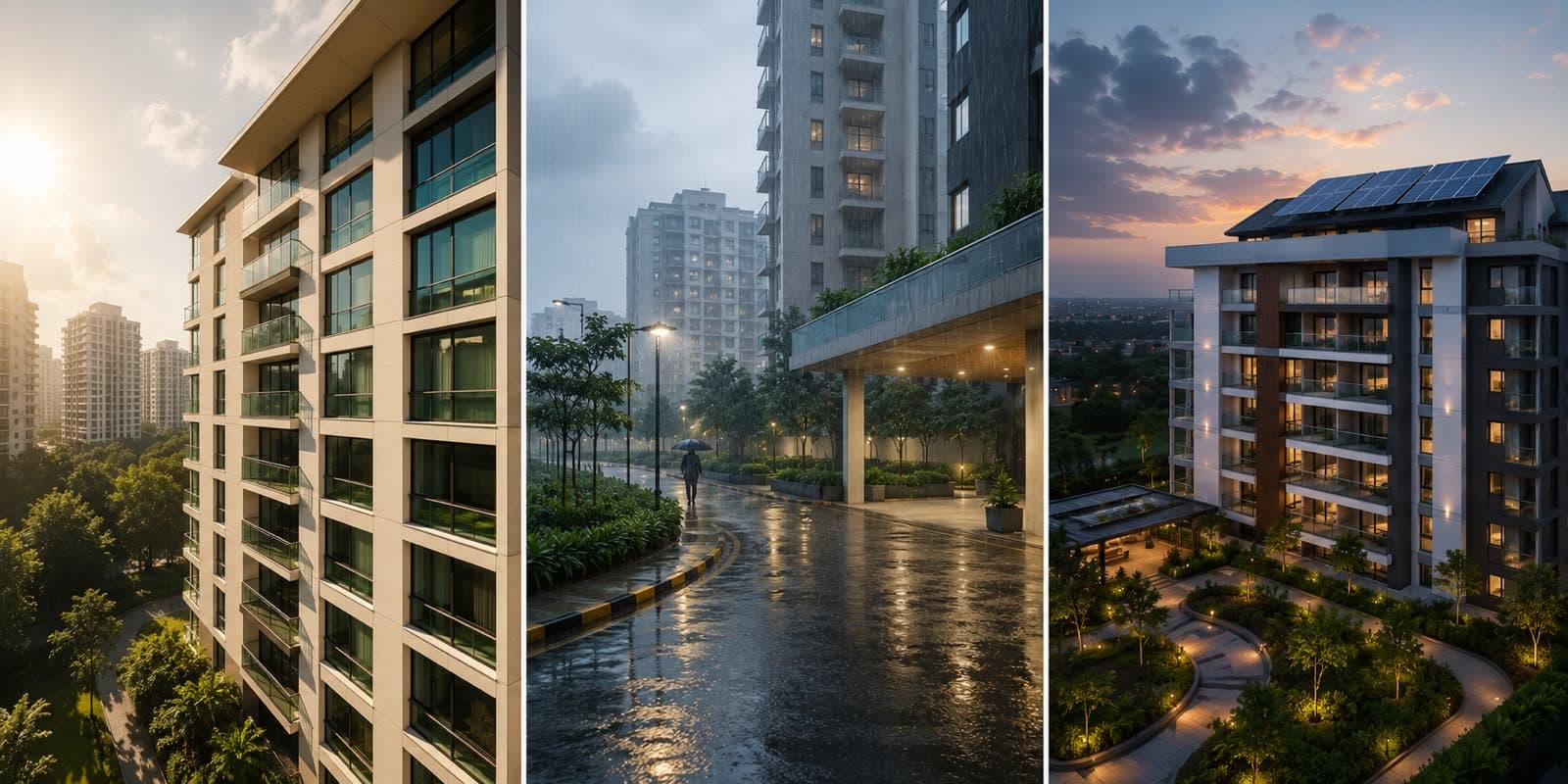
Builders have responded with double-glazed windows, reflective roofing materials, and shaded balconies in newer launches, particularly in cities like Ahmedabad, Nagpur, and parts of Rajasthan where summer temperatures regularly cross uncomfortable thresholds. Heatwave proof apartment design has shifted from a niche green-building feature to something marketing teams now lead with.
Coastal Cities Face a Different Calculation
In coastal markets like Mumbai, Chennai, and parts of Kerala, buyers are weighing a different risk: cyclone exposure and sea level proximity. Properties directly along vulnerable coastlines have started seeing slower price appreciation compared to similar properties set back further inland, a gap that barely existed a decade ago. Insurance premiums for ground floor units in flood-prone coastal pockets have also begun rising, which is itself becoming a factor buyers weigh into their total cost of ownership.
Insurance Is Entering the Conversation Earlier
Homebuyers used to think about property insurance as an afterthought, something to sort out after possession. That pattern is changing. Buyers researching projects in flood-sensitive zones are now asking about insurance availability and premium estimates during the decision stage itself, not after moving in. When premiums climb meaningfully due to recurring weather risk in a particular pocket, it directly affects the real cost of owning a home there.
Resale Markets Are Reacting Too
It is not only new buyers who are recalculating. Owners trying to resell apartments in localities that flooded badly in the last two or three years are finding it noticeably harder to attract buyers at the price levels they expected. Word travels fast in Indian neighbourhoods, and a single bad monsoon season can leave a visible dent on a locality's reputation for years afterward.
What This Means for Developers Going Forward
Developers who treat climate resilience as a genuine design priority rather than a marketing checkbox are likely to hold a real advantage over the next decade. Climate resilient homes India projects, ones built with proper elevation, drainage capacity, and heat-conscious architecture, are positioned to age better both physically and in terms of resale value, as extreme weather events become a more regular part of the Indian climate pattern rather than an occasional disruption.
Summary
Extreme weather homebuyers across Indian cities are increasingly prioritising flood history, drainage infrastructure, heat resilience, and insurance costs alongside the traditional factors of price and location. From elevated construction in flood-prone cities to better ventilation in heatwave-affected regions, climate resilient housing India is shifting from a niche preference into a mainstream buying criterion, with resale values and insurance premiums already beginning to reflect this changing risk awareness among buyers.