
How Nearby Schools, Hospitals, and Markets Affect Your Resale Value
Summary
Discover how nearby schools, hospitals, and markets significantly impact your property's resale value. Learn why convenience and accessibility drive buyer demand and protect your investment.

Introduction
When buyers think about resale value, they often focus on future price appreciation or market timing. However, one of the most powerful and consistent factors influencing resale value is the everyday environment around a home. Proximity to schools, hospitals, and markets directly affects how desirable a property remains over time. These amenities shape daily convenience, lifestyle quality, and buyer demand. Understanding their impact helps homeowners and buyers make smarter long-term property decisions.
Why Resale Value Is Linked to Daily Convenience
Resale value is driven by demand, not just construction quality. Properties that make everyday life easier attract a wider pool of buyers. Schools, healthcare facilities, and local markets address essential daily needs. When these are easily accessible, buyers perceive the property as practical and future-proof. Convenience reduces friction in daily routines, which directly enhances buyer interest during resale.
Schools and Their Long-Term Influence on Demand
Nearby schools play a major role in shaping residential demand. Families often shortlist homes based on school accessibility even before evaluating interiors. A property located near reputed schools attracts consistent interest from end-users. This demand remains stable across market cycles. Even buyers without children value school proximity because it improves rental demand and resale potential.
Quality of Schools Matters More Than Quantity
It is not just the number of schools that matters, but their reputation and accessibility. Well-established schools with stable academic performance increase buyer confidence in the locality. Properties near such institutions often see faster resale because buyers trust the neighbourhood’s long-term suitability for families. Over time, this trust translates into pricing resilience.
Hospitals as a Resale Security Factor
Healthcare access is no longer a secondary consideration. Buyers increasingly prioritise proximity to hospitals and clinics. Easy access to medical facilities provides emotional security, especially for families with elderly members. Properties located near dependable healthcare centres are viewed as safer long-term choices, which supports steady resale demand.
Emergency Access and Buyer Psychology
Buyers subconsciously evaluate how quickly they can access medical help during emergencies. Even if a hospital is rarely used, its presence influences decision-making. Properties that offer shorter travel time to healthcare facilities reduce perceived risk. This psychological comfort improves buyer willingness to pay and shortens resale timelines.
Role of Local Markets in Daily Livability
Local markets are the backbone of everyday living. Proximity to grocery stores, pharmacies, and essential retail adds practical value to a home. Buyers prefer neighbourhoods where daily needs can be met without long commutes. Markets contribute to walkability and routine ease, both of which are increasingly valued in urban living.
Markets and Community Activity
Active local markets also indicate a vibrant residential ecosystem. Regular footfall, functioning shops, and consistent civic activity signal a stable neighbourhood. Buyers associate such areas with long-term habitability. This perception strengthens resale prospects because future buyers feel confident about the locality’s sustainability.

Combined Effect of Amenities on Buyer Choice
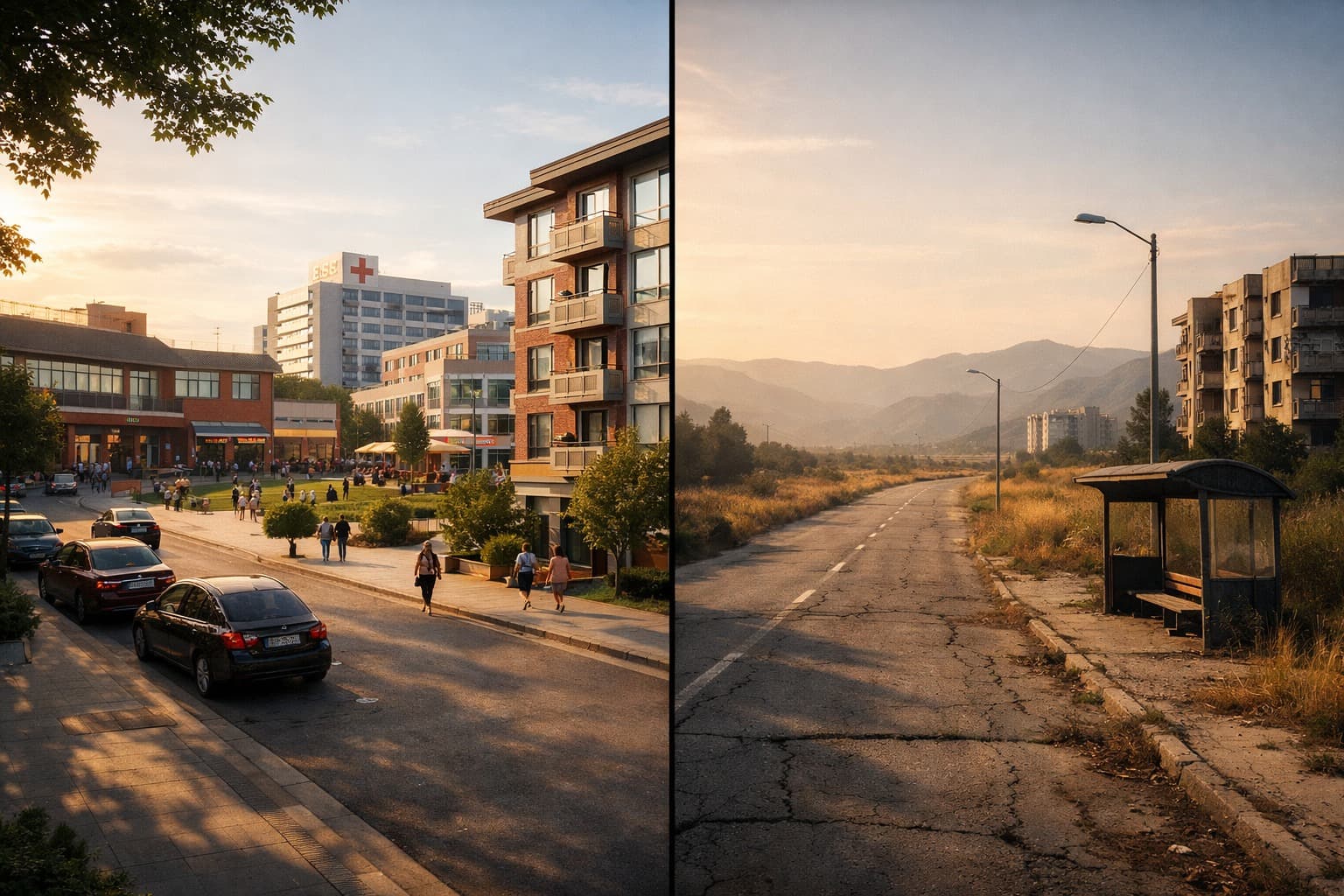
When schools, hospitals, and markets exist within reasonable distance, the property appeals to a broader buyer base. Families, working professionals, senior citizens, and investors all find value in such locations. Wider appeal increases competition during resale, which supports better pricing and quicker transactions.
How Amenities Reduce Market Volatility
Properties in amenity-rich locations tend to be less affected during market slowdowns. Even when overall demand softens, homes near essential infrastructure continue to attract interest. Buyers prioritise necessity-driven locations over speculative areas. This stability protects resale value during uncertain market phases.
Impact on Rental Demand and Resale Link
Strong rental demand often supports resale value. Tenants prefer locations close to schools, hospitals, and markets. Properties that generate consistent rental income appear more attractive to investors during resale. A healthy rental ecosystem indirectly strengthens long-term price stability.
Distance Versus Accessibility
Amenity impact is not defined only by physical distance. Accessibility matters more than straight-line proximity. Good roads, safe pedestrian access, and reliable transport connectivity improve usability. A slightly farther hospital with easy access can add more value than a closer one with poor connectivity. Buyers evaluate experience, not maps.
Overdevelopment Versus Balanced Infrastructure
While amenities add value, overcrowding can reduce appeal. Too many commercial activities without planning may cause congestion and noise. Balanced development matters. Buyers prefer localities where amenities exist without overwhelming residential comfort. Proper planning preserves resale attractiveness.
Buyer Segments and Amenity Sensitivity
Different buyer groups value amenities differently. Families prioritise schools and hospitals. Working professionals focus on markets and daily convenience. Senior buyers value healthcare access the most. A location that caters to multiple segments performs better during resale due to diversified demand.
Long-Term Planning and Civic Stability
Amenities indicate government and private investment in an area. Schools and hospitals usually signal planned development. Such areas benefit from better civic attention, infrastructure upgrades, and service continuity. Buyers associate this stability with long-term value retention.
Common Buyer Mistakes Regarding Amenities
Some buyers assume future amenities will automatically arrive. Others ignore accessibility during peak hours. Overreliance on proposed infrastructure without verification leads to disappointment. Evaluating existing, functional amenities is safer for resale planning than trusting future promises.
How Buyers Should Evaluate Amenity Impact
Buyers should physically visit the area at different times of day. Travel time to schools, hospitals, and markets should be tested in real conditions. Speaking to residents provides insight into actual usability. Practical evaluation gives a more accurate picture than brochures.
Resale Perspective for Long-Term Owners
For homeowners planning to sell in the future, amenity proximity acts as a silent value enhancer. Renovations and upgrades help, but location-driven convenience consistently attracts buyers. Over time, functional neighbourhoods outperform isolated developments in resale performance.
Final Guidance for Buyers and Owners
When choosing a home, buyers should think beyond immediate needs. Schools, hospitals, and markets shape everyday life and future demand. Prioritising functional locations reduces resale risk and increases long-term satisfaction. Location convenience is not a luxury; it is an investment safeguard.
Summary
Nearby schools, hospitals, and markets play a decisive role in determining a property’s resale value. These amenities influence daily convenience, buyer confidence, and long-term demand. Homes located in well-serviced neighbourhoods attract wider buyer interest, remain resilient during market slowdowns, and sell faster at better prices. Buyers who evaluate existing, accessible amenities rather than future promises make more secure property decisions. Over time, functional locations consistently outperform purely price-driven choices in resale performance.
Video will be embedded from: https://www.youtube.com/watch?v=VEH2Se5E-zo