
How Navi Mumbai Is Emerging as a Co-Working Destination
Summary
Navi Mumbai is rapidly emerging as a top co-working destination, fueled by its new international airport, lower rents, and strong GCC demand. Flexible workspaces cater to hybrid models, offering a cost-effective, well-connected alternative to Mumbai.

Introduction
For years, Navi Mumbai carried a quiet, slightly underwhelming reputation in Mumbai's commercial real estate conversations. It was the practical, affordable cousin across the harbour, useful for back-office operations but never the address a company led with on its letterhead. That reputation has aged badly. Navi Mumbai co-working spaces are now filling up at a pace that has surprised even seasoned property watchers, and the reasons behind that turnaround are worth understanding properly.
The Math That Tenants Cannot Ignore
Money talks first in any commercial leasing decision, and the numbers coming out of Navi Mumbai are difficult to argue with. Average office rents in the region sit well below comparable Grade A space across the rest of the Mumbai Metropolitan Region, often by more half. For a company evaluating where to set up a hundred-seat office or a flexible co-working membership for a growing team, that kind of rental gap is not a marginal saving. It changes the entire cost structure of running an India office.
Navi Mumbai office rent comparison Mumbai 2026 consistently shows this affordability gap holding steady even as the region's overall stock and quality have improved sharply. Tenants are getting newer buildings, better specifications, and lower rent simultaneously, which is an unusually generous combination in any property market.
The Airport Changed the Conversation Entirely
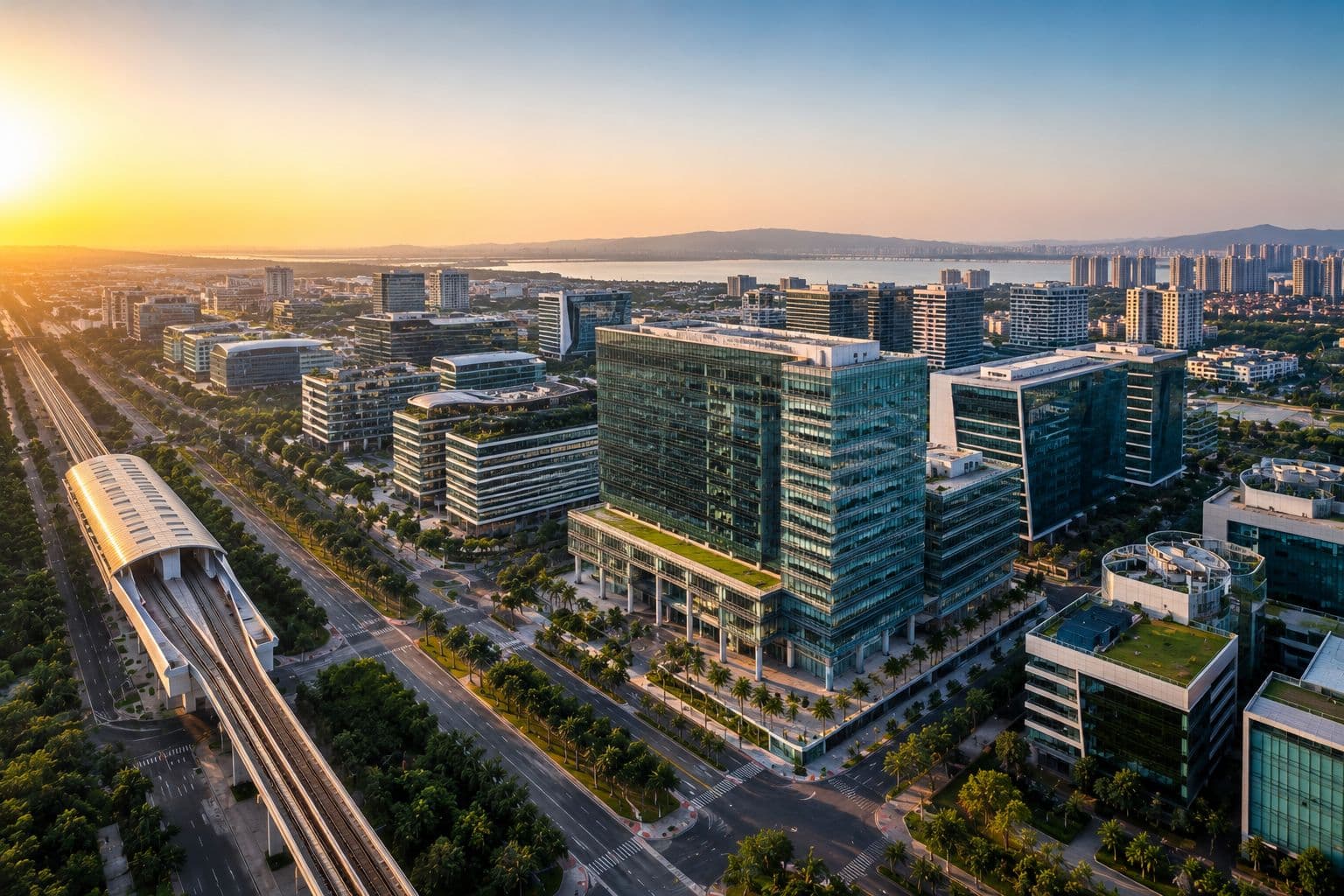
No single development has reshaped perceptions of this region faster than the new international airport. With commercial flights now running and operations extending around the clock, the long-promised transformation of the surrounding belt has stopped being a future promise and started becoming a present reality.
Impact of Navi Mumbai airport on co-working demand shows up most clearly in how companies are now describing their location strategy. Easy access to an international airport matters enormously to global firms setting up regional teams, and flexible workspace operators have been quick to position themselves in nodes that benefit from this new connectivity, knowing that occupiers want both affordability and proximity to the airport corridor.
Global Capability Centres Are Driving Genuine Demand
The deeper structural reason behind this shift is the explosive growth of Global Capability Centres setting up shop in India. These are the in-house teams that multinational companies build to run technology, finance, and operations functions out of India, and their preferences are very specific. They want talent availability, modern Grade A buildings, and infrastructure that actually works.
Navi Mumbai GCC office leasing has benefited enormously from this trend because the region checks every one of those boxes at a fraction of the cost of South Mumbai or Bandra-Kurla Complex. Surveys of these centres consistently rank cost-effective quality space and talent access among their top location criteria, and Navi Mumbai's growing pool of educated young professionals living in its residential belts feeds directly into that requirement.
Why Flexible Workspace Specifically Is Booming
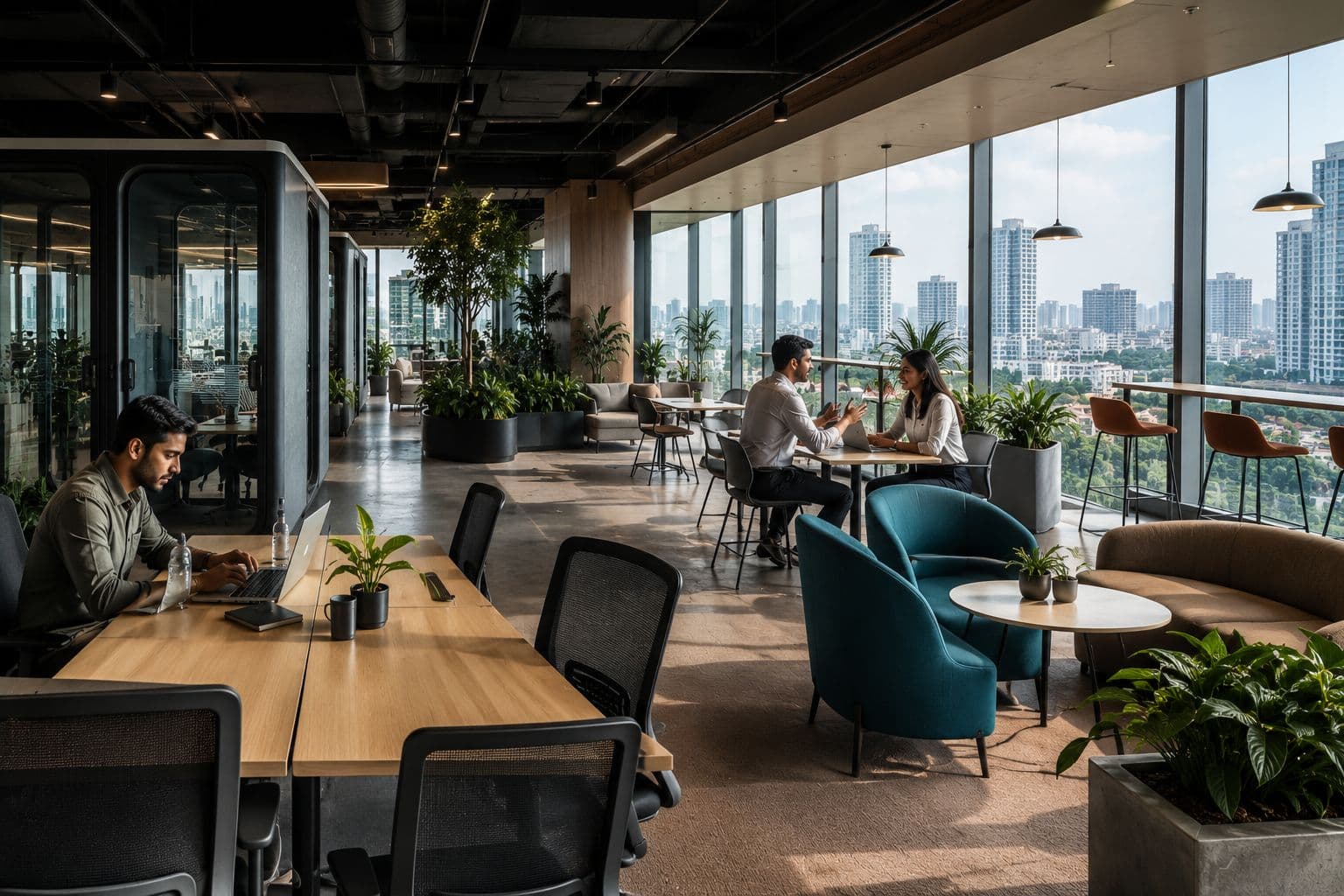
Navi Mumbai flex workspace demand is rising faster than traditional long-term leasing for a simple reason. Hybrid work has matured into a permanent feature of corporate life rather than a pandemic-era experiment, and companies want the ability to scale their footprint up or down without being trapped in a rigid multi-year lease. Co-working operators who have set up large, professionally managed campuses across nodes like Vashi, Airoli, and Belapur are absorbing this demand directly, offering everything from single desks to full private floors with minimal commitment.
The Micro-Markets Worth Watching
Best micro markets for co-working in Navi Mumbai 2026 currently centres around a handful of well-established business nodes. Vashi and Belapur continue to attract companies that value visibility and client access. Airoli and Ghansoli have built genuine corporate density over the past few years. Areas closer to the airport corridor are earning attention from businesses willing to bet on the next phase of growth, even though that wave is still building momentum.
Summary
How Navi Mumbai is emerging as a co-working destination rests on a combination that few Indian commercial markets can currently match: meaningfully lower rents, a newly operational international airport, surging demand from Global Capability Centres, and a flexible workspace ecosystem built to absorb hybrid work patterns. Why companies are choosing Navi Mumbai over South Mumbai for offices increasingly comes down to simple arithmetic paired with genuinely improved infrastructure. What was once considered a fallback location has quietly become one of the most closely watched commercial growth stories in the entire Mumbai Metropolitan Region.