
7 min read
High-Rise vs. Low-Density Housing: Your Perfect Home Guide


High-Rise Low-Density – Aapke Liye Kya Sahi?
Ask ten homebuyers what kind of home they want, and you'll likely get ten different answers about height, space, and community. The High-Rise vs Low-Density housing debate isn't really about which format is objectively better, it's about which one actually fits how you want to live day to day.
What the Terms Actually Mean
According to the National Building Code of India, a high-rise typically refers to a structure with ten or more floors, or one exceeding 35 metres in height. Low-density housing, by contrast, generally means far fewer units packed onto each acre of land, usually somewhere between two and four, with a deliberate emphasis on open space, greenery, and a quieter pace of living.
Why Cities Keep Building Upward
In land constrained metros like Mumbai and Bengaluru, vertical growth isn't really optional anymore. High-rise apartments India wide developers keep launching allow far more families to be housed on the same parcel of land, which is exactly why skylines in these cities keep climbing higher every year.
The Lifestyle High-Rises Actually Sell
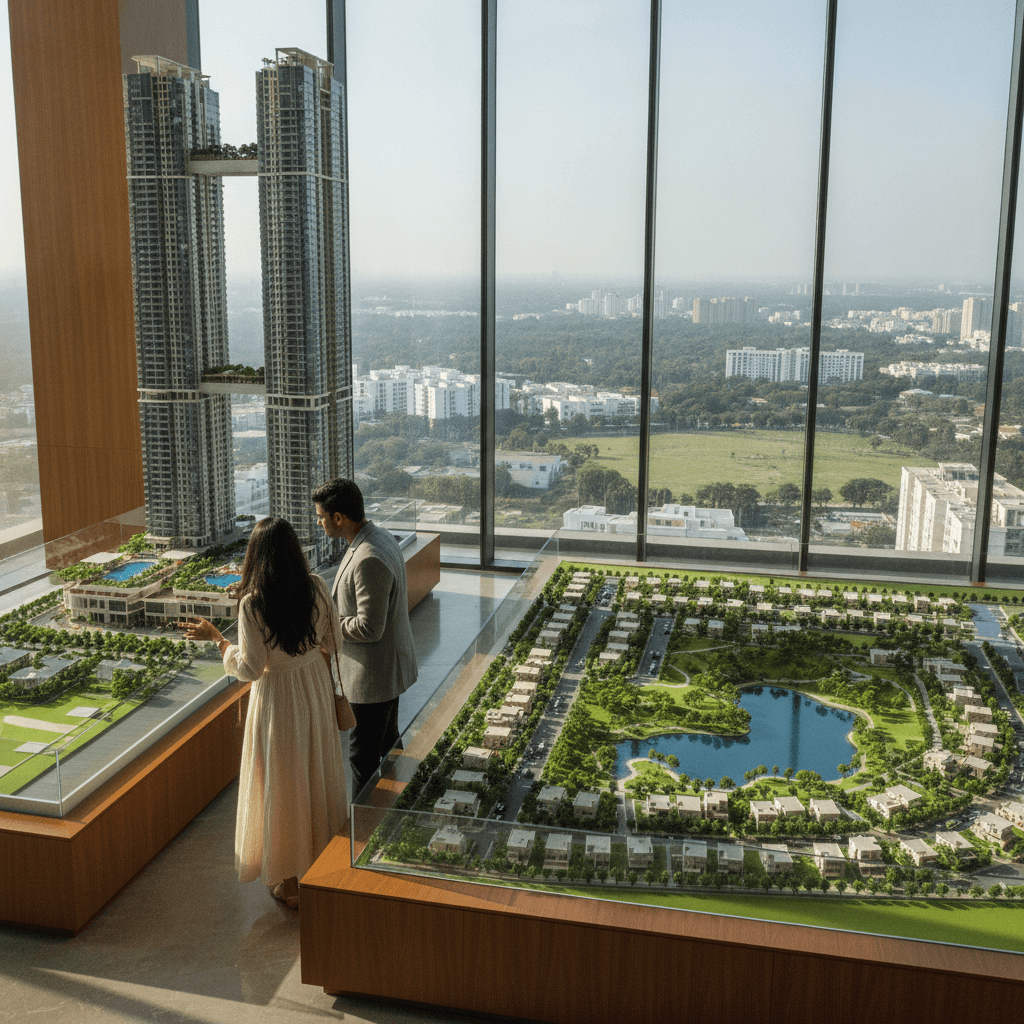
Beyond just space efficiency, high-rises package in a certain kind of urban lifestyle, gyms, spas, co-working lounges, and sweeping city or sea views from higher floors. There's a genuine appeal to watching a city light up at dusk from your own balcony, and that experience alone commands a real price premium in most metro markets.
Where Low-Density Living Wins
Low-density housing India offers something fundamentally different, more natural light, better airflow, and outdoor space that doesn't need to be shared with three hundred other households. It tends to suit families wanting room to expand or modify their homes independently, multi-generational households in particular, along with retirees who value a quieter, more predictable daily rhythm.
The Investment Angle Isn't the Same for Both
For investors, this choice actually splits along fairly practical lines. High-rise apartments near established business hubs tend to deliver faster, more reliable rental income, driven by steady demand from working professionals. Low-rise developments, especially in emerging peripheral corridors, often deliver stronger long term appreciation instead, appealing more to end-users planning to hold and eventually live in the property themselves.
The Maintenance Cost Reality
High-rises come with genuinely higher running costs, elevators, fire safety systems, and shared infrastructure all add up in monthly maintenance bills. Low-rise buildings are comparatively cheaper to maintain, though they typically require more land per household, which can offset some of that saving once you factor in overall project economics.

A Shift Toward Spacious Living
Interestingly, recent data shows homes priced at a crore or above now make up roughly 62 percent of total sales nationally, a clear signal that buyers are increasingly prioritising space and quality of life over simply chasing the most central location available. This shift has quietly strengthened demand for low-density formats even within expensive metro markets.
What Tier-2 and Tier-3 Cities Prefer
Outside the biggest metros, the preference tilts differently. Smaller cities still lean toward low-rise living, partly for affordability, and partly because it aligns better with existing cultural habits around independent housing and multi-generational family setups that vertical towers don't always accommodate comfortably.
So, Which One Is Actually Right for You
If your priority is urban connectivity, rental income, and resort-style amenities within the same building, a high-rise probably suits your lifestyle better. But if privacy, greenery, and a slower, more grounded pace of living matter more to you, low-density housing is likely to feel like a better long term fit, even if it means living a little further from the city centre.
Summary
The High-Rise vs Low-Density housing decision ultimately comes down to lifestyle priorities rather than one format being universally superior. While high-rise apartments India wide continues offering convenience, amenities, and rental strength, low-density housing India increasingly appeals to buyers seeking space, privacy, and long-term comfort. When choosing between high-rise and low-rise, the right answer depends entirely on how you actually want your everyday life to feel.
September 20, 2026
Share via:


