
Hadapsar: How Pune's IT Corridor Turned a Suburb Into a Serious Investment Address
Summary
Hadapsar transformed from an industrial suburb to a prime Pune investment hub, fueled by IT corridors like Magarpatta and SP Infocity. It offers balanced property values, robust social infrastructure, and strong rental yields, attracting both end-users and investors.

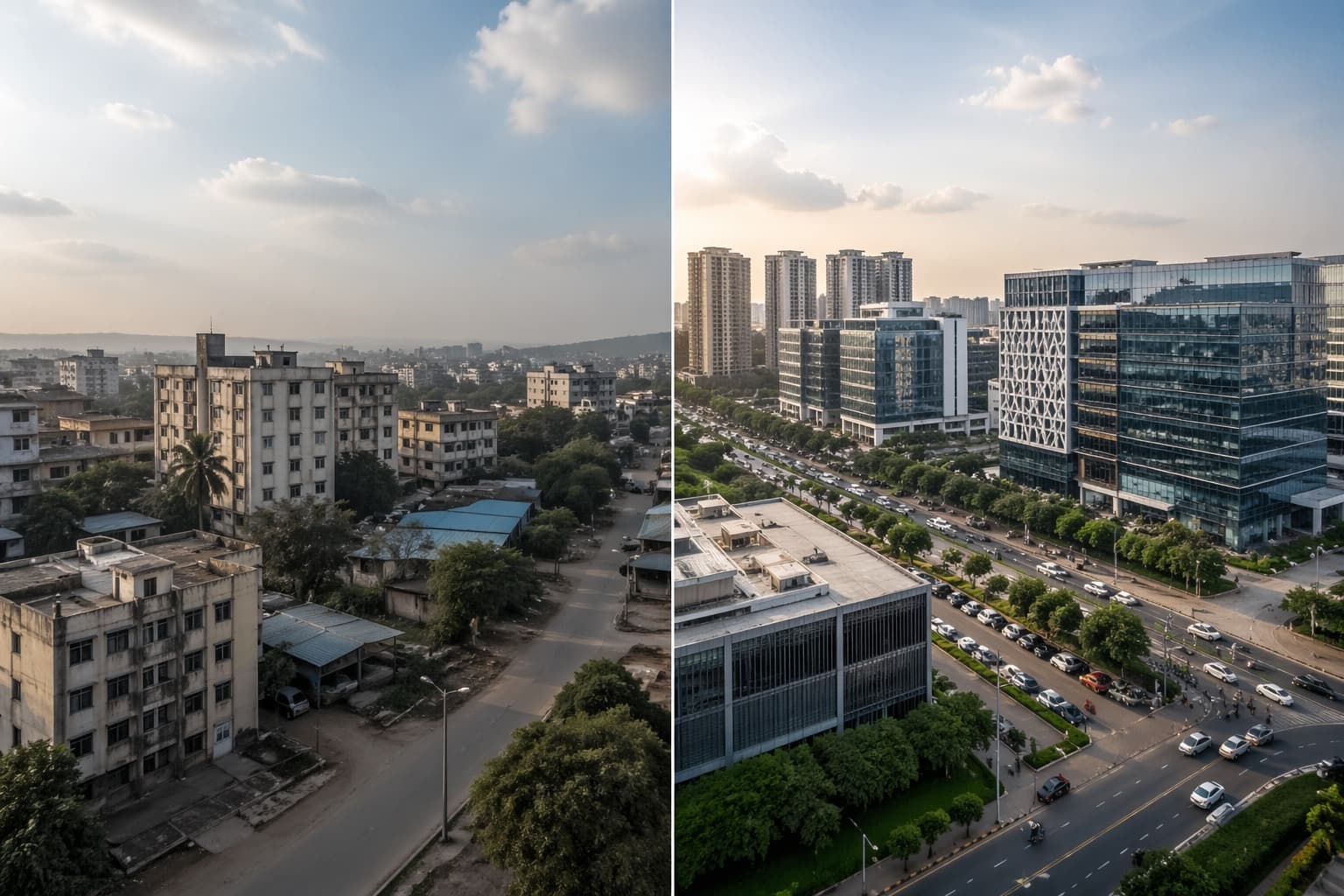
From Industrial Fringe to City Centre Contender
There are certain parts of Indian cities that genuinely surprise you when you chart their trajectory over a decade. Hadapsar is one of them.
Twenty years ago, this was an industrial suburb on Pune's eastern edge. A place of factories, warehouses, and long stretches of land that the city's residential market had not yet seriously considered. What changed everything was not one project or one policy. It was a cluster of large-format employment destinations that gradually made Hadapsar unavoidable for anyone working in Pune's technology and services sector.
The IT Infrastructure That Built This Market
The three anchors of Hadapsar's commercial identity sit within a short distance of each other. Magarpatta City was one of India's earliest integrated townships to embed an IT park within a residential master plan. It houses dozens of technology companies and employs tens of thousands of professionals who either live inside the township or in the surrounding neighbourhoods.
SP Infocity, just off the Pune-Solapur Highway, added another dense cluster of IT and BPO employers to the eastern belt. And EON IT Park in Kharadi, which sits at the border where Hadapsar's influence begins to overlap with the Kharadi corridor, extends this employment density further. When three large IT employment zones converge in the same travel catchment, the residential market in between does not stay quiet for long.
Location as a Structural Advantage
Hadapsar sits along the Pune-Solapur Highway, one of the city's most important arterial roads. This gives it direct connectivity not just to the IT parks immediately adjacent but also to Kharadi, Amanora Town Centre, and the city's central business areas.
The highway access also matters for residents who work in the industrial zones of Ranjangaon further east. It is a corridor that serves multiple employment types, which broadens the tenant and buyer base considerably compared to a micro-market that caters to only one sector. And with proposed metro extensions working toward this part of the city, the connectivity picture is only expected to improve over the next few years.
What the Social Infrastructure Looks Like Today
Investors sometimes focus so tightly on employment proximity that they forget to ask whether a location is actually liveable. Hadapsar scores well on this front.
The area has schools like Delhi Public School and Lexicon School serving resident families. Noble Hospital and Villoo Poonawalla Hospital handle healthcare needs without requiring a long drive elsewhere. Amanora Mall and Seasons Mall give residents retail and entertainment options that previously required a trip to central Pune. The combination of employment proximity and a functioning social ecosystem is what transforms a location from a rental market into one where people genuinely want to own.
Property Prices and What They Signal
Hadapsar currently represents one of Pune's most balanced value propositions. Property prices here remain meaningfully lower than Baner or Koregaon Park, while offering comparable or better connectivity for professionals working in the eastern IT belt.
Average residential prices across the micro-market range from roughly ₹7,500 to ₹11,000 per square foot depending on the project, location within the neighbourhood, and the developer's brand positioning. Premium gated developments with larger unit sizes and curated amenities are pushing toward the upper end of that range. Ready-to-move-in inventory commands a predictable premium over under-construction options, particularly among buyers who have learned from experience that delivery timelines matter enormously.
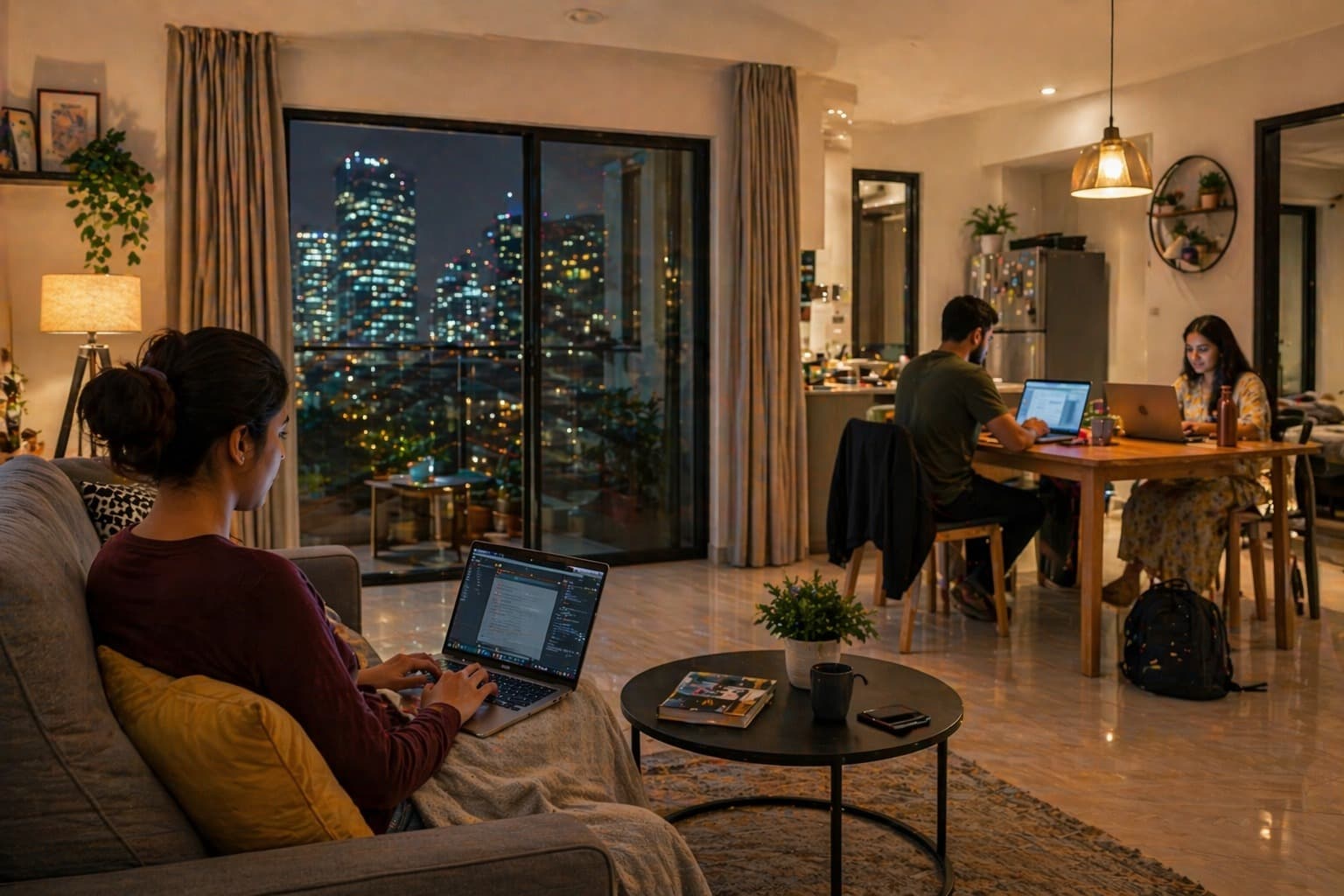
Rental yields are another reason investors pay attention here. A well-located 2 BHK apartment near the Magarpatta or SP Infocity corridor consistently attracts corporate tenants willing to pay rents that translate to yields of 3 to 4 percent annually, which is among the healthier yield profiles for a residential asset in any Pune micro-market.
Who Is Buying Here and Why
The buyer mix in Hadapsar is telling. End users form the largest segment, specifically IT professionals in the 30 to 45 age bracket who are tired of paying rent close to their workplace and want to own. This is a buyer who prioritises commute time heavily and is willing to stretch on budget to avoid a 90-minute drive each way.
Investors targeting rental income from corporate tenants form the second significant segment. And NRIs from the Pune diaspora, many of whom have family roots in this part of the city or who worked here before moving abroad, represent a consistent source of demand for the mid-to-premium range.
Summary
Hadapsar's transformation from industrial suburb to Pune's eastern real estate hotspot has been driven by one consistent force: the sustained employment density created by Magarpatta City, SP Infocity, and the EON IT Park corridor. With strong social infrastructure, improving metro connectivity, and property prices that still sit below Pune's western premium belt, Hadapsar offers a compelling combination for both end users and investors looking at Pune real estate in 2026. The market here is not speculative. It is employment-backed, consistently occupied, and quietly appreciating.