
Bullet Train Coming: Maharashtra Zones Where Smart Money Is Already Moving
Summary
Maharashtra's bullet train is reshaping real estate across BKC, Thane, Virar, and Boisar. With significant progress, these stations present diverse property investment opportunities, signaling a narrowing window for smart money.

India's Most Ambitious Rail Project Is Taking Shape
Something irreversible is happening along the western coast of India. Concrete pillars are rising out of the ground between Mumbai and Ahmedabad at a pace that few believed possible even three years ago. The Mumbai-Ahmedabad High Speed Rail Corridor, popularly called the bullet train corridor, crossed 300 kilometres of completed viaduct construction by mid-2025 and was sitting at 56 percent overall physical progress by November 2025. The first section, between Surat and Bilimora in Gujarat, is targeted to open on August 15, 2027. The full 508-kilometre line is expected to be operational by December 2029.
For Maharashtra, this is not just a transport story. It is a property story. And the four stations on the Maharashtra section of the bullet train corridor are sitting at the centre of it.
Why Maharashtra's Four Stations Deserve Your Attention
The full corridor has 12 stations. Four of them fall in Maharashtra: BKC in Mumbai, Thane, Virar, and Boisar. Each of these locations carries a different investment profile. Each is at a different stage of surrounding development. And each is likely to deliver a different kind of return depending on whether you are thinking residential, commercial, or land.
The total project cost is estimated at ₹1.1 lakh crore, funded 81 percent by Japan's JICA at a concessional interest rate of just 0.1 percent over 50 years. Trains will run at an operational speed of 320 kilometres per hour. The express service will cover Mumbai to Ahmedabad in just over two hours. Currently the fastest train takes close to six hours. That time compression rewrites the geography of every city on the route.
BKC: Where the Journey Begins Underground
The bullet train's Mumbai terminus will sit underground inside the Bandra Kurla Complex, one of India's most premium commercial addresses. The station will be a three-level underground structure, and Mumbai Metro Lines 2 and 3 will connect to it directly. Construction of this terminal is being handled by Megha Engineering and Hindustan Construction Company in a joint venture, covering a 1-kilometre underground footprint.
BKC is already the city's most expensive commercial address, and a functioning bullet train station will only add to that. But for retail and hospitality investors, the real opportunity lies in the transit-oriented development that typically clusters around underground stations in cities like Tokyo and Seoul. India is at the beginning of that journey. BKC is where it starts.
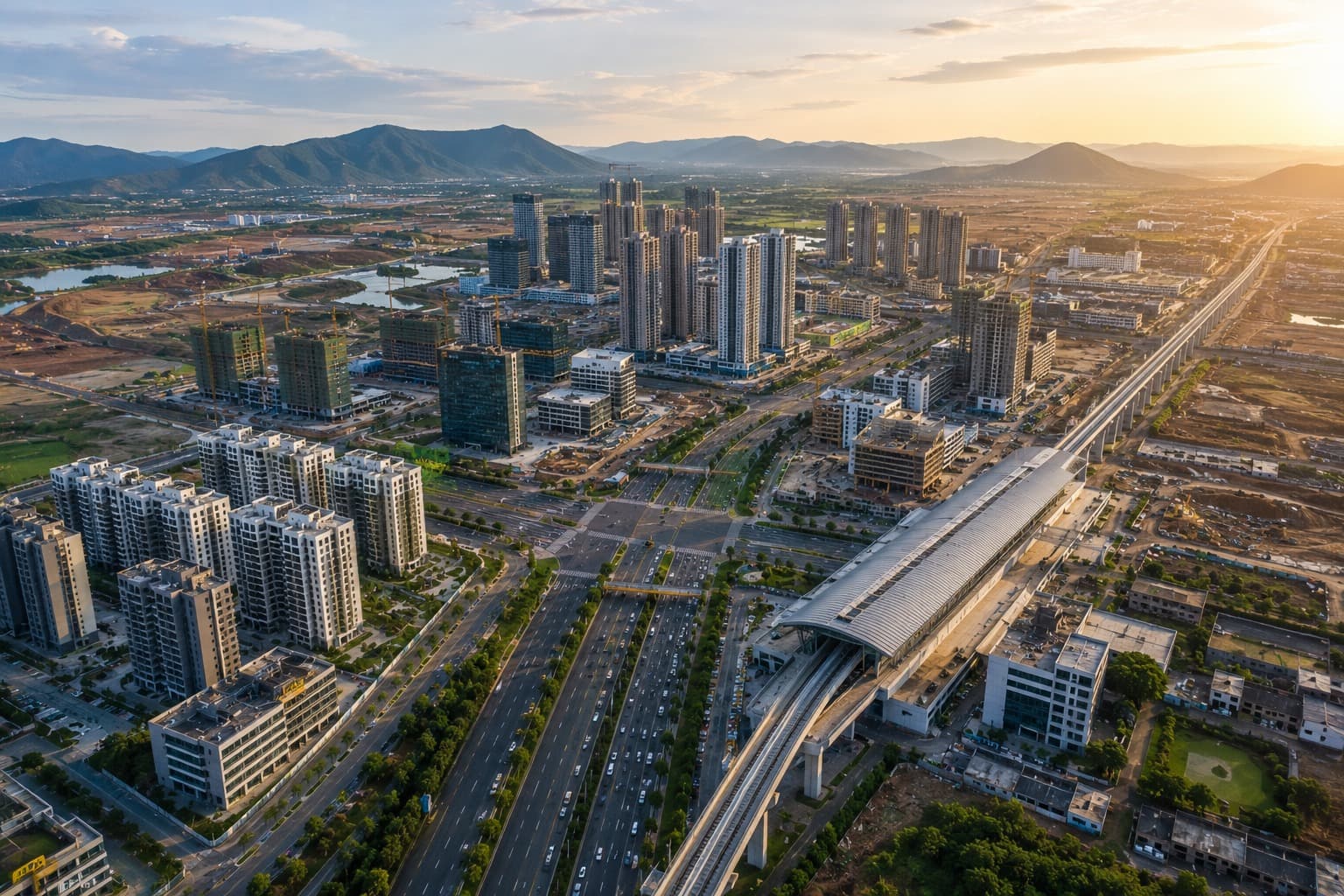
Thane: The Corridor's First Stop Above Ground
The bullet train exits underground at Thane, after travelling 21 kilometres through a tunnel from BKC, of which 7 kilometres runs under the Thane Creek seabed. This is India's first undersea tunnel and an engineering milestone that has no precedent in the country. Once above ground at Thane, the corridor transitions to an elevated viaduct that carries it the rest of the way to Ahmedabad.
Thane also houses one of three maintenance depots on the line, spread over 60 hectares. Depot infrastructure at this scale generates a long-term employment cluster, which feeds residential demand in the surrounding areas. Thane's property market has already been on a multi-year upward cycle. A functioning bullet train station here adds a premium layer to what is already one of the MMR's most active housing markets.
Virar: Affordable Entry With a Long Runway
Virar is where the real opportunity for the ordinary investor lies. Property prices here are a fraction of what you pay in Thane or BKC. The bullet train station at Virar will put this peripheral suburb directly on India's first high-speed rail network. That kind of connectivity upgrade does not happen twice in a generation.
Historically, every time a major transit upgrade has arrived at an affordable suburb, the first five years after announcement see quiet accumulation by informed buyers, and the five years after opening see price appreciation that leaves latecomers frustrated. Virar is currently in that first phase. The station is confirmed. Construction is underway. But prices have not yet moved to reflect the full significance of what is coming.
Boisar: Industrial Belt Meets High Speed Rail
Boisar sits in Palghar district, about 110 kilometres north of Mumbai. It is an established industrial zone with pharmaceutical, chemical, and engineering manufacturing already anchored there. The arrival of a bullet train station in Boisar changes the calculus for both industrial land and worker housing in a meaningful way.
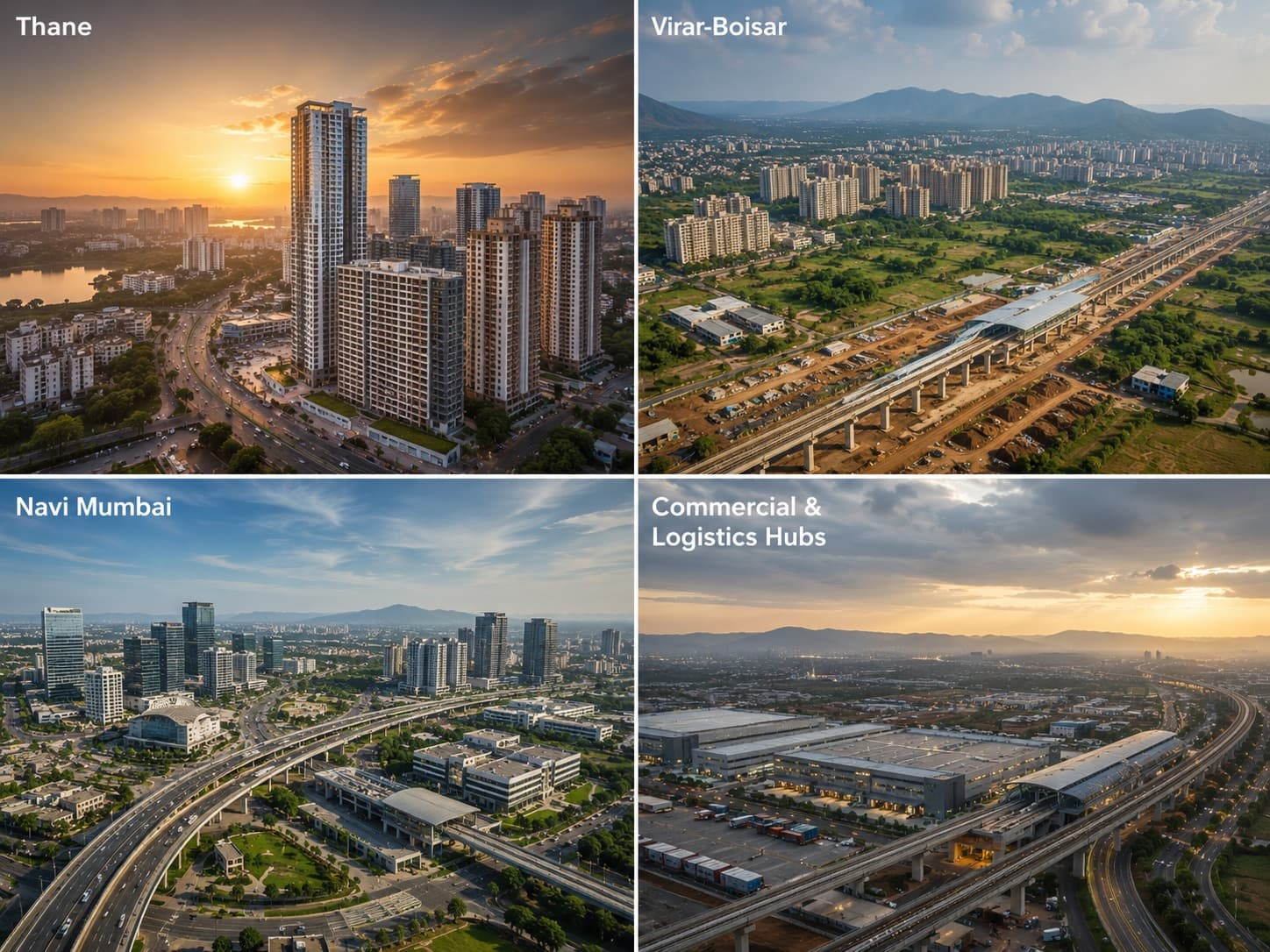
Senior management and technical professionals who previously could not justify living in Boisar due to connectivity constraints will have a very different conversation once they can reach BKC in under 20 minutes. That daily commute shift will drive mid-segment housing demand in a location that currently has some of the most affordable land prices anywhere on the MAHSR corridor.
Construction Progress That Tells You This Is Real
For investors who have watched Indian infrastructure announcements come and go without delivery, the progress data on the Mumbai-Ahmedabad bullet train is genuinely different this time. As of January 2026, piling work was 86 percent complete, pier construction was at 86 percent, and viaduct construction had crossed 71 percent. Track laying has not yet begun, but the electrification contract covering all 508 kilometres was awarded in January 2024 to L&T.
The project's physical momentum is no longer theoretical. Pillars are standing. Viaducts are stretching. The machines doing the work run around the clock.
Summary
The bullet train corridor's Maharashtra investment zones at BKC, Thane, Virar, and Boisar each offer a distinct entry point for different investor profiles. From the premium commercial opportunity at the Mumbai BKC bullet train terminus to the affordable long-horizon residential play at Virar and Boisar, the MAHSR corridor is creating a new real estate map for Maharashtra. With December 2029 as the full opening target and 56 percent construction complete, the window to enter ahead of mainstream market recognition is still open but narrowing every month.