Introduction
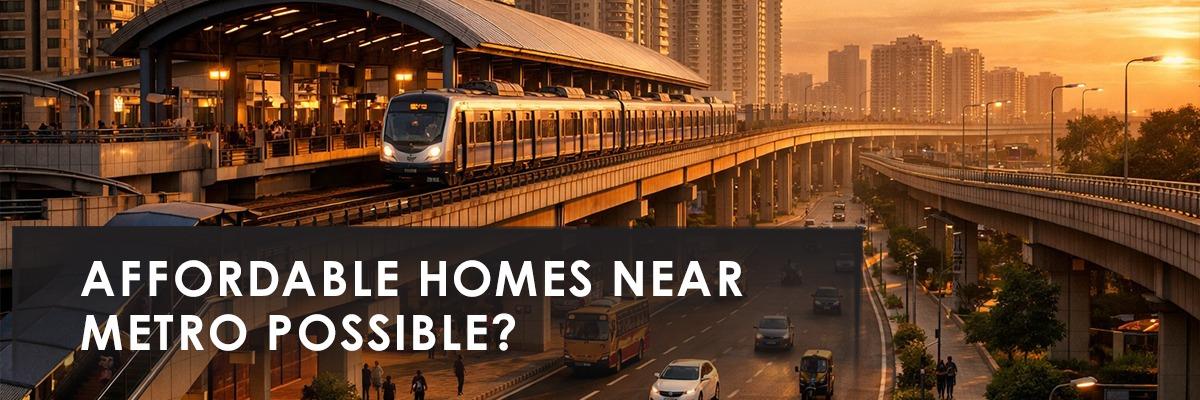
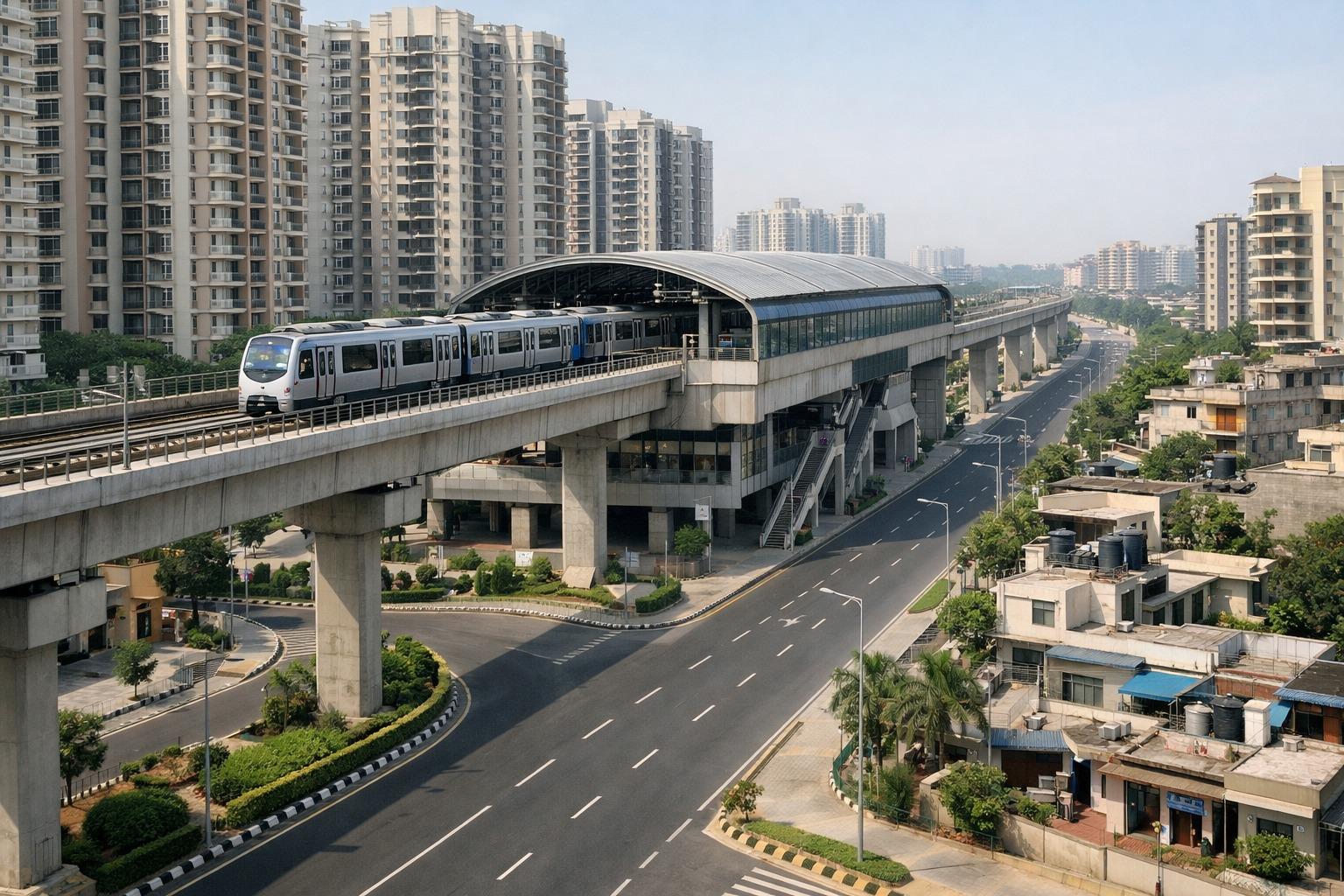
Metro connectivity does something specific and measurable to property prices. It is not speculation or sentiment. It is a documented pattern that has played out across every Indian city where a metro line has opened in the past fifteen years. The moment a new corridor is confirmed, prices in the influence zone begin moving. By the time the first train runs, the easy appreciation has already been captured by buyers who moved early. Metro connected property budget planning is therefore not just about affording what is available today. It is about understanding which stage of the metro-driven price cycle a locality is currently in and calibrating your entry accordingly.
Understanding the Metro Price Curve
Property prices near metro stations move in three distinct phases. The announcement phase, where prices rise on sentiment and speculation, typically delivers ten to twenty percent appreciation before a single pillar is erected. The construction phase, where infrastructure progress becomes visible, adds another fifteen to twenty-five percent as buyer confidence grows and developer launches in the corridor reflect updated land costs. The operational phase, once trains are running and commute times are confirmed, delivers the final appreciation leg and also stabilises prices at the new baseline.
Property near metro India purchased during the construction phase consistently outperforms both the announcement and post-operational entry in terms of total return over a five to seven year holding period. The construction phase buyer pays above pre-announcement pricing but below fully operational pricing, capturing the majority of the appreciation curve without the speculative risk of an announcement-stage purchase.
What Metro Proximity Actually Costs in India's Major Cities
Budget planning starts with understanding real numbers rather than approximations. In Mumbai, apartments within 500 metres of an operational metro station command a premium of fifteen to twenty-five percent over similar apartments one kilometre or more away. A 2 BHK in Thane's metro-adjacent pockets runs Rs 95 lakh to Rs 1.2 crore. The same configuration 1.5 kilometres from the nearest station is available at Rs 75 lakh to Rs 90 lakh.
Metro corridor investment in Bengaluru shows a similar pattern. Whitefield and Marathahalli apartments within walking distance of the Purple Line extension stations have moved to Rs 7,000 to Rs 9,500 per square foot. Projects a kilometre further on the same road are still transacting at Rs 5,500 to Rs 7,000. The gap is real and it compounds with each passing year of operational metro history.
In Delhi NCR, Gurugram sectors directly above or adjacent to the Rapid Metro and Yellow Line extensions trade at a premium of ten to eighteen percent over comparable sectors without metro access. Noida's metro-connected sectors along the Aqua Line have narrowed their price discount to Greater Noida significantly since the line became operational.
How to Find Value in a Metro Corridor
The budget buyer in a metro area should not be looking at the station itself. The station-adjacent premium is real and already fully priced. The opportunity sits at the second and third ring. Apartments that are a ten to fifteen minute walk or a short auto-ride from the station, close enough to use the metro conveniently but far enough to escape the immediate premium, consistently offer better value than the closest addresses.
Affordable property near metro India buyers should also look at upcoming stations rather than operational ones. Along Mumbai's Metro Line 9 toward Mira Road, Metro Line 2A toward Dahisar, and Pune's Metro Line 3 toward Hinjewadi, the stations scheduled to open in the next twelve to twenty-four months are still priced closer to their pre-metro valuations than their post-opening equivalents will be.
Budget Components Beyond the Purchase Price
Metro-connected areas carry a specific cost structure that buyers often underestimate. Land costs are higher, which means developer profit margins are compressed, which sometimes leads to smaller carpet areas at the same price point. A buyer comparing a metro-adjacent project at Rs 1.1 crore with a peripheral project at Rs 85 lakh needs to check carpet area per rupee, not just headline price.
Property investment metro connected areas also tends to mean higher society maintenance charges because projects in premium micro-markets invest more heavily in amenity infrastructure. A metro-corridor project with a rooftop pool, co-working lounge, and professional facility management charges Rs 4,000 to Rs 8,000 per month in maintenance. Budget for this explicitly.
Stamp duty, registration, and GST on under-construction metro-area projects follow standard state rules but the absolute amounts are higher simply because the base price is higher. On a Rs 1.1 crore metro-adjacent flat in Pune, stamp duty alone runs Rs 5.5 lakh to Rs 6.6 lakh. Add registration and the transaction cost exceeds Rs 7 lakh before you touch the interior.
The Rental Yield Equation in Metro Areas
Metro connectivity is one of the most reliable drivers of rental demand. Tenants who depend on public transit for daily commuting actively seek metro-adjacent addresses and pay a rent premium for the convenience. A 2 BHK near an operational Mumbai metro station that rents for Rs 28,000 per month might command only Rs 20,000 to Rs 22,000 in a comparable non-metro location.
That rental premium improves the yield profile of metro-area property and provides a cushion for investors who want rental income to partially offset their EMI during the holding period.
Summary
Budget planning for metro connected areas in India requires understanding the price curve stage, identifying value in the second and third rings from stations, accounting for higher transaction costs on elevated base prices, and factoring in ongoing maintenance charges that premium metro-corridor projects carry. Metro corridor property purchased during the construction phase consistently captures the strongest appreciation. Affordable options exist in upcoming station zones and walkable distances from confirmed stations. The buyers who plan their full cost picture accurately and enter during the construction phase are the ones who look back on metro-area purchases as their best real estate decisions.