Badewadi Village Overview: Location, Connectivity, and Local Profile
Introduction
Badewadi is a small village located in Maharashtra’s Ahmednagar district, falling under the Pathardi taluka. Like many rural settlements in the region, Badewadi reflects the agricultural roots, social structure, and gradual transformation of Maharashtra’s countryside. Understanding villages such as Badewadi is important not only from a demographic perspective but also for those exploring land ownership, rural development, or regional planning.
Geographic Location
Badewadi is situated within the Pathardi administrative block of Ahmednagar district. The region lies in the western part of Maharashtra and is characterised by semi‑arid climatic conditions. The village is surrounded by other small habitations and agricultural land, forming part of a predominantly rural landscape.
Administrative Structure
Administratively, Badewadi falls under the local gram panchayat system. Village‑level governance handles civic matters such as water supply, local roads, sanitation, and welfare schemes. For higher administrative services, residents depend on Pathardi town and district‑level authorities in Ahmednagar.
Population and Settlement Pattern
Badewadi has a modest population, typical of villages in this belt. The settlement pattern is compact, with residential homes clustered near agricultural fields. Families often live in joint or extended households, reflecting traditional rural social structures.
Primary Occupation and Economy
Agriculture is the main source of livelihood in Badewadi. Residents primarily depend on farming and allied activities such as animal husbandry. Crop patterns are influenced by rainfall availability, soil conditions, and irrigation access. Seasonal employment and migration for work may also be observed, which is common in semi‑rural regions.
Education Facilities
Basic educational facilities are generally available within or near the village, such as primary schools. For secondary and higher education, students typically travel to nearby towns like Pathardi. Access to education plays a key role in shaping migration and employment choices among younger residents.
Healthcare Access
Healthcare facilities in villages like Badewadi are usually limited to primary health services. For advanced medical care, residents rely on government hospitals and private clinics in Pathardi or Ahmednagar city. Distance and transport availability influence healthcare access.
Connectivity and Transport
Badewadi is connected to surrounding villages and towns through local roads. Public transport options may include state‑run buses or shared vehicles connecting the village to Pathardi. While connectivity supports daily commuting and trade, infrastructure quality can vary.
Water and Basic Infrastructure
Water supply in Badewadi depends on a mix of traditional sources such as wells, borewells, and seasonal rainfall. Electricity connectivity is available, though reliability may vary. Infrastructure development in rural areas is often gradual and linked to government schemes.
Social and Cultural Life
Village life in Badewadi is shaped by local customs, festivals, and community events. Religious and cultural gatherings play an important role in social bonding. The pace of life remains slower compared to urban areas, with strong community interdependence.
Land Use and Property Aspects
Land in and around Badewadi is largely agricultural. Property ownership is often inherited and linked to farming families. Any land transactions require careful verification of records, as rural land deals involve revenue documentation and local approvals.
Government Schemes and Rural Development
Residents may benefit from state and central government schemes related to housing, agriculture, water conservation, and employment. Implementation and awareness levels vary, influencing the pace of development.
Challenges Faced by the Village
Like many rural settlements, Badewadi may face challenges such as limited employment opportunities, water scarcity, and dependence on monsoons. Access to quality education and healthcare remains an ongoing concern.
Potential for Gradual Development
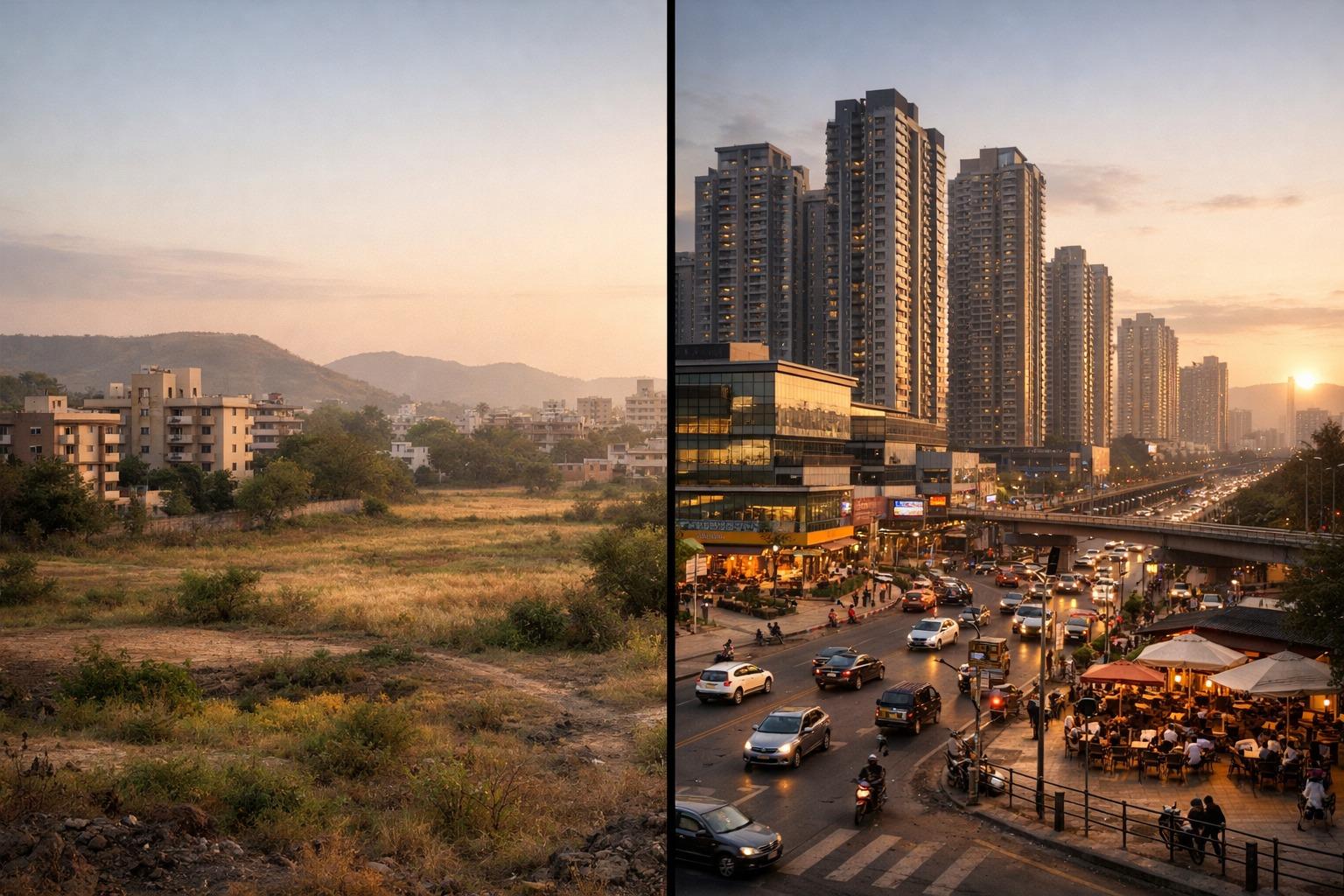
With improving road connectivity, digitisation of land records, and rural welfare initiatives, villages like Badewadi are slowly integrating with larger economic systems. Development remains incremental rather than rapid.
Final Perspective
Badewadi represents a typical rural village in Maharashtra—rooted in agriculture, community‑driven, and gradually evolving. While it may not be a growth hotspot, it reflects the foundational role villages play in the state’s social and economic fabric.
Summary
Badewadi is a village in Pathardi taluka of Ahmednagar district, Maharashtra, with agriculture as its primary occupation. Governed by a gram panchayat, the village depends on nearby towns for advanced education, healthcare, and services. While infrastructure and opportunities remain limited, Badewadi continues to function as a close‑knit rural community shaped by traditional livelihoods and gradual development.