
Areas Near Industrial Corridors Worth Investing in India
Summary
Discover promising investment areas near India's industrial corridors, including Mumbai MMR, Hyderabad, Pune, and more. Learn how infrastructure projects are driving real estate growth and creating opportunities for investors.

Introduction
When people talk about industrial corridor investment, it often sounds like something meant only for big companies. But honestly, it is no longer limited to factories and warehouses. Today, many ordinary homebuyers are looking at property near industrial hubs because that is where jobs, roads, and daily demand are growing. Slowly and steadily, these corridors are shaping real estate corridors India into strong investment destinations. If you are searching for emerging property markets India, understanding these zones can really help you make better decisions.
Understanding Industrial Corridors in Simple Words
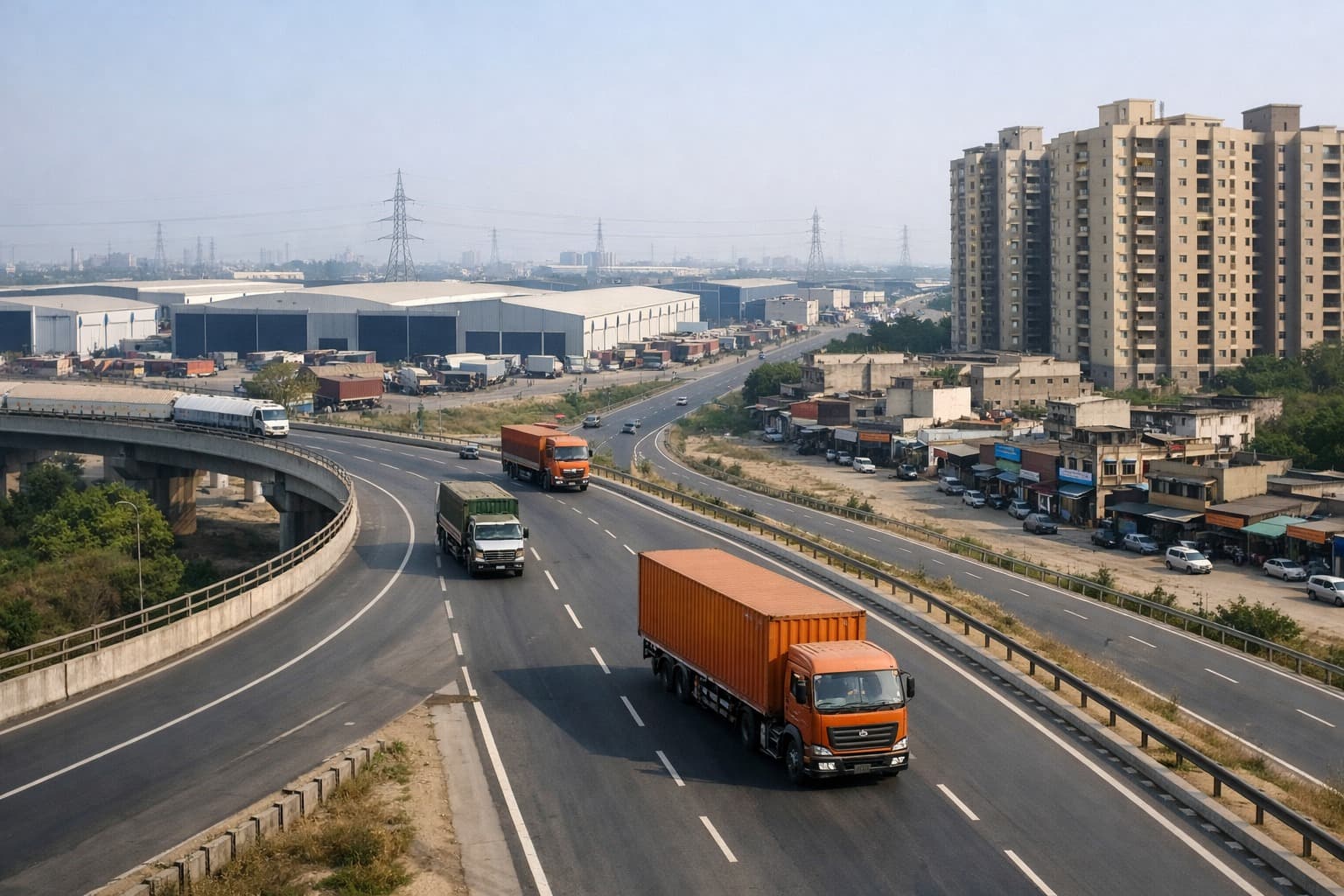
In simple terms, industrial corridors connect major cities through highways, railways, ports, and digital networks. Along these routes, industries, offices, and townships develop together. This makes industrial area real estate more valuable with time. People working nearby need homes, shops, schools, and hospitals. So, demand keeps rising. Over time, this creates some of the best industrial corridors for investment in the country.
Mumbai MMR: Vikhroli and Kanjurmarg Belt
The eastern side of Mumbai has changed quietly in recent years. Areas like Vikhroli and Kanjurmarg are becoming important parts of real estate near industrial zones India. Metro lines, redevelopment projects, and REIT-grade offices are improving the lifestyle here. Lodha and Godrej have already invested heavily. Many buyers see this as a safe property investment near highways and ports zone. Rental yields of around 2 to 3 percent and steady appreciation make it a balanced option.
Hyderabad: Tellapur and Kondapur Growth Story
Hyderabad’s western corridor is powered by data centers and IT parks. Tellapur and Kondapur are now known for strong infrastructure and global investments. This is one of the high growth real estate corridors in India today. Metro Phase II, ORR, and expressways improve daily travel. Investors here enjoy 10 to 15 percent appreciation and healthy rentals. It also fits well with the idea of rental yield near industrial parks, especially for tech professionals.
Pune Hinjewadi Phase 3: Stable and Reliable
Hinjewadi Phase 3 in Pune has grown step by step. It combines IT, education, and manufacturing in one space. This area is popular among middle-income buyers and young professionals. Many consider it part of the best areas near industrial corridors worth investing in India because demand rarely falls. With 8 to 12 percent appreciation and decent rent, it offers steady returns without too much risk.
Gurugram and Navi Mumbai: Infrastructure Driven Markets
Sectors 79, 93, and 95 in Gurugram are backed by strong pipelines and projects like Dwarka Expressway and Jewar Airport. These locations support property investment near Delhi Mumbai Industrial Corridor, which boosts long-term value. Similarly, Ulwe and Dronagiri in Navi Mumbai benefit from NMIA, Atal Setu, and Metro lines. Buyers looking for residential projects near industrial hubs India often prefer these areas. Prices are rising steadily, and rental demand is growing.
Bengaluru and Chennai: Tech Meets Manufacturing
Whitefield and Sarjapur Road in Bengaluru are examples of real estate opportunities near Bengaluru Chennai corridor. Tech parks, startups, and metro connectivity keep demand strong. Expansion near Devanahalli and Hebbal adds future potential. Since 2020, appreciation has been impressive. In Chennai, OMR, Sriperumbudur, and Oragadam are supported by automotive and IT industries. This region connects closely with the Bengaluru Chennai Industrial Corridor, making it attractive for both end-users and investors.
Ahmedabad GIFT City and Eastern Corridors
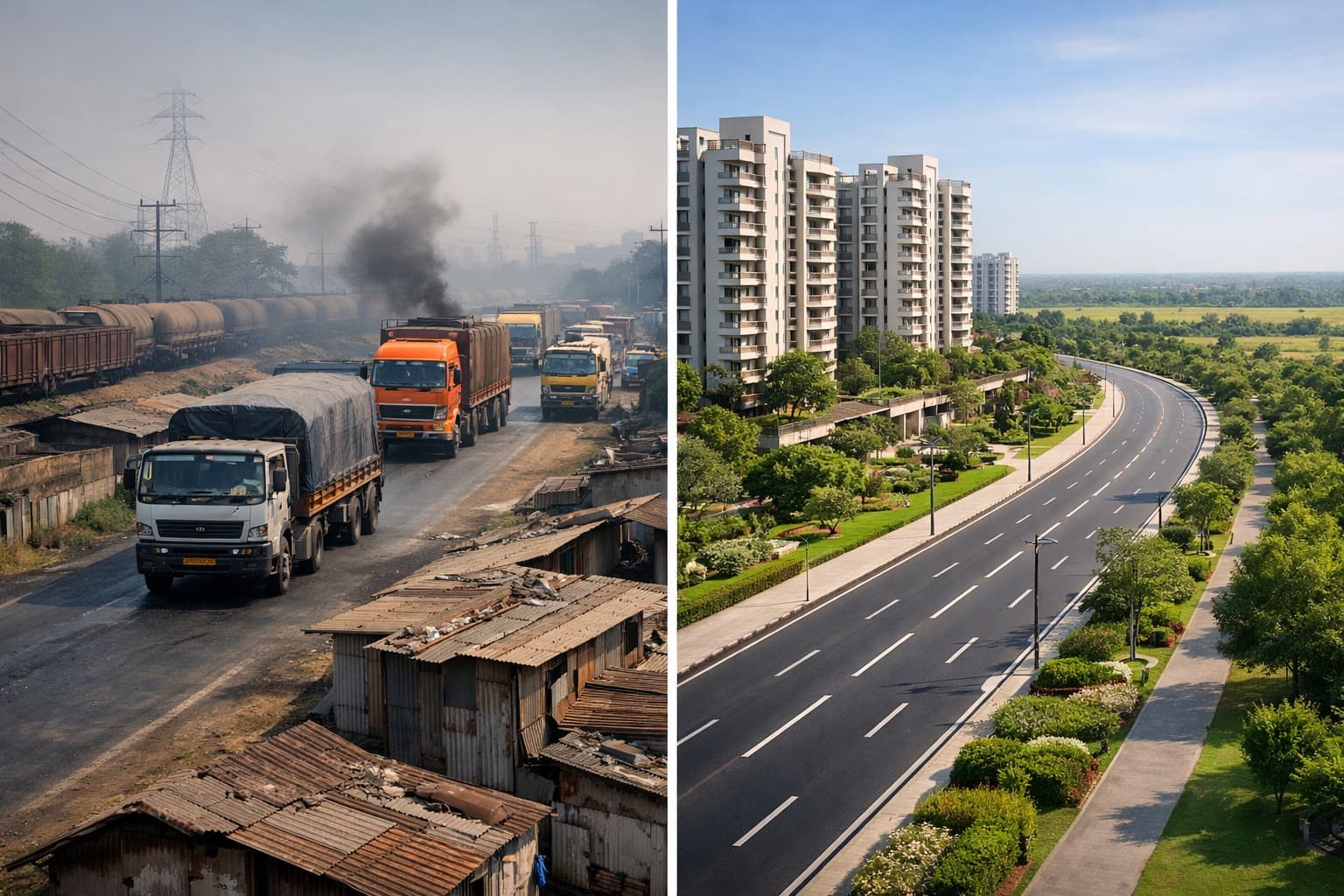
GIFT City near Ahmedabad is India’s first smart financial hub. It attracts NRIs and professionals, offering stable rental income. Many see it as part of long-term real estate corridors India development. Eastern corridors like AKIC are also gaining attention. Cities like Patna and Durgapur are slowly improving. Here, industrial area real estate is still affordable, which may offer future upside for patient investors.
Major Projects Supporting These Corridors
Projects like DMIC, Mumbai-Ahmedabad bullet train, peripheral roads, and metro expansions create strong backbones. These support property near industrial hubs by reducing travel time and logistics cost. Ports, SEZs, and business parks increase employment. All this strengthens high rental yield property near industrial zones over time.
Future Outlook for Investors
By 2030, these corridors may create millions of jobs and attract large foreign investments. Cities along them will become modern economic centers. Demand for homes, offices, and co-living spaces will rise. For those planning property investment near highways and ports, early entry can make a big difference. Still, one must study location, builder reputation, and local demand before deciding. Sometimes, waiting and observing is also wise, yes.
Summary
Industrial corridors are reshaping India’s real estate landscape by combining infrastructure, jobs, and urban growth. Locations near Mumbai MMR, Hyderabad, Pune, Gurugram, Navi Mumbai, Bengaluru, Chennai, and GIFT City offer strong potential. Supported by projects like DMIC and metro expansions, these areas promise steady appreciation and rental demand. For investors, focusing on connectivity, developer credibility, and long-term planning is essential. With careful research and patience, corridor-based properties can become reliable wealth-building assets.
Video will be embedded from: https://www.youtube.com/watch?v=mYJHa1NeusM