Introduction
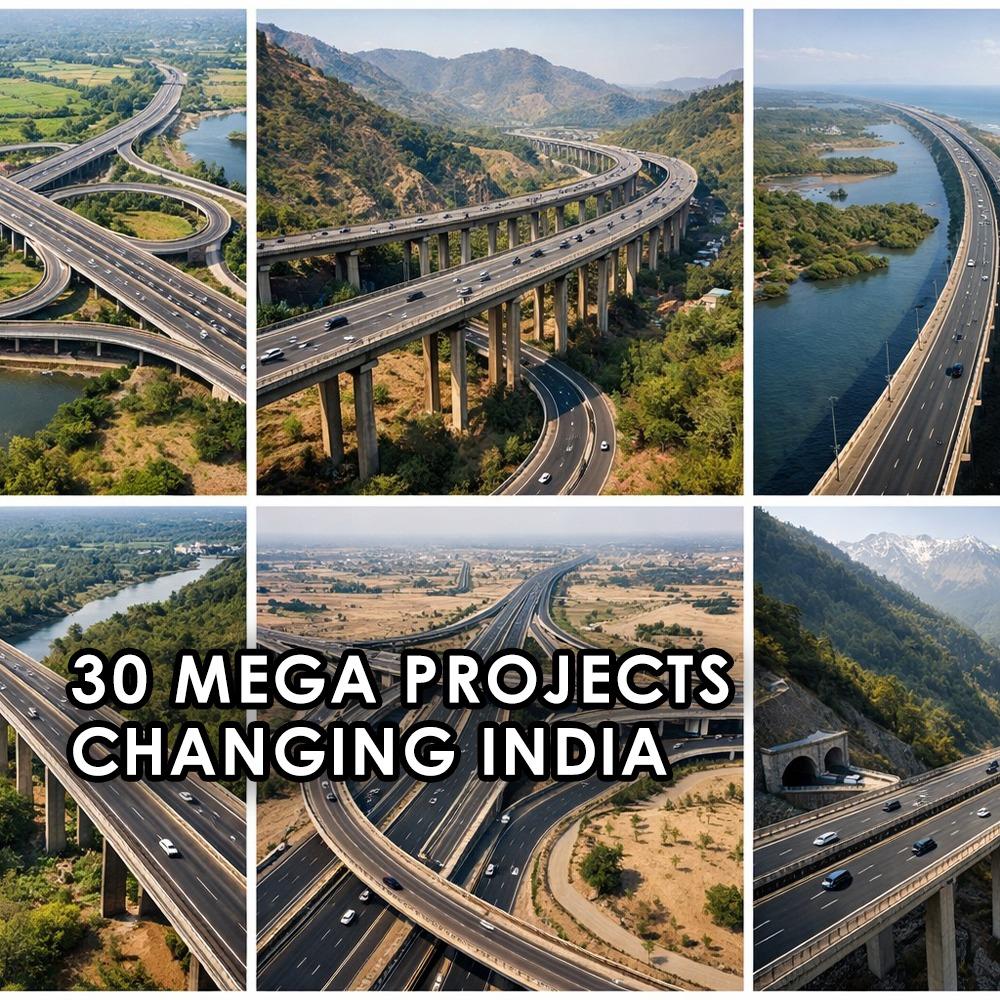
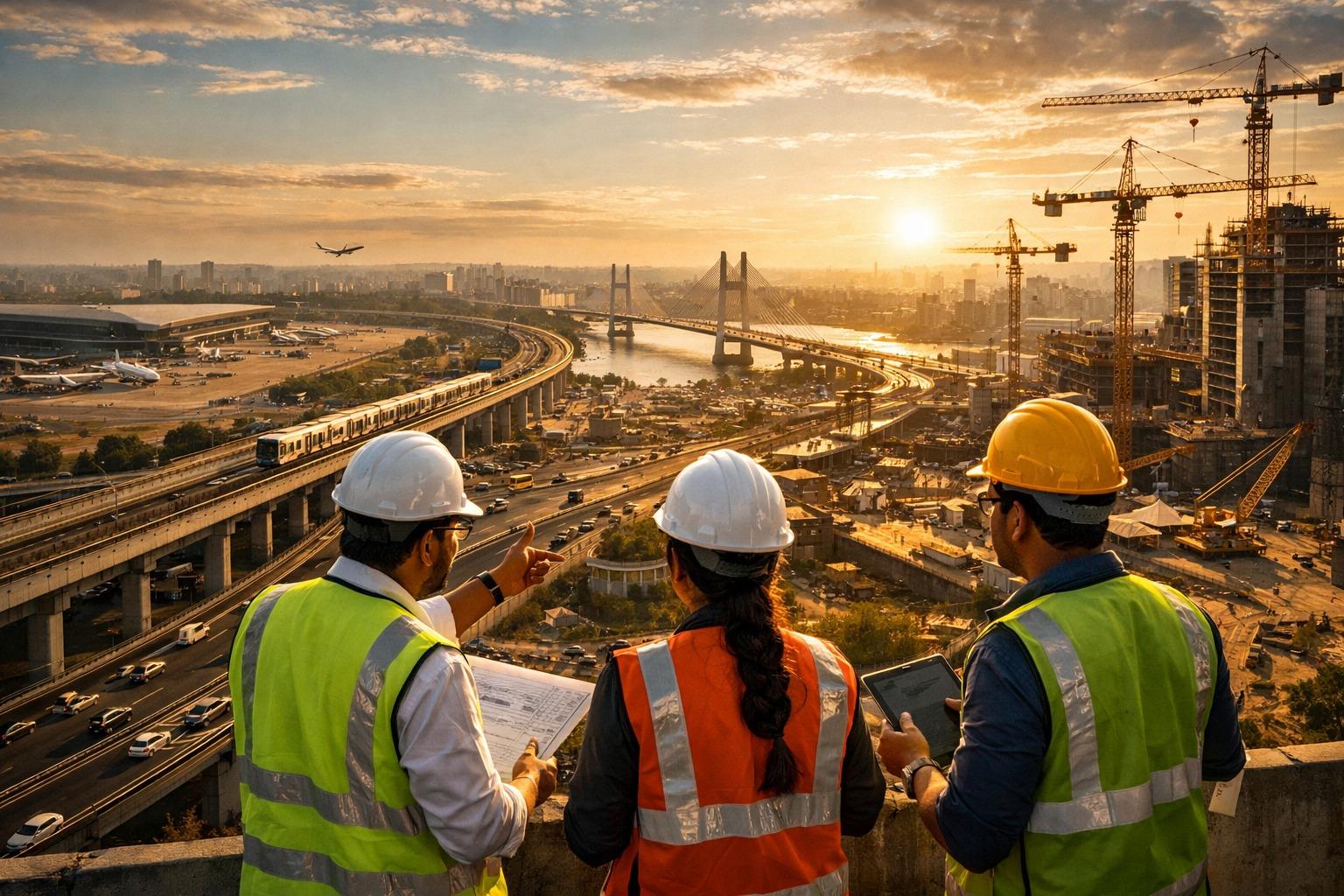
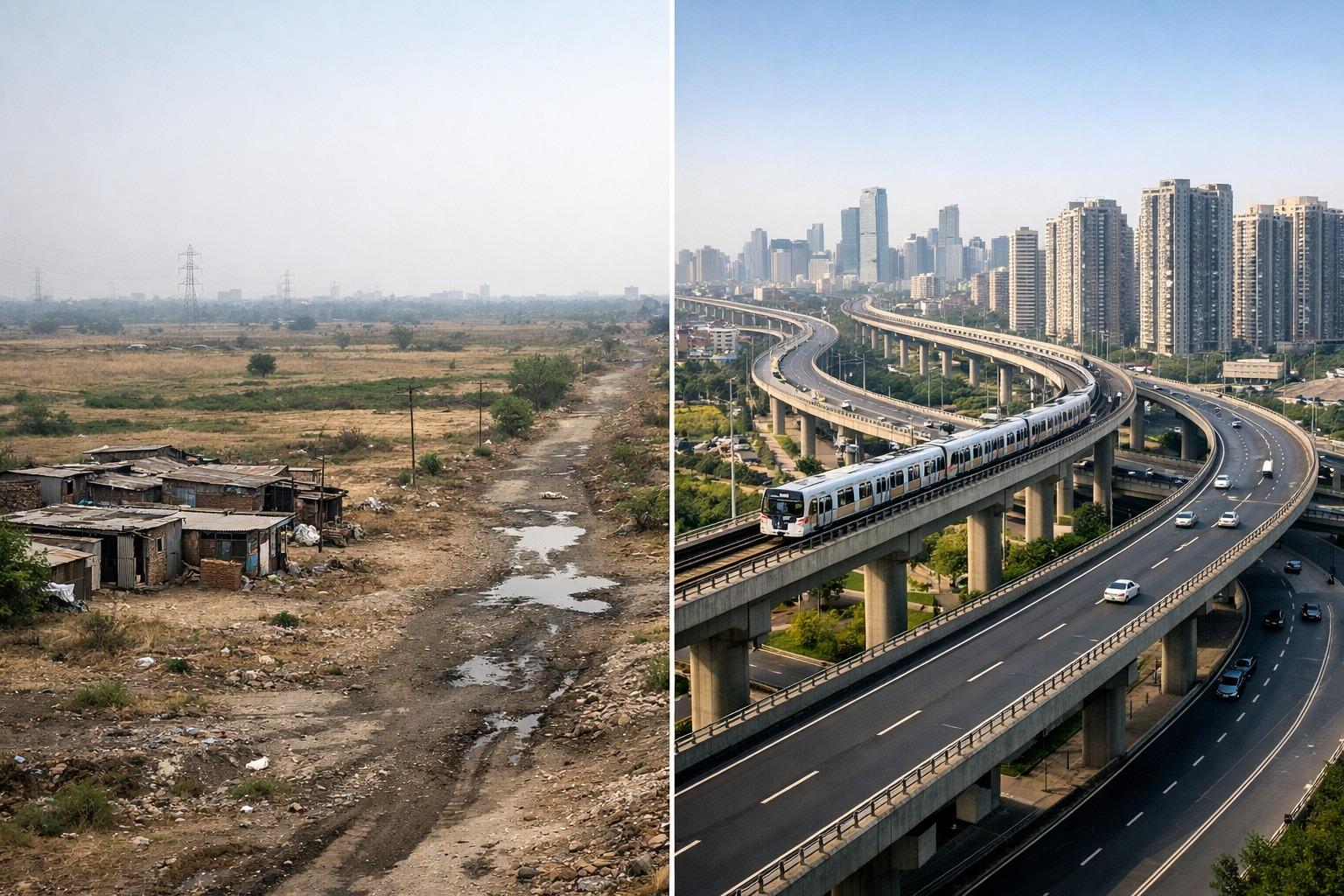
India is building at a pace that has few parallels in its history. From eight-lane expressways slicing through five states to the world's longest sea bridge connecting Mumbai to Navi Mumbai, the country's India mega infrastructure projects pipeline is not just an engineering story. It is a property story. Every highway that shortens a commute, every airport that brings a tier-2 city onto the global map, every metro line that reaches a suburban tech corridor directly reshapes where people want to live, work and invest. Here are the most consequential projects running right now.
Delhi-Mumbai Expressway
At 1,386 kilometres, the Delhi Mumbai Expressway is India's longest greenfield expressway. Eight lanes, access-controlled, passing through Delhi, Haryana, Rajasthan, Madhya Pradesh, Gujarat and Maharashtra. Travel time between the two cities drops from roughly 24 hours to 12. The corridor unlocks real estate demand along dozens of intermediate towns and industrial nodes. Property markets from Dausa in Rajasthan to Vadodara in Gujarat are already seeing speculative and end-user interest driven purely by this project.
Bharatmala Pariyojana
Bharatmala Pariyojana is the umbrella programme rewriting India's highway map. Over 26,000 kilometres of projects have been awarded, with nearly 20,400 kilometres already constructed as of early 2025. The programme spans economic corridors, port-connectivity routes and border roads across the country. Spending has crossed Rs 4.9 lakh crore. The daily highway construction rate has more than doubled from 11 kilometres per day a decade ago to over 30 kilometres per day today.
Noida International Airport, Jewar
The Noida International Airport at Jewar is reshaping the eastern NCR property market in ways that even optimistic forecasters did not fully anticipate. Commercial operations are expected to begin by late 2025 or early 2026. Property prices in Jewar, Greater Noida and Yamuna Expressway zones have already jumped 28 percent in anticipation. The airport will serve as a pressure valve for IGI Delhi and anchor a logistics, warehousing and hospitality demand wave that will last a decade.
Navi Mumbai International Airport
The Navi Mumbai International Airport has operationalised, with the inaugural flight completing a runway test in late 2024. The airport influence zone covering Ulwe, Dronagiri, Panvel and Kharghar is attracting developers and businesses simultaneously. Logistics firms tied to JNPT port proximity, hotel developers and office park investors are all staking positions around this new aviation hub.
Western Dedicated Freight Corridor
The Western Dedicated Freight Corridor stretches 1,506 kilometres from Dadri in Uttar Pradesh to Jawaharlal Nehru Port in Maharashtra. As of mid-2025, it is 96 percent operational. The corridor runs parallel to the Delhi-Mumbai Expressway in many stretches, creating a dual infrastructure spine that will anchor industrial and warehousing demand across western India for decades. Logistics parks along this corridor are among the most actively leased commercial assets in the country right now.
Mumbai Trans Harbour Link
The Mumbai Trans Harbour Link is a 21.8-kilometre six-lane sea bridge connecting Sewri on Mumbai Island to Nhava in Navi Mumbai. It has collapsed a commute that once took over 90 minutes to under 20 minutes. Property values in Navi Mumbai's Belapur, Kharghar and Panvel zones have responded sharply. The bridge is the single biggest connectivity catalyst for the Navi Mumbai real estate market since the city was planned.
Mumbai Coastal Road
The Mumbai Coastal Road project connects Marine Drive in South Mumbai all the way to Kandivali in the north. Phase one connecting Marine Drive to the Bandra-Worli Sea Link has already opened, with the full 29-kilometre corridor progressing toward completion with a budget of Rs 14,000 crore. Property markets along the western coast of Mumbai, particularly Worli, Bandra and Versova, are pricing in this connectivity upgrade.
Zoji-La and Z-Morh Tunnels
The Zoji-La Tunnel at 14.2 kilometres will be one of Asia's longest bi-directional tunnels when complete, providing all-weather connectivity between Kashmir and Ladakh. The Z-Morh Sonamarg Tunnel, inaugurated in January 2025, already provides year-round access to Sonamarg. Tourism infrastructure investment and real estate development in J&K are building behind these connectivity milestones.
PM Gati Shakti: The Master Framework
All of these projects connect under the PM Gati Shakti National Master Plan, which integrates roads, railways, ports, airports and mass transit into a single coordinated planning framework. By October 2024, the platform had onboarded 44 central ministries, integrated over 1,600 data layers and assessed 208 major projects worth Rs 15.39 lakh crore. The goal is to cut India's logistics cost from 14 to 16 percent of GDP down to 9 percent.
Summary
India's top mega infrastructure projects India 2026 spanning the Delhi Mumbai Expressway, Bharatmala Pariyojana, Noida and Navi Mumbai airports, the India Dedicated Freight Corridor and Mumbai's coastal and sea bridge projects are collectively creating the most significant wave of property value creation in the country's history. Every project on this list has a direct, measurable impact on where real estate demand rises next, making infrastructure literacy the most valuable skill any Indian property investor can develop today.