
Zero-Waste Home Design for Indian Families: Sustainability in Daily Life
Summary
Zero-waste home design for Indian families integrates cost-saving, sustainable solutions into daily life. It prioritizes passive cooling, water recycling, solar energy, and smart waste management, ensuring eco-friendly living without constant effort.

Introduction
The phrase zero waste gets thrown around in architecture circles and lifestyle blogs with a looseness that makes most families tune out before the first paragraph ends. It sounds expensive. It sounds inconvenient. It sounds like something designed for people who do not have school runs and cooking to manage. But zero waste home design is not about perfection or extreme minimalism. It is about designing a home where the systems, materials, and spaces work together to produce as little wasted resource as possible, whether that resource is water, electricity, building material, or food. For a family running a functioning household in an Indian city, that is not an abstract environmental goal. It is a practical cost-saving and quality-of-life decision.
Start With the Building Shell
The single most impactful zero waste decision happens before a single piece of furniture is chosen. The building envelope, meaning the walls, roof, and windows, determines how much energy the home will consume for cooling and heating for the next thirty years. A poorly insulated home in a hot climate wastes enormous amounts of electricity fighting a problem that good design would have prevented at the construction stage.
Eco friendly home India design starts with wall thickness and material choice. Fly ash bricks and AAC blocks both offer better thermal mass than standard red brick, which means interior temperatures fluctuate less dramatically with outdoor conditions. Double-glazed windows on west-facing walls reduce afternoon heat gain significantly. These are not luxury upgrades. They are decisions that pay back in lower electricity bills every month for the life of the building.
Water: The Most Overlooked Resource
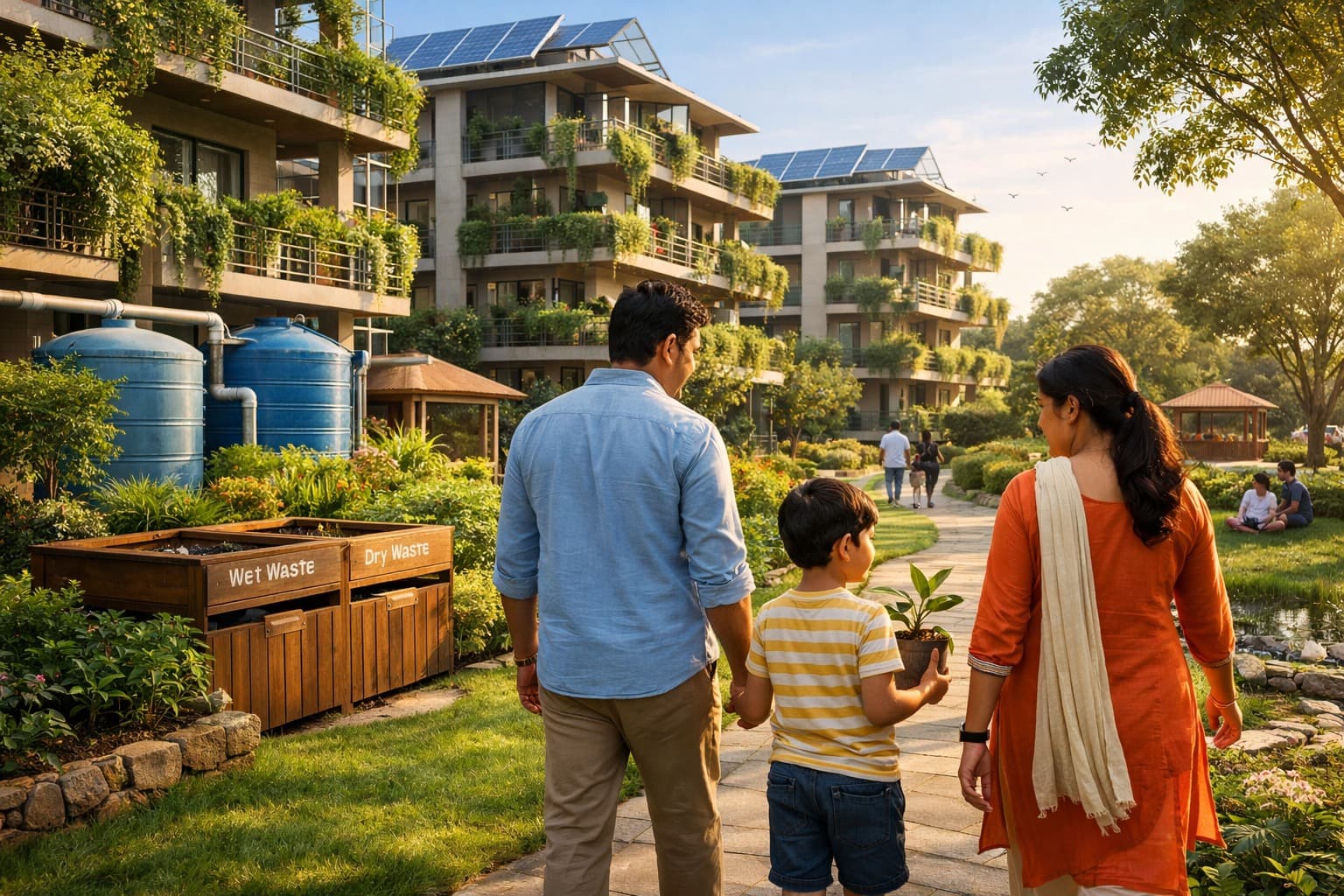
Indian families use water in ways that building design almost never accounts for. A sustainable family home that genuinely minimises waste treats water as a closed loop wherever possible. Rainwater harvesting systems collect monsoon runoff from rooftops and store it for garden use, toilet flushing, and in filtered form for household cleaning. Greywater recycling channels water from sinks and washing machines through a simple filtration process and back to the garden or toilet cisterns.
Dual-flush toilets, aerator fittings on all taps, and pressure-regulated shower heads reduce daily consumption without requiring any behavioural change from the family. These fittings cost marginally more than standard alternatives at the time of installation and recover that difference in water bills within one to two years.
Designing Out Food Waste
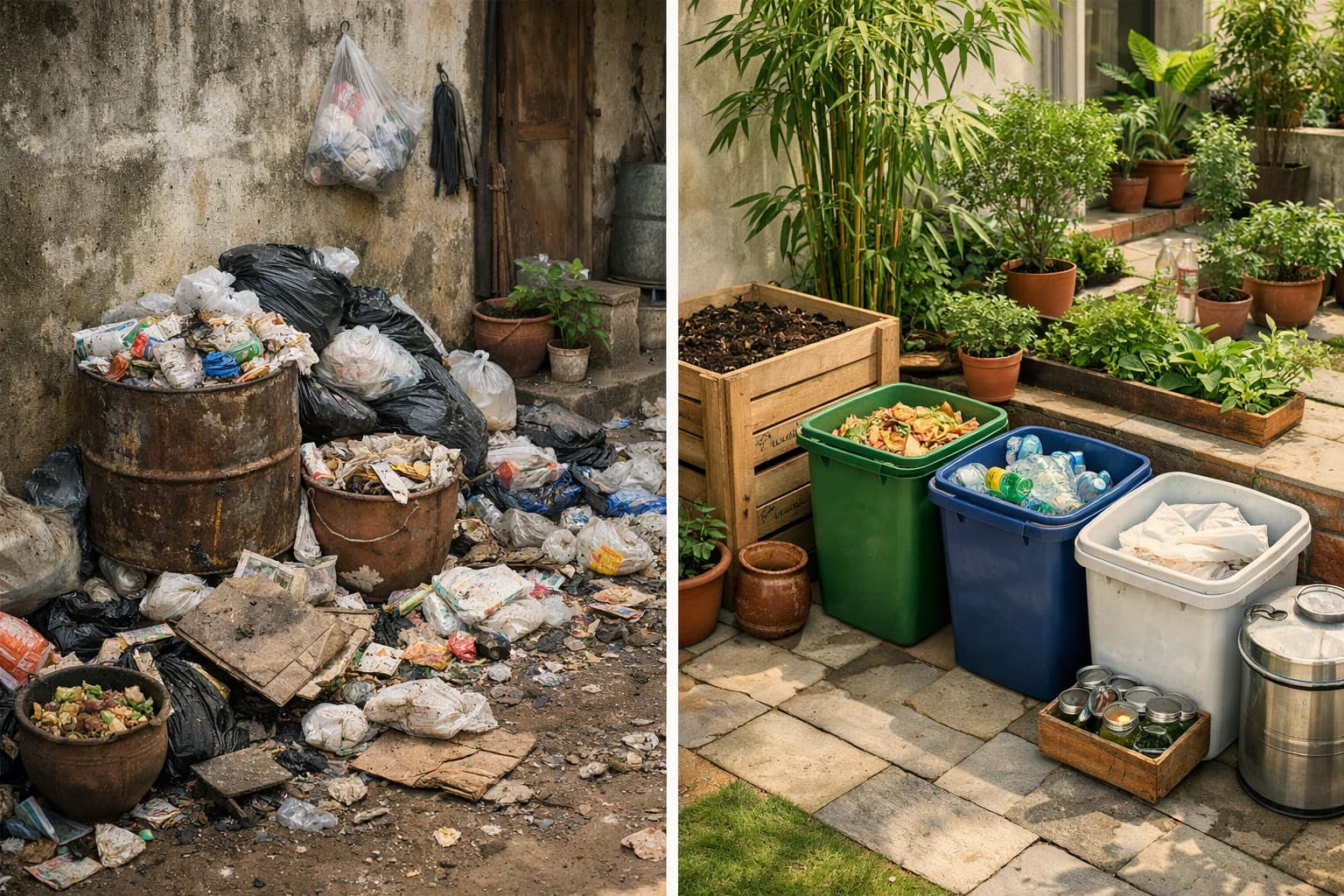
Most homes are not designed with food waste in mind at all. The kitchen layout, the absence of composting infrastructure, and the lack of a designated space for waste separation all contribute to a household that sends far more organic material to landfill than it needs to. Family friendly sustainable home design includes a kitchen with a dedicated wet waste section near the sink, a small countertop composter for daily organic scraps, and ideally a connection to a terrace or balcony composting setup where finished compost feeds a kitchen herb garden.
This is not complicated. A 2-by-2 foot corner of a balcony or a compact terrace can house a composting unit that processes all of a family's vegetable scraps. The output is free fertiliser for plants. The input is waste that would otherwise go into a plastic bag and into an overloaded municipal bin.
Material Choices That Last Decades
Zero waste building materials India options have expanded significantly in recent years. Reclaimed wood for flooring and cabinetry carries embodied carbon from its previous life rather than requiring fresh deforestation. Bamboo composite panels for interior walls and ceilings are harder than most hardwoods, renewable within five years, and available from Indian manufacturers at prices that have come down considerably.
Natural paints made from clay, lime, and mineral pigments are now available across most Indian cities from specialty suppliers. They are breathable, non-toxic, and do not off-gas the volatile organic compounds that standard synthetic paints release for months after application. For a family with young children, that last point alone is worth paying attention to.
Solar and Energy Storage
No green home India conversation is complete without solar. The PM Surya Ghar subsidy has brought a 3 kW rooftop solar system to a post-subsidy cost of approximately Rs 1 lakh to Rs 1.5 lakh for eligible residential properties. At average family electricity consumption levels, payback happens within four to five years. The panels then produce free electricity for another twenty years.
Battery storage paired with solar panels takes a home close to grid independence during normal usage months and significantly reduces dependence on coal-generated power throughout the year. Families with EV two-wheelers or four-wheelers can charge them from solar during daylight hours, further compressing the household's carbon footprint.
The Family Practicality Test
Zero waste design fails when it asks families to change inconvenient behaviours constantly. The best zero waste project design is invisible in daily use. Lights that dim automatically when a room is empty. Taps that stop running after a set time. A kitchen where the composting bin is right next to the cutting board. Segregated waste bins built into cabinetry so sorting requires no extra effort.
The design carries the sustainability rather than depending on the family to remember it every day.
Summary
Zero waste home design for Indian families combines passive cooling, water recycling, solar energy, responsible material choices, and practical waste management into a home that costs less to run and produces less environmental impact without demanding daily sacrifice from the people living in it. Eco friendly home decisions made at the design stage, from wall materials to kitchen layout to rooftop solar, deliver compounding returns in lower bills, better air quality, and a living environment that serves the family better every year. Sustainability built into the structure works. Sustainability that depends on memory does not.